If you searched for 'swiss bird meaning,' you are most likely asking one of two things: what species is considered the Swiss bird (and what does it symbolize), or whether 'Swiss bird' is a phrase or idiom with a figurative meaning. The short answer: there is no single, fixed Swiss national bird the way some countries have one. What Switzerland does have is a well-known annual 'Swiss Bird of the Year' program run by BirdLife Switzerland, which elevates a different species each year as a conservation ambassador. Each chosen bird carries its own symbolic meaning tied to its traits and the conservation message behind its selection. As for a figurative idiom called 'Swiss bird,' no widespread slang or metaphor by that exact name exists in common usage. So if you saw the phrase somewhere specific, context is everything, and this guide will help you pin it down fast.
Swiss Bird Meaning: Species, Symbolism, and Idiom Guide


What 'Swiss bird' actually refers to
The phrase 'Swiss bird' does not point to a single, permanent emblem the way the bald eagle points to the United States. Switzerland has never officially designated one bird as its national symbol. Instead, the term shows up in three main contexts: the annual BirdLife Switzerland 'Bird of the Year' program, cantonal and heraldic bird imagery, and straightforward ornithological and conservation usage (like the Swiss Bird Index, a monitoring tool maintained by Vogelwarte Sempach and the Swiss Association for the Protection of Birds).
The 'Bird of the Year' program is almost certainly what most English-language searchers are thinking of. BirdLife Switzerland names a new species every November for the following year. Recent examples include the little grebe (2024), the marsh warbler (2023), and the little owl (2021). Each selection comes with a clear symbolic framing, which is why people naturally search for the 'meaning' attached to that bird.
On the heraldic side, Swiss cantons and municipalities have long used birds as charges on coats of arms, so 'Swiss bird' in a historical or visual art context might point you toward a specific cantonal emblem rather than a national one. The Standesscheibe tradition (decorative cantonal panes featuring heraldic imagery) is a good example of how bird symbolism gets very localized within Switzerland.
The most commonly associated Swiss birds and what they represent
Because the 'Swiss bird' title rotates, the symbolic meaning you are after depends on which bird is being discussed. Here is a look at the most prominent recent selections and their assigned meanings.
The little grebe (Swiss Bird of the Year 2024)

BirdLife Switzerland described the little grebe explicitly as a 'symbol of good water.' This small diving bird is closely associated with clean lakes and wetlands, so its selection was a direct call to protect aquatic habitats. In broader symbolic tradition, grebes are linked to persistence and adaptability because of their remarkable diving ability and their habit of building floating nests. They are birds that thrive at the boundary between water and air, which in many folk traditions carries associations with emotional depth and hidden life beneath the surface.
The marsh warbler (Swiss Bird of the Year 2023)
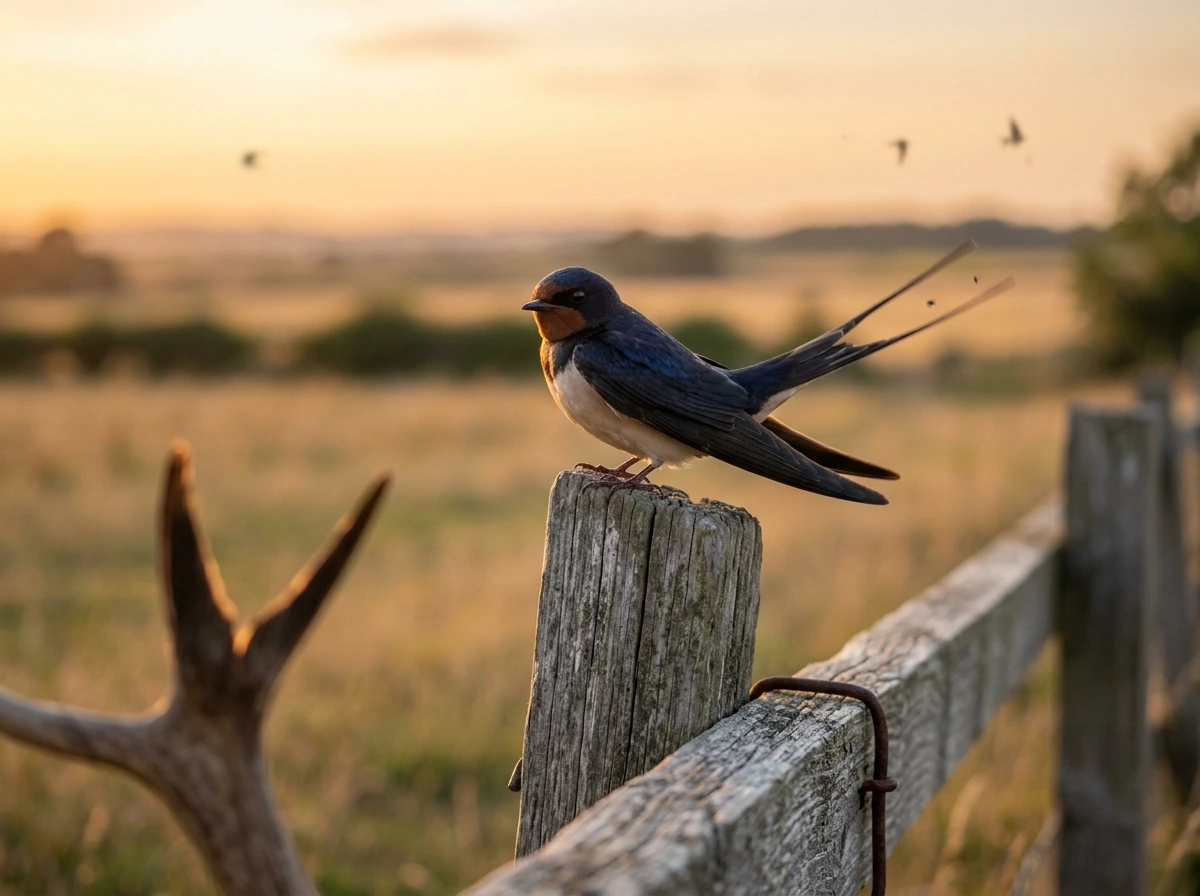
The marsh warbler earned its year partly because of what BirdLife called its 'virtuosic singing' and its extraordinary ability to mimic the calls of dozens of other bird species. In symbolic terms, a bird celebrated for imitation and vocal mastery has long carried associations with creativity, communication, and adaptability across cultures. The marsh warbler spends winters in Africa and returns to Europe to breed, giving it the added symbolic weight of a long-distance traveler, a quality that connects it thematically to the swallow (a bird whose symbolic role in meaning and omen traditions is explored in its own dedicated coverage on this site).
The little owl (Swiss Bird of the Year 2021)
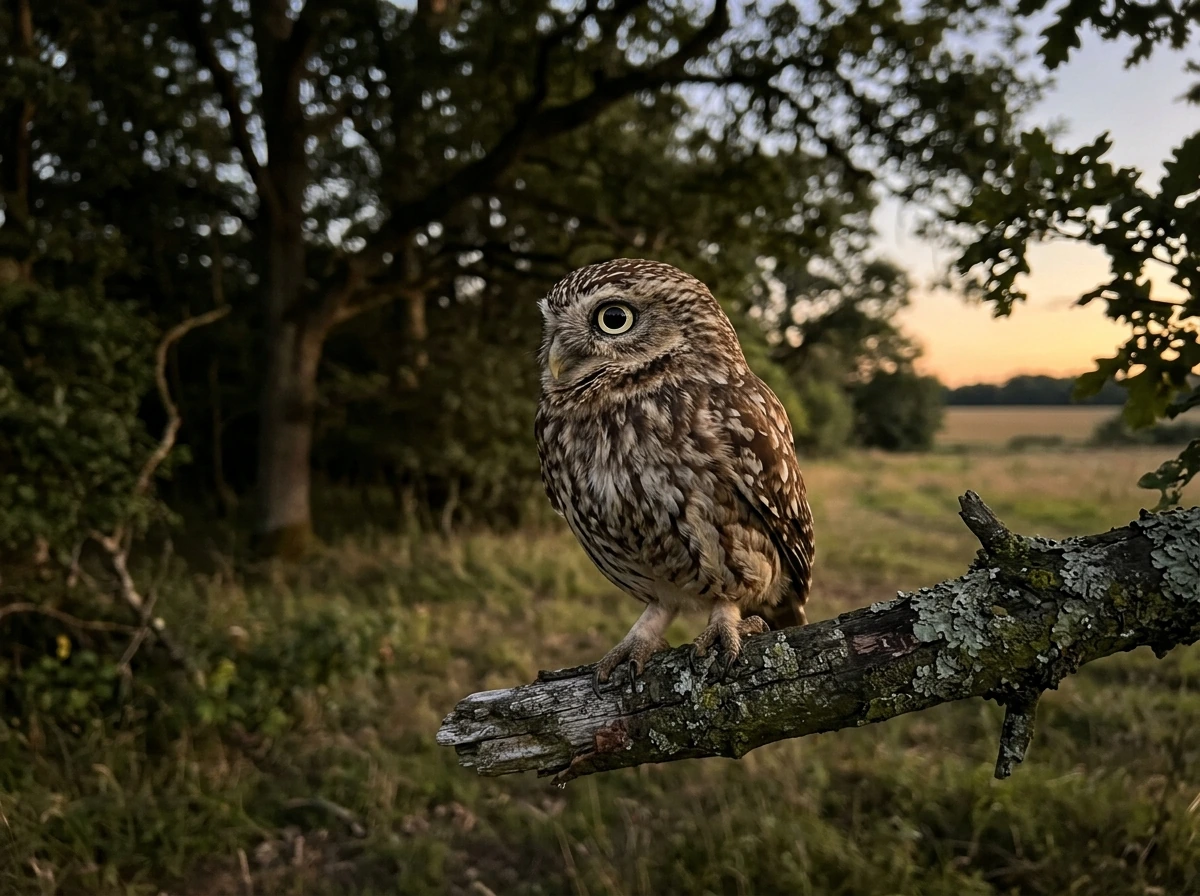
The little owl selection came with explicit conservation-oriented symbolism. Swiss media described it as representing both the successes of conservation projects and the consequences of neglecting biodiversity policy. In mythology and folklore, owls are among the most symbolically loaded birds anywhere in the world. Athena's owl in Greek tradition stands for wisdom and rational thought. In Roman belief, an owl's call was an omen, sometimes foreboding death (Julius Caesar's assassination was reportedly preceded by owl cries). Many Indigenous and African traditions treat the owl as a messenger between the living and the dead. The little owl specifically, being small and ground-dwelling compared to its larger relatives, often carries associations with humility alongside wisdom in European folk belief.
Does 'Swiss bird' have an idiomatic or slang meaning?
Honestly, no evidence points to 'Swiss bird' being a widespread idiom or figurative phrase in English or in common Swiss-German usage. Unlike expressions built around the swallow, the raven, or the crane, which carry centuries of metaphorical freight in literature and everyday speech, 'Swiss bird' does not appear in any established idiom dictionary or in media as a fixed figurative expression. If you saw it used figuratively somewhere specific, it was almost certainly a creative or contextual usage by whoever wrote it, not a recognized phrase. swallow tail bird meaning swallow tail bird meaning If you are specifically wondering about the swallowtail bird meaning, the details depend on the species and the cultural tradition you are looking at.
Where 'Swiss bird' does appear consistently in non-ornithological language, it tends to be institutional shorthand: 'Swiss Bird Index,' 'Swiss Bird of the Year,' or labels like 'Swiss Bird Centre' (a wildlife rehabilitation organization). These are proper-noun usages, not idioms. So if someone said 'that's a real Swiss bird' in a conversation and you are trying to decode it, they were likely making a reference to Swiss precision, neutrality, or some other Swiss national stereotype through their own creative metaphor, not using a standardized phrase.
The symbolic meanings of key Swiss-associated birds
Even without a fixed national bird, the species most closely associated with 'Swiss bird' contexts carry rich symbolic histories worth knowing.
| Bird | Swiss Association | Core Symbolic Meanings | Cultural Traditions |
|---|---|---|---|
| Little grebe | Bird of the Year 2024 | Clean water, adaptability, hidden depth | European wetland folklore, conservation symbolism |
| Marsh warbler | Bird of the Year 2023 | Creativity, vocal mastery, long-distance travel, adaptability | European and African bird lore, migratory symbolism |
| Little owl | Bird of the Year 2021 | Wisdom, humility, conservation, life/death messenger | Greek (Athena), Roman omen tradition, European folk belief |
| Alpine chough | Common Swiss Alpine species | Freedom, high-altitude endurance, wildness | Alpine mountaineering culture, Swiss highland identity |
| White stork | Heraldic and regional symbol | New life, luck, homecoming, seasonal renewal | European and Near Eastern folk tradition, heraldry |
The Alpine chough deserves a special note because it is genuinely iconic in the Swiss landscape context even if it has not held the 'Bird of the Year' title recently. It is the bird most people picture when they think of a Swiss mountain scene, soaring above peaks and glaciers, and it carries the symbolic weight of freedom and wild endurance that alpine environments naturally inspire. The white stork, meanwhile, appears in Swiss cantonal heraldry and in the broader European tradition as a bird of luck and renewal, similar to how the swan functions symbolically in other Northern European traditions (see swan bird meaning for a comparison worth exploring if you are digging into European bird symbolism more broadly).
How 'Swiss bird' shows up in real language and media

In practice, the phrase appears in a few distinct registers. In Swiss conservation journalism (especially outlets like SWI swissinfo.ch), it nearly always introduces the annual BirdLife Switzerland announcement, following the pattern: 'The Swiss Bird of the Year is the [species].' In scientific and policy contexts, 'Swiss Bird Index' (SBI) is a technical term for a modelled monitoring index measuring trends in breeding bird populations across Switzerland, maintained by Vogelwarte Sempach. The Swiss Bird Index is maintained by Vogelwarte Sempach (Swiss Ornithological Institute) as part of its breeding-bird population monitoring in Switzerland Swiss Bird Index (SBI) is a technical term for a modelled monitoring index measuring trends in breeding bird populations across Switzerland, maintained by Vogelwarte Sempach.. In photography and nature content, 'Swiss bird' is simply a geographic label, meaning birds photographed or documented in Switzerland.
Local Swiss media sometimes adds another layer, with individual cantons naming their own 'bird of the year.' A recent example from Zug named the long-tailed tit as its local bird of the year, which sits alongside, not instead of, the national BirdLife Switzerland selection. So if you see 'Swiss bird of the year' in a local Swiss publication, check whether it is the national BirdLife program or a cantonal initiative before you attach symbolic meaning to it.
Pin down exactly which meaning you need
Because 'Swiss bird' can point in several directions, a quick checklist helps you figure out which meaning actually fits your situation.
- Where did you see the phrase? If it was in a news article or press release from BirdLife Switzerland or Swiss media, you are looking at the annual 'Bird of the Year' program. Look up which year is being discussed to identify the specific species.
- Is there a year attached? 'Swiss Bird of the Year 2024' means little grebe. 'Swiss Bird of the Year 2023' means marsh warbler. 'Swiss Bird of the Year 2021' means little owl. Check BirdLife Switzerland's announcements for other years.
- Is it a scientific or policy document? 'Swiss Bird Index' (SBI) is a monitoring tool, not a symbolic title. In this context, 'Swiss bird' is institutional shorthand, not symbolism.
- Is it a cantonal or heraldic context? Look at the specific canton's coat of arms or heraldic tradition. Swiss cantonal birds vary widely and some go back centuries.
- Are you looking for a figurative or idiomatic meaning? If someone used 'Swiss bird' metaphorically in conversation or creative writing, there is no standard idiom to decode. The meaning is personal or contextual, likely drawing on Swiss cultural associations (precision, neutrality, Alpine wildness) rather than a fixed phrase.
- Are you looking for the symbolic traits of a specific bird? Once you have identified the species (from any of the above steps), its symbolic meaning comes from that bird's own folklore and cultural history, not from its Swiss designation alone.
Switzerland's broader symbolic identity and why birds fit into it
Switzerland expresses national identity through very specific, often nature-tied symbols rather than a single overarching emblem. The edelweiss is the most recognized floral symbol. The Hérens cow is an iconic national animal. Helvetia, the female personification of the Swiss Confederation, appears on coins and stamps. In this context, the rotating 'Swiss Bird of the Year' fits a pattern: Switzerland tends to celebrate nature symbols in a rotating, conservation-minded way rather than fixing one creature as a permanent emblem. That is actually a more ecologically thoughtful approach than most national bird designations, even if it makes 'Swiss bird' harder to pin down for someone searching its meaning.
The Swiss Ornithological Institute (Vogelwarte Sempach) maintains one of Europe's most thorough nationwide bird monitoring systems, publishing avifauna atlases and running the Swiss Bird Index. The Swiss Ornithological Institute/Vogelwarte Sempach publishes its State of Birds in Switzerland report as a PDF for ongoing monitoring context The State of Birds in Switzerland. This institutional depth means that 'Swiss bird' in an academic or conservation context carries genuine scientific weight, and a searcher who lands on that usage is entering a very different conversation from someone curious about the mythological symbolism of an owl or a grebe.
Which Swiss bird meaning is right for you
If you came here wanting a simple answer: the most likely thing 'Swiss bird meaning' refers to is the annual BirdLife Switzerland Bird of the Year title and the symbolic conservation message that comes with whichever species holds it. The little grebe means clean water and aquatic health. The marsh warbler means vocal creativity and migratory resilience. The little owl means wisdom applied to conservation and the cost of ignoring biodiversity. Each carries its own deeper symbolic history from world mythology on top of that Swiss framing.
If you were hoping 'Swiss bird' was a slang term or idiom with a neat figurative definition, it is not, at least not in any standardized form. And if you are researching Swiss heraldic birds or a specific canton's bird symbol, you will need to go a level deeper into cantonal heraldry than a single national-level answer can give you. Whatever brought you here, the checklist above should get you to the right answer in under a minute.
FAQ
If I see “Swiss bird” in English, what is the first meaning I should check for?
Start with the BirdLife Switzerland “Bird of the Year” program. It is the most common reason English pages mention “Swiss Bird” followed by a species name, and the meaning is typically the conservation framing tied to that specific bird for that year.
What if the phrase includes a year, like “Swiss Bird of the Year 2021”?
Use the year as the selector. BirdLife Switzerland announces a new species each November for the following year, so the species label is linked to the program’s cycle, not the exact month you encountered the phrase.
Does “Swiss bird” ever mean a single official national bird like the US bald eagle?
No. Switzerland does not have one fixed national bird emblem. When people treat “Swiss bird” like a permanent symbol, they are usually blending multiple local and institutional usages (Bird of the Year, cantonal heraldry, or research terminology).
How can I tell whether “Swiss bird” refers to BirdLife’s program or to scientific monitoring like the Swiss Bird Index?
Look for technical wording. “Index,” “monitoring,” “breeding bird populations,” or research/analytics language usually points to the Swiss Bird Index, while plain “The Swiss Bird of the Year is…” language points to the conservation ambassador program.
What if I’m reading Swiss media and “Swiss bird” refers to a canton’s own bird of the year?
Treat it as separate from the national BirdLife selection. Cantons can name their own local bird of the year alongside the national program, so you should confirm whether the source explicitly says “BirdLife Switzerland” or specifies it is cantonal.
If a “Swiss bird” article shows a bird that is not one of the recent Bird of the Year picks, what does that likely mean?
It may be a heraldic or landscape-associated Swiss species rather than the rotating program. The Alpine chough and white stork, for example, are commonly invoked in Swiss cultural imagery even when they are not the current Bird of the Year.
Can “Swiss bird” mean a bird photographed or recorded in Switzerland?
Yes. In photography, travel writing, and some nature content, “Swiss bird” can simply be a geographic label for birds documented in Switzerland, with no national symbolism implied.
Is “Swiss bird” ever used as slang or an idiom in Swiss German or English?
Usually no. If you see it figuratively, it is typically a one-off metaphor by a specific writer, not a widely established idiom. Checking whether the phrase appears as a standalone proverb or consistently across many unrelated sources is the best test.
What is a quick way to decode the meaning when “Swiss bird” appears in a sentence?
Identify what comes immediately around it. If there is a species name and a conservation angle, map it to that Bird of the Year selection’s symbolism. If there are words like “index,” “monitoring,” or “trends,” switch to the Swiss Bird Index interpretation. If it’s about coats of arms, panes, or local emblems, interpret it as cantonal heraldry.
If I’m specifically trying to get symbolism for one species, should I rely on the Swiss Bird of the Year framing only?
Use it as the entry point, then expand carefully. Swiss framing often adds a conservation message, but the species also has longer global symbolism traditions (for example, owls and grebes). Make sure you do not treat the Swiss conservation message as the only meaning.