The swallow bird is a small, agile songbird from the family Hirundinidae, best known for its deeply forked tail, glossy dark blue-black upperparts, and remarkable migratory journeys. Symbolically, it carries some of the most consistent and positive meanings of any bird across world cultures: hope, safe return, love, loyalty, and the arrival of spring. If you have seen a swallow in a dream, spotted one nesting near your home, or encountered swallow imagery in a tattoo or a poem, this guide will tell you exactly what swallow bird meaning is and why.
Meaning of Swallow Bird: Symbolism, Myths, and Interpretations

Marcus Blackwell
23 Mar 2026
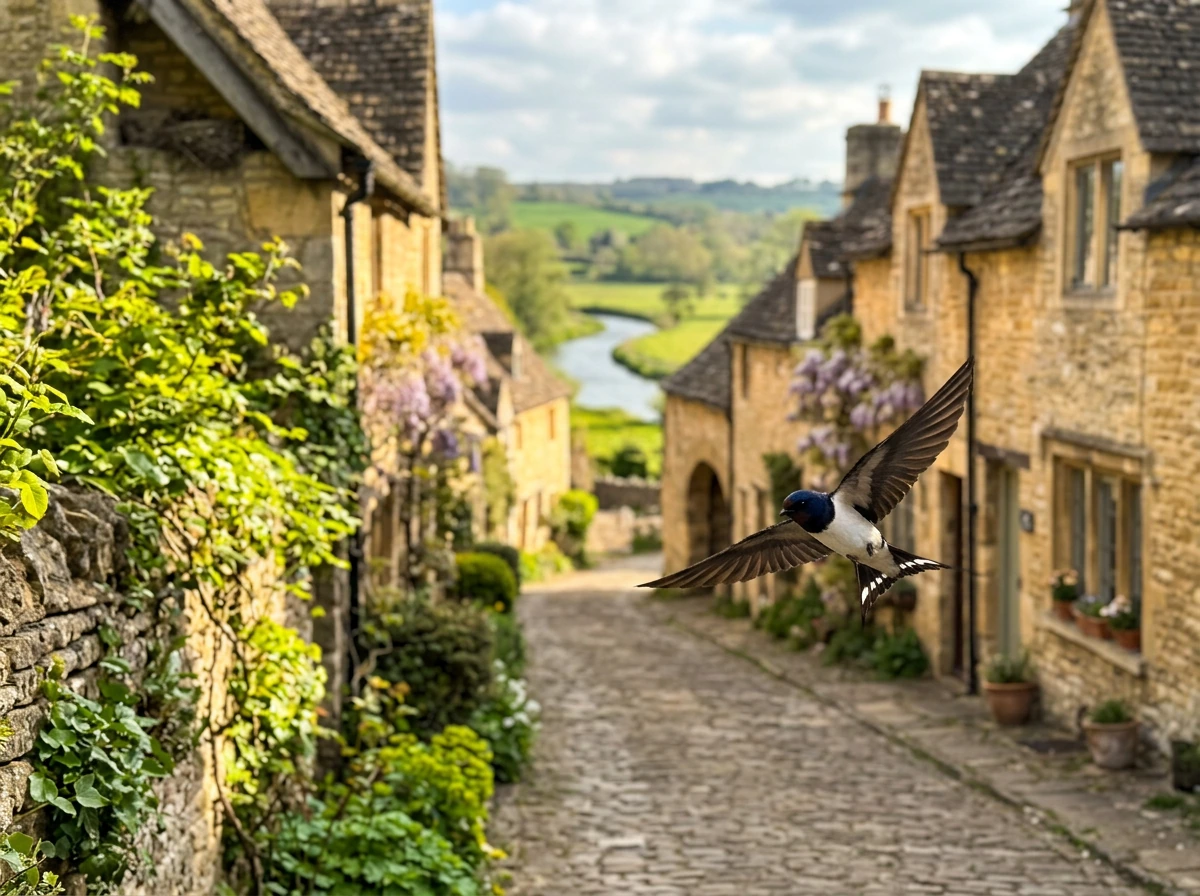
What a swallow bird actually is
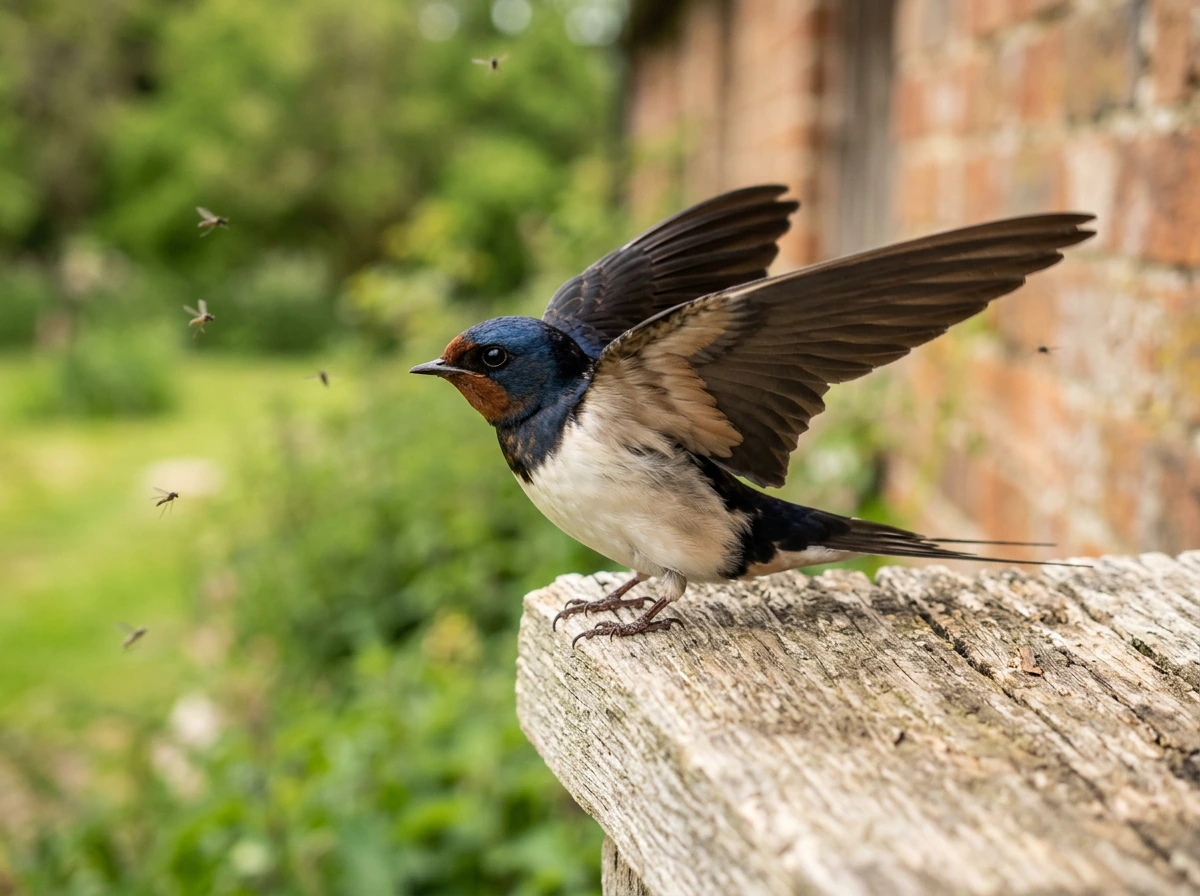
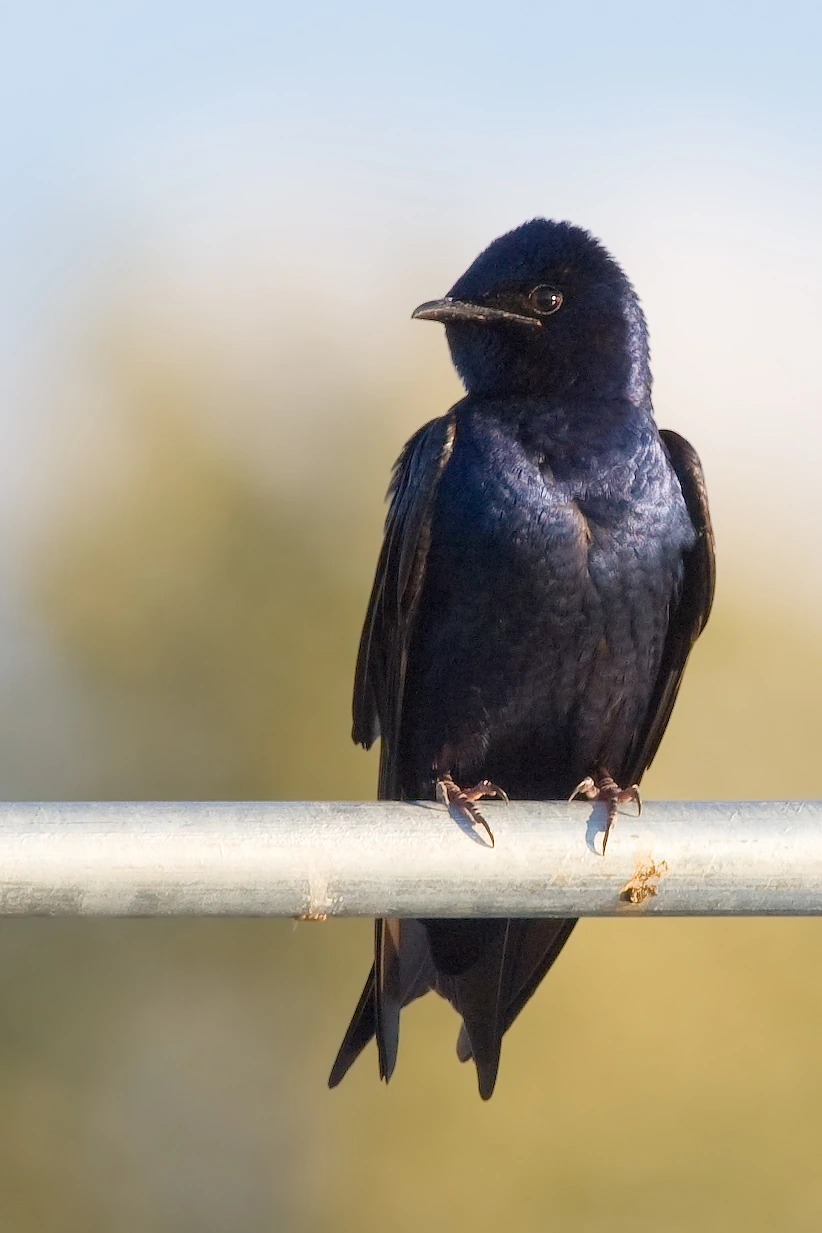
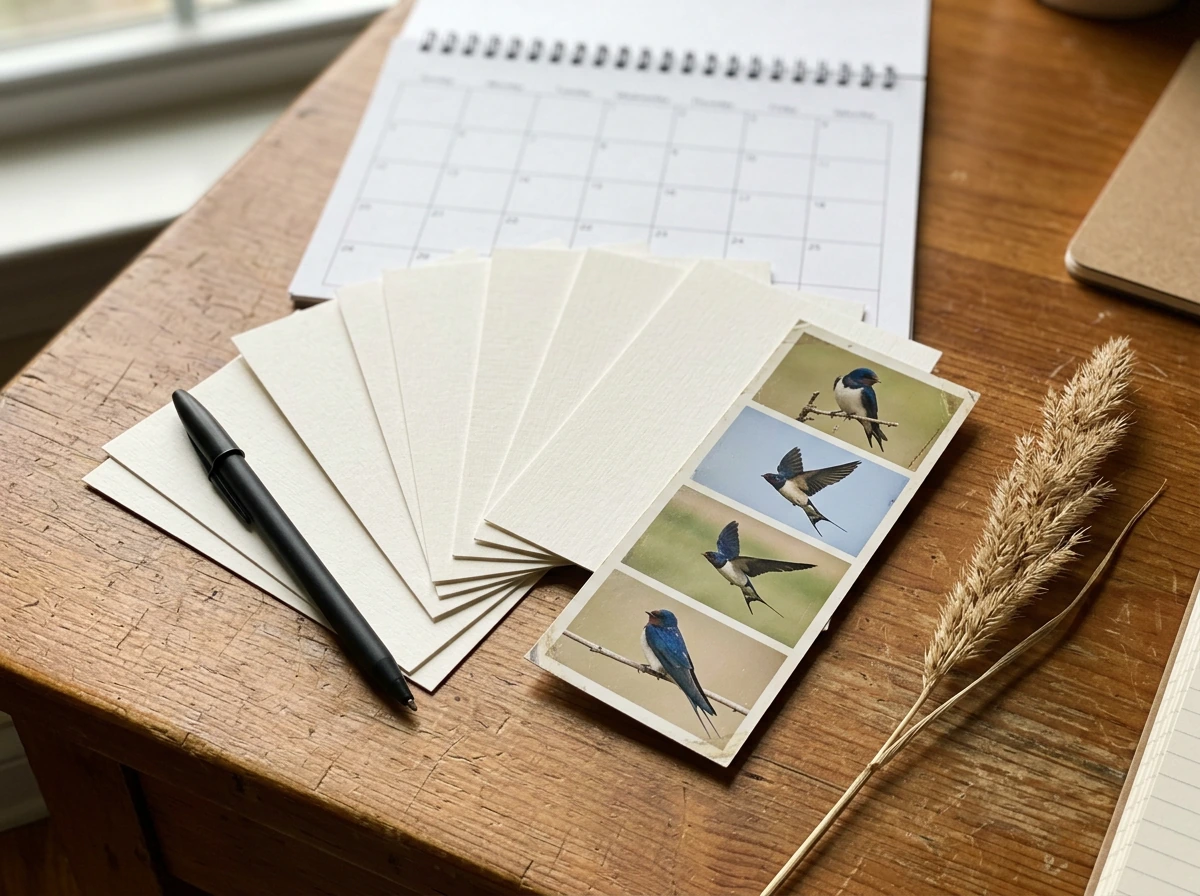
Swallows belong to the family Hirundinidae, a group that also includes martins. The most widely recognized species is the barn swallow (Hirundo rustica), which breeds across the Northern Hemisphere and migrates to the Southern Hemisphere in winter, making it one of the most widely traveled birds on the planet. In the field, you can identify a swallow by its deeply forked tail (which gives it exceptional aerial maneuverability while chasing insects), glossy dark blue-black upperparts, and pale or white underparts. They are birds of open farmland, pasture, and wetlands, and they drink on the wing by skimming low over lakes and rivers and scooping up water with an open beak.
Swallows are aerial insectivores, meaning they eat exclusively flying insects caught mid-flight. They build cup-shaped nests from mud mixed with their own saliva, often inside barns, under eaves, or on cliff faces, and they typically lay between three and seven eggs. Many species nest in loose colonies. One thing worth clarifying: swallows are sometimes confused with swifts (common swift, Apus apus), which look superficially similar but belong to an entirely different order (Apodiformes) and are not closely related. If you are reading about swallowtail birds specifically, that topic has its own dedicated coverage on this site. If you meant swallowtail birds instead, this swallow tail bird meaning guide explains the symbolism and significance behind them.
Swallow the bird vs. swallow the verb: clearing up the confusion
The word "swallow" is one of those English words that does double duty, and it trips people up when searching for its meaning. The verb "to swallow" (meaning to pass food or liquid down the throat) comes from Old English swelgan, traceable through Middle English swolwen to the Proto-Germanic root swelgan or swelhan, meaning to swallow, imbibe, or absorb. It appears in written English from at least the 11th century.
The bird noun is a completely separate etymological line. It comes from Old English swealwe, via Middle English swalwe, and traces back to the Proto-Germanic root swalwon. You can see this split clearly in other Germanic languages, where the two words have always been distinct. So when you search for "swallow definition bird" or "meaning of swallow bird," you are asking specifically about this second word and this animal. The symbolic content of this article applies entirely to the bird, not to the act of swallowing.
Swallow symbolism in mythology, folklore, and religion
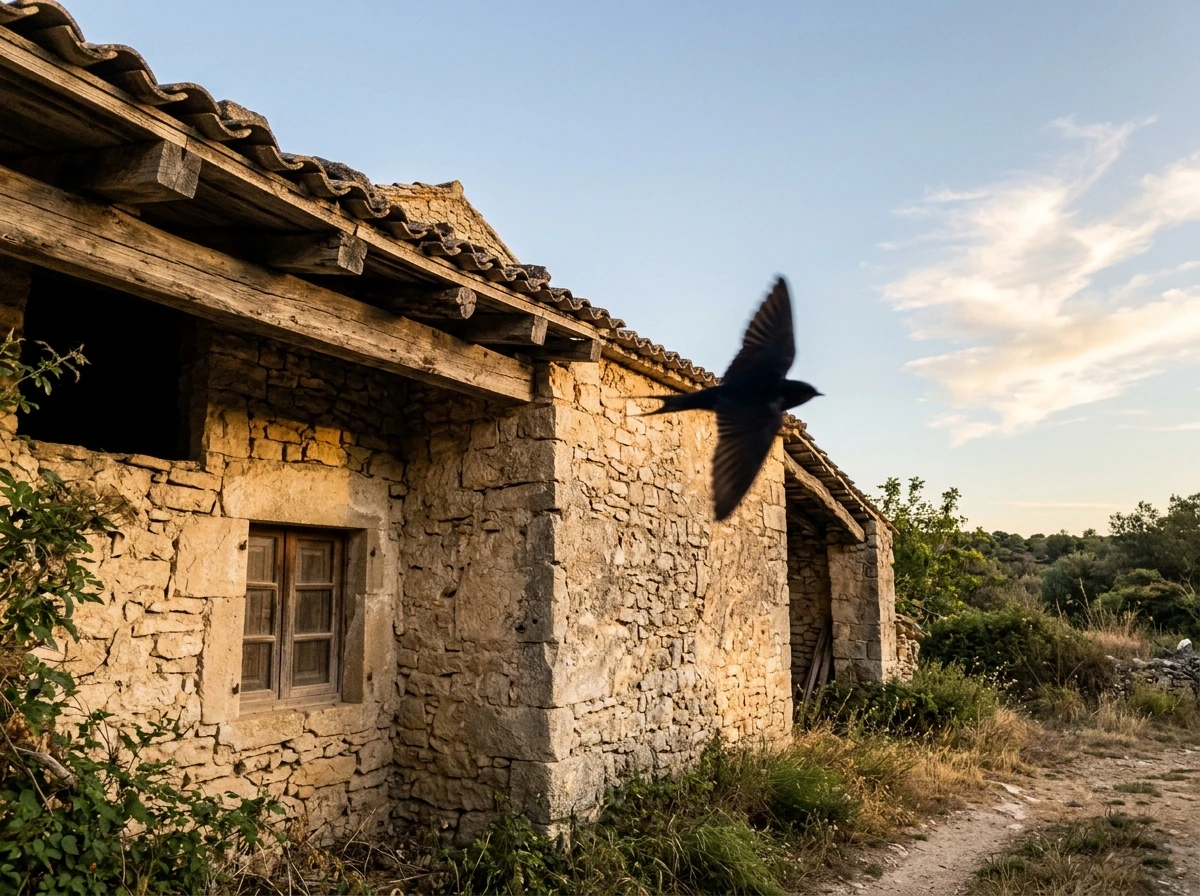
Swallows appear in mythology and religious tradition across a remarkable range of cultures, nearly always carrying positive associations. A consistent thread is the bird's connection to transformation, transition, and the passage between worlds, which makes sense given that swallows visibly arrive, depart, and return with the seasons.
Greek myth: swallows and transformation
In the Greek version of the Philomela myth, the characters involved in a story of violence and revenge are ultimately transformed into birds. In some Greek tellings, Philomela herself is transformed into a swallow, while Roman versions more commonly make her a nightingale. The detail matters because it shows how the swallow was understood in the ancient world: as a bird associated with the transition between suffering and a kind of freedom, and with the power of metamorphosis. The variation between Greek and Roman versions also illustrates how swallow symbolism and nightingale symbolism were sometimes treated as interchangeable in classical tradition, both representing a voice released from pain.
Classical poetry: spring and love
The late Latin poem Pervigilium Veneris ("The Eve of Venus") explicitly links the barn swallow to spring and to love, a pairing that has persisted in European literary tradition ever since. The arrival of swallows in spring was not just a pleasant seasonal note: in an agricultural society, it marked the return of warmth, growth, and abundance. That practical association became a poetic and romantic one over centuries, and the swallow as a herald of love is deeply embedded in European verse and song.
Weather omens and folk religion
In Northwest Europe, folk tradition held that swallows flying low was a sign of coming rain, a belief rooted in the observable behavior of insects descending to lower altitudes before wet weather, which the swallows follow. This kind of nature-watching gave swallows a reputation as reliable forecasters. In many European Christian traditions, harming a swallow or destroying its nest was considered deeply unlucky, and a swallow choosing to nest on your house was widely seen as a blessing.
How swallow meaning varies by region and tradition

| Region / Tradition | Core Symbolic Meaning | Notable Belief or Practice |
|---|---|---|
| Europe (general) | Spring, renewal, love, good luck | Swallow nesting on a home brings good fortune; low-flying swallows predict rain |
| Ancient Greece | Transformation, freedom from suffering | Philomela myth: characters transformed into swallows (some versions) |
| Maritime / Sailor culture | Safe return, loyalty, overcoming distance | Tattoo earned after 5,000 nautical miles; promise the sailor would find his way home |
| China | Prosperity, good fortune, spring growth | Swallows (yànzi) are a homonym for 'banquet' (yànhuì); nests near a home signal good luck for couples |
| Americas (Capistrano) | Return, renewal, seasonal celebration | Annual 'Return of the Swallows' on Saint Joseph's Day (March 19) at Mission San Juan Capistrano |
China: prosperity and homophony
In Chinese culture, the swallow (yànzi, 燕子) carries layered positive meaning. One layer is purely linguistic: the word for swallow sounds like yànhuì, the word for banquet, so swallow imagery is associated with good fortune and prosperity. On a more practical symbolic level, swallows returning to nest near a home in spring signals the beginning of the growing season, and in traditional agricultural communities this was genuinely good news. A swallow's nest near the home of a newly married couple was considered especially auspicious.
The Americas: Capistrano and the return legend
The most famous swallow-return tradition in the Americas is centered on Mission San Juan Capistrano in California. Since the 1920s, linked to the work of Father John O'Sullivan, the mission has celebrated the annual return of cliff swallows on or around March 19, Saint Joseph's Day. The "Return of the Swallows" celebration marks spring's renewal and rebirth, and the song "When the Swallows Come Back to Capistrano" turned the tradition into a piece of American popular culture. It is worth noting that the New Yorker has described the phenomenon as "a legend that people enjoy believing," which is a fair characterization: the swallows do return, but the precision of the date has been embellished over time. That does not diminish the symbolic resonance of the story; it actually illustrates how powerfully the idea of return is attached to swallows in the popular imagination.
What swallows represent in modern life
Modern swallow symbolism has condensed around a few consistent themes, all of which connect back to the bird's actual behavior: it migrates enormous distances and returns to the same nest site year after year with striking precision. That homing instinct is the engine behind virtually every contemporary symbolic meaning attached to swallows.
- Love and loyalty: Swallows pair for life in popular understanding, and their return to the same nest reinforces loyalty as a central symbol.
- Home and belonging: A swallow always comes back. In both sailor tradition and general folk culture, this makes the swallow a symbol of the pull toward home.
- Safe travel and return: Particularly in maritime tradition, the swallow represents the hope that a journey completed safely will bring the traveler back to those they love.
- Hope and new beginnings: Because swallows arrive with spring, seeing one (in real life or symbolically) is widely read as a sign that difficult times are ending.
- Freedom and resilience: Swallows spend most of their lives in the air, covering thousands of miles, and their image is often used to represent overcoming adversity through movement and persistence.
The sailor tattoo tradition
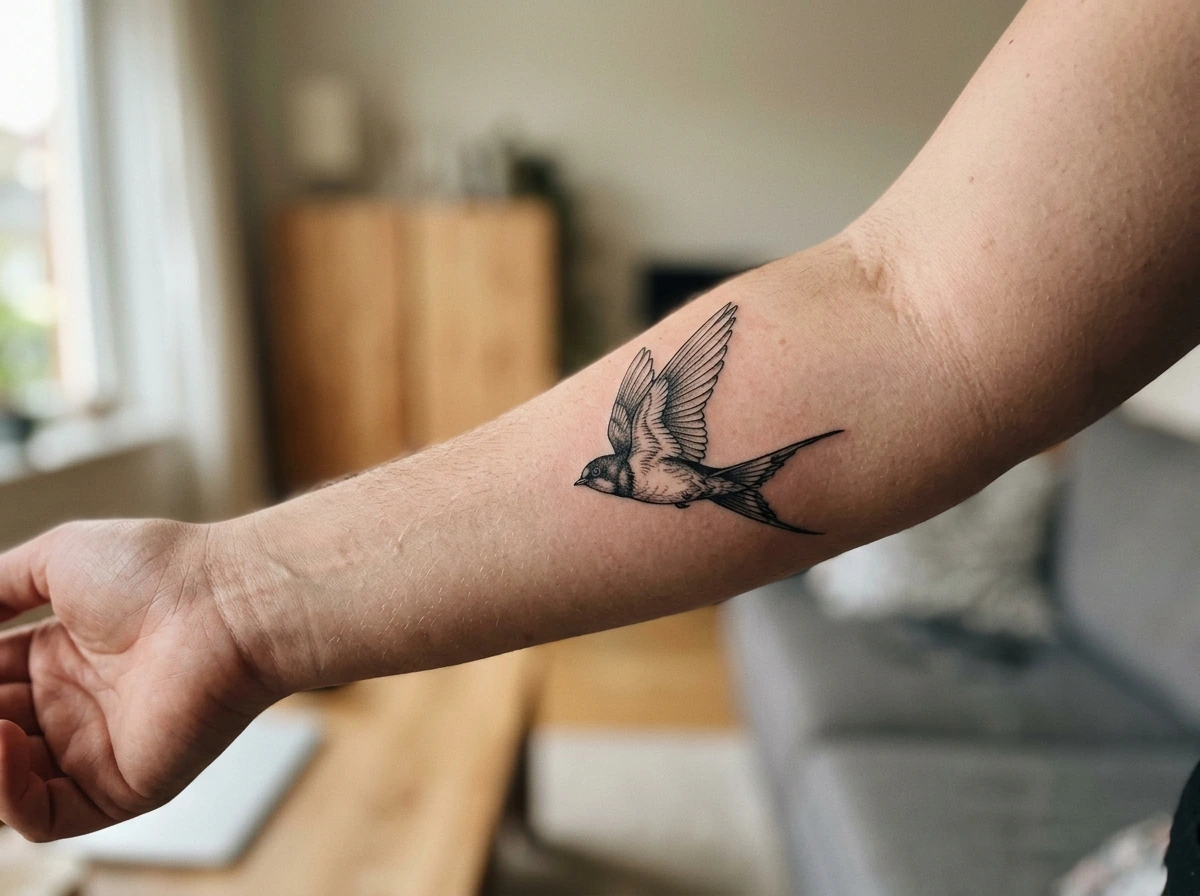
The swallow tattoo is one of the most documented cases of animal symbolism becoming a living tradition. In maritime culture, a sailor earned the right to tattoo a swallow on their body after completing 5,000 nautical miles at sea. A second swallow marked 10,000 miles. The symbolism was explicit: the swallow was believed to guide a sailor's soul home if he died at sea, and the tattoo expressed both pride in the distance traveled and hope of safe return to loved ones. The National WWII Museum documents this tradition as a genuine piece of living naval culture. Today, swallow tattoos carry that same layered meaning: accomplishment, loyalty, and the promise of return.
Swallow idioms and expressions worth knowing
The most well-known expression connected to swallows is the proverb "One swallow does not make a spring" (sometimes rendered as "one swallow does not make a summer"). It originates from Aristotle's Nicomachean Ethics and has been absorbed into virtually every European language. The meaning is straightforward: a single positive sign is not enough to confirm a trend, or a single good day does not guarantee a good season. In modern use, it is a caution against drawing large conclusions from limited evidence. You will hear it in business, politics, and everyday conversation whenever someone is warned not to get overexcited by an early promising result.
Weather-related swallow lore produced its own set of vernacular expressions. "Swallows flying low" became a shorthand for incoming rain in English and other European folk speech, so much so that the phrase carries automatic weather-forecasting connotations even today. The verb "swallow" also generates its own idioms ("swallow your pride," "a bitter pill to swallow"), but those belong to the completely separate etymological line discussed above and have nothing to do with the bird.
In literary and poetic tradition, swallows appear as shorthand for the turning of seasons and the end of absence. References to swallows in poetry almost always signal either arrival (spring is here, the beloved returns) or departure (summer is ending, loss is coming). If you encounter a swallow reference in a poem or novel, those are the two registers to consider first.
How to interpret swallow symbolism in real situations
Symbolic meaning is only useful if you can apply it. Here is how to think about swallows in the specific contexts you are most likely to encounter them.
Seeing swallows near your home
In virtually every tradition that has an opinion on the matter, a swallow choosing to nest on or near your home is considered good luck. Chinese tradition specifically frames it as auspicious for new couples and for the household's prosperity. European folk tradition says the same. If swallows are nesting near you and you want to read that symbolically, the consensus across cultures is uniformly positive: expect good fortune, spring energy, and a productive season. On a practical level, it also means you have good insect habitat nearby, which is its own kind of ecological good news.
Swallows in dreams
Dream interpretation traditions consistently associate swallows with hope, arrival, and the resolution of a period of waiting. If a swallow appears in a dream, the most consistent reading across compiled dream symbolism is that something hoped for is approaching, or that a transition you have been anticipating is about to complete. Given the bird's actual behavioral profile (long migration, reliable return, homing precision), this reading makes intuitive sense as a metaphor. A swallow in flight usually emphasizes freedom or the journey itself; a swallow returning to a nest tends to emphasize homecoming and resolution.
Swallow tattoos and body art
If you are getting a swallow tattoo or interpreting one, the meaning is well-established and multi-layered. At its core, a swallow tattoo says: I will find my way home, and the people I love will find their way back to me. It carries connotations of travel completed, distance overcome, and loyalty maintained across separation. Paired swallows typically emphasize love and partnership. A single swallow can represent a personal milestone (in the sailor tradition, that first 5,000 miles) or simply the aspiration for safe passage. The symbolism is stable enough that you do not need to explain it: most people who recognize swallow imagery already carry an intuitive sense of what it means.
Swallows in literature and art
When you encounter swallows in poetry, fiction, or visual art, use the symbolic core as your interpretive anchor. Swallows signal spring and renewal when a story or poem is moving toward hope or resolution. They signal loss or longing when they appear at the moment of departure (the swallows are leaving, summer is ending, something beloved is going away). In classical contexts, particularly Greek and Roman literature, a swallow reference may also invoke transformation or metamorphosis via the Philomela myth. When you encounter swallows in poetry, fiction, or visual art, use the symbolic core as your interpretive anchor. Swallows signal spring and renewal when a story or poem is moving toward hope or resolution. They signal loss or longing when they appear at the moment of departure (the swallows are leaving, summer is ending, something beloved is going away). In classical contexts, particularly Greek and Roman literature, a swallow reference may also invoke transformation or metamorphosis via the Philomela myth. The swan bird carries its own distinct symbolic register (grace, mortality, transcendence), and it is worth keeping swallow and swan symbolism separate when reading: they are not interchangeable., and it is worth keeping swallow and swan symbolism separate when reading: they are not interchangeable.
A practical checklist for interpreting swallow meaning
- Identify the context: real life (bird near your home), dream, tattoo, or literary reference.
- Apply the core meaning: hope, safe return, loyalty, spring arrival, and good fortune are the stable cross-cultural constants.
- Check for directional symbolism: is the swallow arriving (positive, hope, return) or departing (loss, ending, transition)?
- Consider the regional tradition if relevant: Chinese context emphasizes prosperity and family; European context emphasizes spring and love; maritime context emphasizes travel and homecoming.
- For idioms, default to 'One swallow does not make a spring' as the most common swallow proverb, meaning do not read too much into a single promising sign.
- For literary references, check for Philomela myth connections if the text is classical or if transformation is a theme.
FAQ
If I saw a swallow, how can I tell whether the message is about arrival/homecoming or about travel itself?
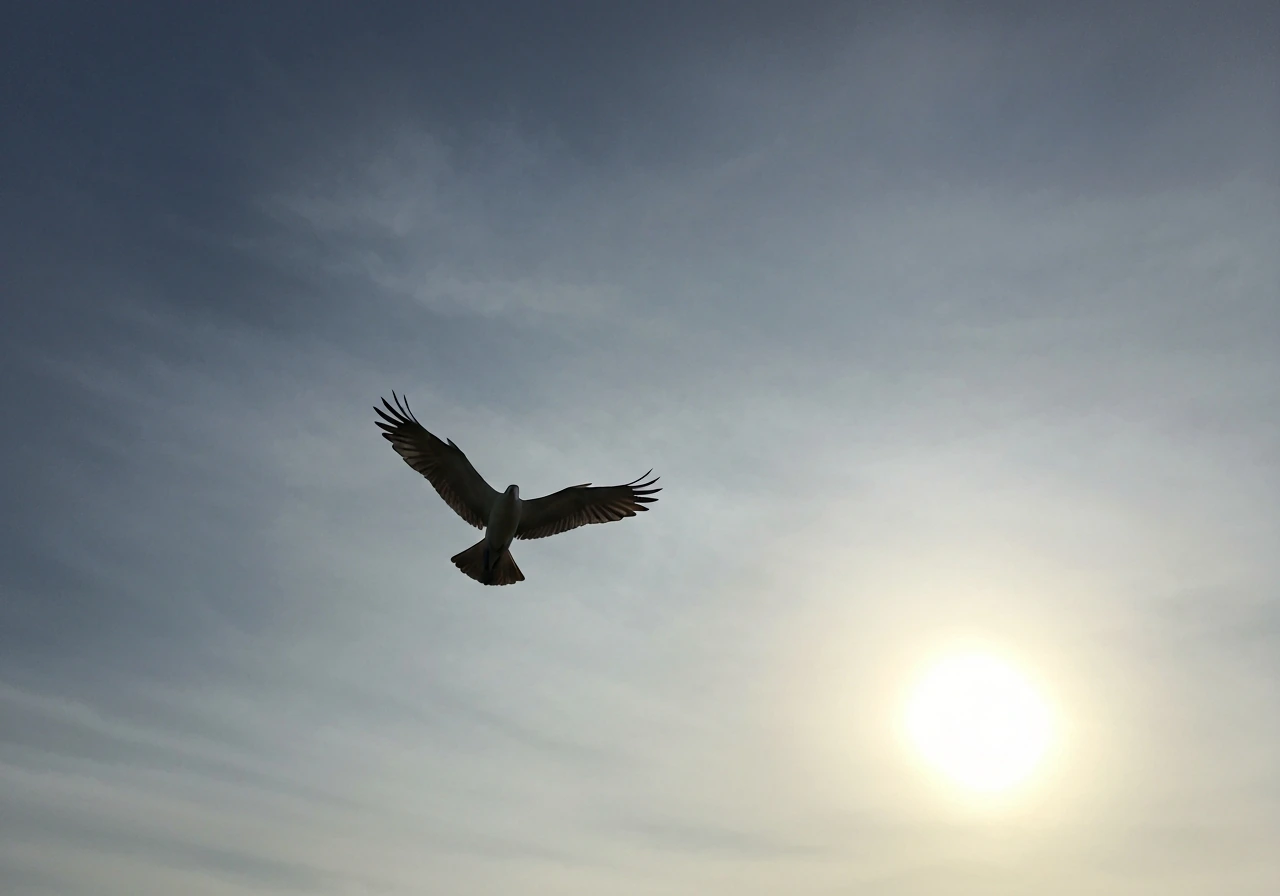
Use the posture. A swallow near buildings or a nest reads as homecoming, resolution, and safe return. A swallow in open flight reads more like the journey, freedom, and momentum toward a destination, with the focus on “passing through” rather than “reaching.”
Does the “meaning of swallow bird” change depending on the species, like barn swallow versus cliff swallow?
Symbolism is mostly consistent across swallow types because the core traits, migration and homing to the same nest site, stay the same. Species differences matter for practical symbolism (for example, cliff swallows strongly connect to the Capistrano-style return celebrations), but the broad themes of hope, loyalty, and return generally remain stable.
What should I do if the swallow meaning I’m getting feels negative or frightening?
Treat it as a sign of transition rather than a fixed positive outcome. Swallows can symbolize a passage between phases, so a “bad” feeling can reflect letting go (departure, ending, change). The best check is whether the rest of your situation also involves an ending and a next step, not whether the omen guarantees comfort.
I read that swifts can be confused with swallows. Can that mix-up affect interpretation?
Yes, in practical symbol reading. If you saw a small bird with very long scythe-like wings that rarely lands, it may be a swift, and traditional swallow meanings tied to nesting and return may not fit as well. When the bird is clearly landing, perching, or nesting near a home, swallow symbolism is the more accurate match.
Does a swallow tattoo always mean travel, or can it be only about love and loyalty?
It can be either. The article’s baseline meaning includes safe return, but pairing swallows is the strongest indicator for love and partnership. If the tattoo includes only one swallow, it is more often read as personal progress, a milestone, or the wish for safe passage rather than a direct “relationship” statement.
If a swallow nests on my property, is it only symbolic, or does it have real-life implications I should consider?
Real-life implications matter. Nesting usually means you have abundant flying insects nearby, which is good for local biodiversity, but you may also get droppings under the nest. If it’s under eaves or a porch, plan for cleaning or choose a safe, non-harmful way to protect the area while leaving the nest intact.
Is “one swallow does not make a spring” a warning against hope, or can it coexist with swallow symbolism?
It can coexist. The proverb is not “don’t hope,” it’s “don’t over-commit based on a single early signal.” So if you used the swallow symbol for hope, you can still move forward cautiously, validate results over time, and avoid assuming everything will resolve immediately.
Are dream swallow interpretations different if the dream focuses on feeding, landing, or building a nest?
Often, yes. Feeding or active foraging commonly emphasizes sustained effort and ongoing progress. Landing near a home or watching the bird return to a specific spot leans toward closure and resolution of a waiting period. Nest-building imagery tends to point to establishing stability, routines, or a new “home base” in your life.
What’s a good way to read swallow symbolism in art or poetry when the context is ambiguous?
Start with the seasonal direction. If the surrounding imagery signals beginning, light, and recurrence, interpret it as spring, renewal, and hoped-for return. If the scene signals closing, fading, departure, or absence, read it as longing or the end of a phase, with the swallow as a marker of transition.
Can swallow symbolism conflict with other bird symbolism, like swans?
Yes, and the safest rule is to keep the “bird identity” separate. Swallows are tied to return, transition, and homing, while swans more often represent grace, mortality, or transcendence. If your artwork mixes the two, treat them as different registers, not interchangeable meanings.