The swan means different things depending entirely on where you encountered it. Saw one gliding across a lake? That's one conversation. Dreamed about one? Different interpretation. Came across 'swan song' in a sentence and weren't sure what it meant? That's a third path entirely. This guide covers all of them, helps you figure out which one applies to you, and gives you a direct answer you can use right away.
Swan Bird Meaning: Symbolism, Myths, Dreams, and Phrases

Marcus Blackwell
23 Mar 2026
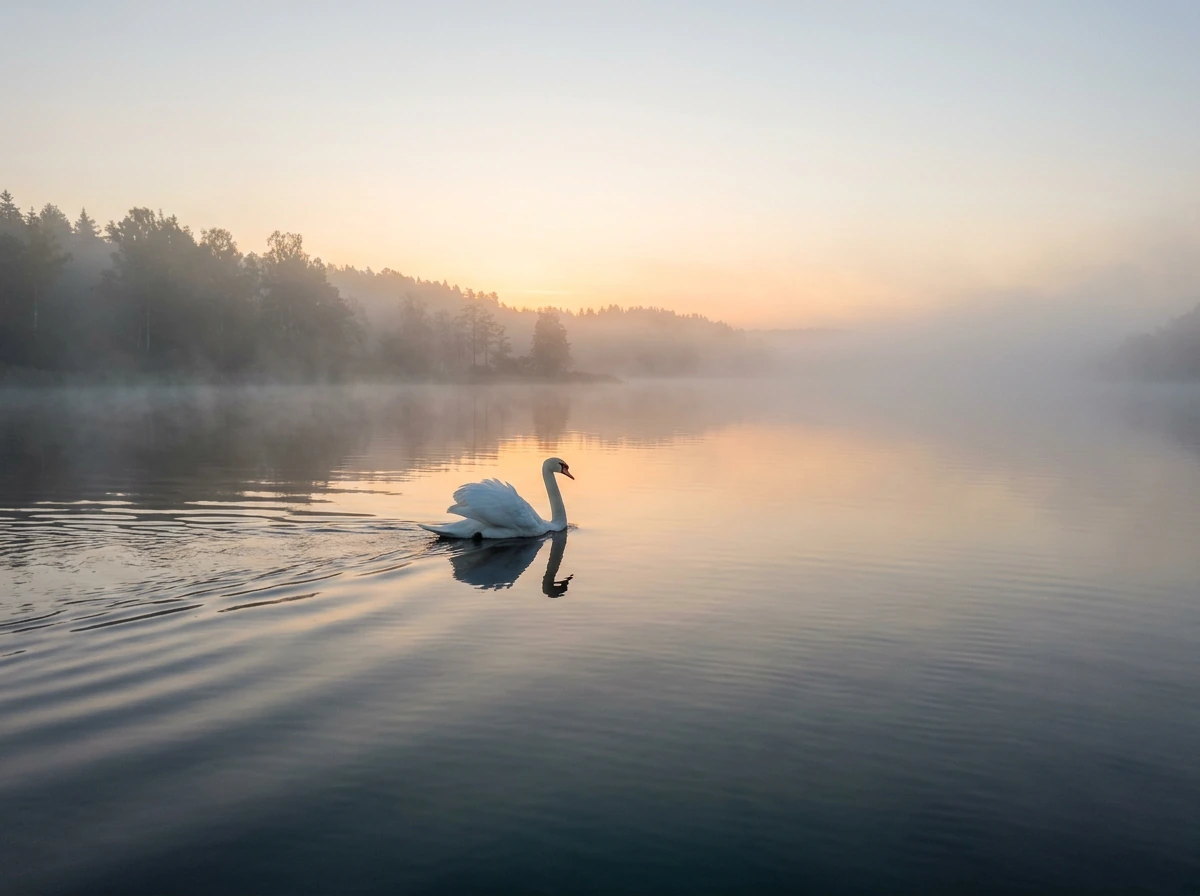
What a swan actually is (the quick real-world version)
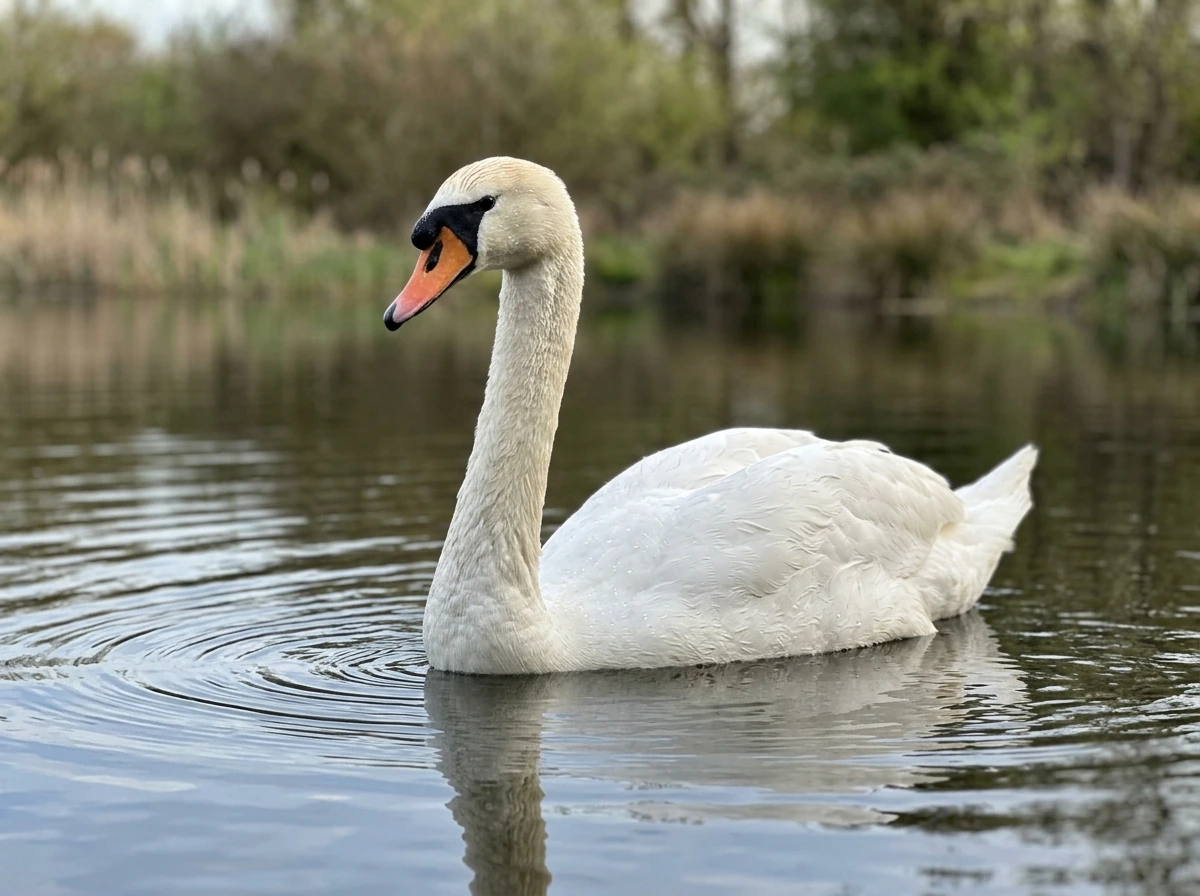
Swans are large waterbirds in the family Anatidae, the same family as ducks and geese. The most common species people encounter include the mute swan (Cygnus olor), the trumpeter swan, and the whooper swan. Mute swans are the classic postcard birds with the curved neck and orange bill. They're native to Eurasia but were introduced to North America in the early 1900s, where they've since become invasive in many areas. Tundra swans (Cygnus columbianus) are a North American native you're more likely to see in the wild: they breed on Arctic tundra and migrate south to the Atlantic and Pacific coasts of the United States each winter, typically using large lakes and wetland areas where submerged aquatic vegetation is plentiful.
If you just want to know what kind of bird you saw: swans are the largest birds you'll spot on open water, almost always white (except for the Australian black swan), with that unmistakable long neck and slow, deliberate movement. Their diet is more than 95% submerged plant material, which is why you find them in shallow, vegetated water rather than open ocean or fast rivers.
Core swan symbolism across cultures
Across most of the world's cultural traditions, swans cluster around a consistent set of meanings. Grace and beauty are the most universal: the swan's posture and movement made it a natural shorthand for elegance long before anyone wrote it down. Purity shows up almost as often, tied directly to the bird's white plumage. Love and lasting commitment come from the swan's well-documented pair bonding behavior. And transformation, which is a deeper thread that runs through mythology specifically, connects to the swan's ability to move between water, land, and air.
Less cheerful but equally real: in certain traditions, swans carry associations with mourning, endings, and the boundary between the living world and whatever lies beyond it. This isn't the dominant reading in most Western contexts, but it's important to know if you're drawing on Finnish, Celtic, or other Northern European sources. The meaning shifts significantly depending on the tradition.
| Cultural Tradition | Primary Swan Meaning | Notable Nuance |
|---|---|---|
| Western/European (general) | Grace, beauty, love, purity | Strongly positive; swan as ideal |
| Greek mythology | Divine transformation, desire | Zeus as swan; Leda myth |
| Finnish mythology (Kalevala) | Death, the underworld | Swan of Tuonela guards the realm of the dead |
| Celtic traditions | Transformation, otherworld travel | Shape-shifting swan maidens |
| Hindu tradition | Wisdom, spiritual discernment | The hamsa/swan as symbol of the soul |
| Modern Western (secular) | Rarity, elegance, unexpected events | Includes 'black swan' in finance/risk theory |
Swan meanings in mythology and folklore
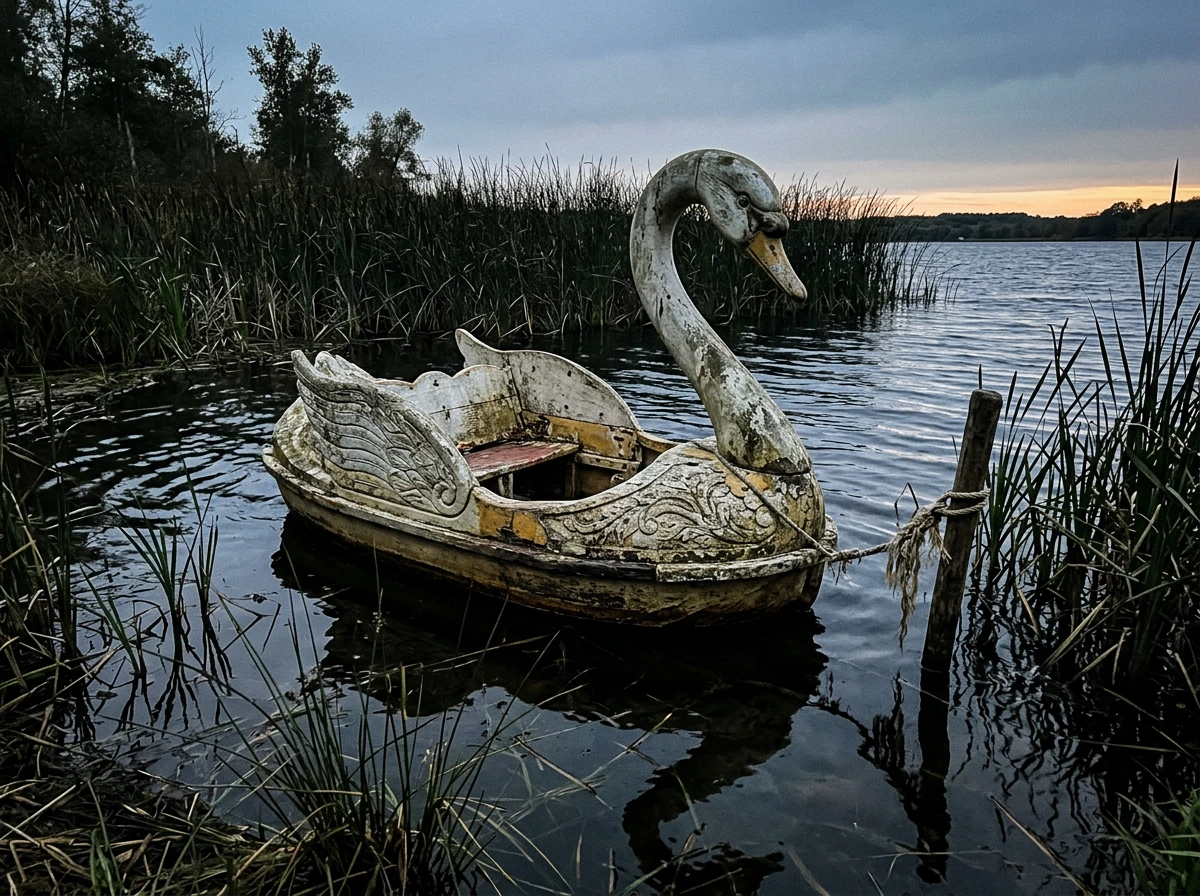
Greek mythology gives us one of the most famous swan stories: Zeus transforming into a swan to approach Leda. This myth became a major subject in art for centuries and is referenced repeatedly in Western literature. The swan here represents divine disguise, desire, and the unpredictable nature of divine intervention in human life. It's a story about power and transformation in the same breath.
Finnish mythology takes the swan somewhere much darker. In the Kalevala, the Swan of Tuonela swims on the black river surrounding Tuonela, the Finnish realm of the dead. Lemminkäinen's task of hunting this swan is one of the impossible challenges that ultimately leads to his death. Here the swan isn't elegant or romantic: it's a guardian of the boundary between life and death. Jean Sibelius later turned this image into one of his most famous orchestral tone poems, which is how it filtered into wider European awareness.
The swan maiden motif (classified as fairy tale type ATU 400) appears across Eurasia and parts of the Americas. The premise is consistent: a supernatural woman shifts between human and swan form using a feathered cloak or magical garment. A mortal man typically steals the cloak, trapping her in human form and taking her as a wife. She eventually recovers her cloak and returns to the sky. The swan maiden story is fundamentally about freedom, the cost of captivity, and transformation as identity rather than disguise. If you've encountered this in a literary or dream context, those themes are what the swan is pointing toward.
What a swan means in dreams and spiritual contexts
Dream interpretation isn't an exact science, but there are consistent patterns in how swans appear symbolically. A white swan gliding calmly most often represents grace under pressure, emotional clarity, or a relationship that feels stable and true. If the swan in your dream was in distress, trapped, or struggling, the interpretation typically shifts toward themes of restricted freedom or a situation where your natural self is being suppressed.
Color matters more than most people realize. A black swan in a dream carries a different charge from a white one. Given the cultural weight the black swan now carries (more on that in the idioms section), a black swan in a dream context can point toward something unexpected or disruptive on the horizon: not necessarily negative, but significant and surprising. A pair of swans almost universally points toward love, partnership, or a bond you value.
In spiritual and ritual contexts, the swan tends to represent the soul's journey, transitions between states of being, and inner transformation. Hindu traditions use the hamsa (often translated as swan or goose) as a symbol of the soul and of spiritual discernment: the ability to separate the essential from the inessential, the way a swan was mythologically said to separate milk from water. If you're working within a spiritual framework that uses animal totems or spirit guides, the swan typically signals that you're in or approaching a period of significant personal change.
Swans in art, literature, and pop culture
The most prominent example in Western art is almost certainly Tchaikovsky's Swan Lake, first performed in 1877. The plot uses transformation as its central mechanism: the sorcerer Von Rothbart curses Odette and her companions, turning them into swans by day and releasing them to human form only at night. Swan Lake crystallized the swan as a symbol of enchantment, doomed beauty, and love that struggles against supernatural forces. Its imagery has become so embedded in Western culture that 'swan lake moment' has near-universal recognition as shorthand for graceful tragedy.
In literature, the Nicaraguan poet Rubén Darío used the swan as a central symbol of artistic inspiration and beauty in his modernist movement, drawing a line from the Greek myth of Leda all the way through Wagner's Lohengrin to the idea of the swan as the artist's muse. This is a less commonly known reference but worth flagging if you're reading Latin American modernist poetry and wondering why swans keep appearing.
In contemporary visual culture, the swan still reads as elegance and purity in fashion and design, but it's also been reclaimed as a symbol of transformation specifically through the 'ugly duckling' narrative (which is technically about a swan, not a duck). That story, from Hans Christian Andersen, gave the swan permanent residence in the cultural vocabulary of self-discovery and late-blooming identity.
Swan idioms and phrases, decoded

This is where a lot of searches for 'swan meaning' actually end up, so let's go through the main ones directly.
Swan song
A 'swan song' is a final performance, farewell gesture, or last great work before someone leaves or dies. The phrase comes from an ancient belief that swans, which are largely silent during their lives, sing one beautiful song just before death. The belief was already being disputed in antiquity: Pliny the Elder called it false. Despite that, the metaphor survived intact. The phrase entered English formally around the 1830s. When someone says 'this album was her swan song,' they mean it was her final contribution before retiring or dying. The phrase carries a mix of beauty and finality: bittersweet, not purely sad.
Black swan
In modern usage, 'black swan' is almost always a reference to Nassim Nicholas Taleb's concept from his 2007 book: a highly improbable event that carries massive consequences and is rationalized in hindsight as having been predictable. A 'black swan event' is unexpected, difficult to prepare for, and game-changing. Financial crises, pandemics, and technological disruptions get called black swan events. If you encountered this phrase in a news or finance context, that's the meaning. It has nothing to do with the bird's symbolism in mythology, though the original European shock at discovering that black swans actually existed in Australia (after centuries of assuming all swans were white) is exactly what inspired the metaphor.
Ugly duckling
Though the protagonist of Andersen's story is literally a young swan who doesn't know what he is, 'ugly duckling' has become its own idiom meaning someone who appears unremarkable or awkward early on but develops into something remarkable. It's used in business, education, sports, and everyday conversation. When people say someone was 'the ugly duckling of the group,' they mean they were overlooked before their potential became obvious.
Swan lake (as a phrase)
Beyond the ballet, 'swan lake moment' or 'swan lake situation' has informal usage meaning a scenario of graceful, tragic beauty: something visually or emotionally perfect that is simultaneously doomed. It's not a formal idiom with a dictionary entry, but it's used with enough consistency in cultural commentary to be worth recognizing.
How to figure out what the swan means for your specific situation
The fastest way to get the right interpretation is to identify your context first, then apply the relevant meaning. Here's how to do that in practice.
- Ask: did I see a real swan, or is this symbolic? If you saw a swan in nature, the practical answer is that it's a wild bird in its habitat. The symbolic layer is optional and personal. If the sighting felt significant or you're spiritually inclined, use the transformation and grace themes as a starting point.
- If it was a dream: note the color (white vs. black), the swan's behavior (calm, distressed, flying, paired), and the setting (open water, enclosed space, darkness). Calm white swan on open water points toward clarity and love. Black swan points toward surprise or disruption. Trapped or struggling swan points toward restricted freedom or suppressed identity.
- If it was a phrase: identify which phrase. 'Swan song' means a final, beautiful farewell. 'Black swan' means a rare, high-impact, unpredictable event. 'Ugly duckling' means late-blooming potential. None of these overlap.
- If it was a mythological or literary reference: identify the tradition. Greek swan = divine transformation and desire. Finnish swan = the realm of death. Swan maiden folklore = freedom, identity, and captivity. Ballet/Romantic literature = enchanted tragedy.
- Note what the swan was doing. A swan in flight symbolizes freedom and transcendence in most traditions. A swan on water symbolizes serenity and emotional depth. A swan with cygnets points toward nurturing and protection. An aggressive swan (and mute swans genuinely can be aggressive) may point toward defending something precious.
One thing worth adding: if you came here because you're trying to decode a swan reference in a text, poem, or song and it still doesn't fit any of the above categories cleanly, the detail to focus on is whether the swan is paired with other symbols. Swans paired with water or moonlight lean romantic and emotional. Swans paired with darkness, rivers, or death imagery lean toward the Finnish/Celtic underworld associations. Swans paired with music or song almost always invoke the swan song tradition, even if the phrase isn't used explicitly.
If you're exploring broader bird symbolism and want to compare how swans stack up against other birds with similar associations, the meanings behind swallows and other waterbirds follow some overlapping themes around freedom and transition, though each bird has its own distinct symbolic lane. If you're exploring broader bird symbolism and want to compare how swans stack up against other birds like swallowtail bird meaning, the meanings behind waterbirds often overlap on themes of freedom and transition. If you meant the surfin bird meaning specifically, it helps to look at the phrase as it appears in lyrics or internet slang to get the right vibe. ...Swans stand apart primarily because of the transformation thread: very few other birds carry that particular weight across so many unconnected cultural traditions. <a data-article-id="C3A0C1C5-29A5-4F0B-B151-5DDEC228971E">swallowtail bird meaning</a>. swallow tail bird meaning. swiss bird meaning
FAQ
If I see a swan in real life, how can I tell whether it’s a “grace and purity” sign or something like mourning or an underworld boundary from the article?
Use surrounding cues, not the bird alone. If the scene is calm and daylight, the reading usually stays with grace, love, and emotional clarity. If you encounter swans at night, near dark water or cemeteries, or in a context tied to rites of passage, then underworld and boundary meanings are more likely. Also note your own intent, if you were already thinking about endings or closure, the interpretation tends to follow that theme.
What does it mean if the swan I noticed was aggressive, chasing, or fighting instead of gliding peacefully?
Aggression usually points to disrupted pairing or disrupted boundaries rather than pure elegance. Swans are territorial around nesting and mates, so symbolically it often reflects conflict over loyalty, protection of what you value, or a need to set limits. In dream or interpretation work, a “struggling swan” similarly shifts from grace to constrained freedom or a situation pressing on your natural behavior.
Does a single swan mean “love,” or is a pair required for that symbolism?
A pair of swans is the clearest, near-universal signal for love and partnership. A single swan can still relate to love, but it more often leans toward individual refinement, emotional clarity, or transformation in your own identity. If your context includes a wedding, reunion, or mutual commitment language, then even one swan can be read as relational, just less directly than a pair.
How should I interpret “swan bird meaning” when the swan is clearly not white, for example a dark or shadowy swan in a story or dream?
Treat color as a tone-setter. A black or shadow-like swan tends to flag disruption, surprise, or a major change you did not expect, not necessarily doom. If the setting is also dark or watery, that combination can merge two threads, transformation plus boundary or underworld imagery. If you only get a vague silhouette, lean toward transformation rather than a specific omen.
What if my dream has multiple swans, not just one or a pair, and they’re moving in a formation?
Multiple swans often expand the theme from romance to a group process. If they move together smoothly, the meaning tends to be collective harmony, shared values, or a stable path for change. If the group looks scattered, trapped, or in distress, the emphasis becomes restricted freedom or misalignment in relationships and roles.
What does it mean when a swan is “stuck” somewhere, like on land, on ice, or unable to reach water?
A stuck swan usually indicates identity or emotional imbalance, because swans symbolize movement between states (water, land, air). Symbolically it can mean you are in a phase where your “natural element” is unavailable, or you are trying to transform while your environment still restricts you. In interpretation practice, pair this with what stopped it, ice can suggest emotional freezing, and land can suggest forced practicality over emotion.
If I’m trying to decode “swan” in a poem or song, how do I avoid mixing up “swan song” with the myth or with dreams?
Check whether the text signals finality, retirement, death, or a last performance. If it does, prioritize the “swan song” meaning. If it focuses on transformation, disguise, desire, or an enchantment theme, lean toward mythic transformation. If it uses emotional states and inner struggle language, it likely aligns with dream-style themes like grace under pressure or restricted freedom.
Is “swan lake moment” always romantic tragedy, or can it apply to other kinds of situations?
It can apply beyond romance, but the core is a specific flavor: something looks perfect, graceful, or emotionally striking, then reveals a doomed or unstable underside. If the scene is more comedic than tragic, it will usually not fit well. If it includes beauty plus inevitability, that’s when “swan lake” language tends to land.
What does “hamsa” mean in the context of swan symbolism, and does it change how I should interpret the swan bird meaning for spiritual work?
In that framework, the point is discernment, separating the essential from the inessential, not just beauty or romance. If you are reading swan symbolism spiritually, treat the swan as a reminder to refine perception, choose what’s truly nourishing, and release what’s ornamental. That can shift your interpretation from “someone is transforming” to “you are learning what to prioritize.”
If I saw a swan and immediately looked up “swan bird meaning,” what’s the fastest decision method for the correct interpretation?
First identify the category by context: real-world encounter, dream imagery, literature or music phrase, or idiom reference. Second, look for the anchor details the article suggests: pairing, color, whether it’s calm or distressed, and what it’s paired with (water or moonlight for romantic mood, dark rivers or death imagery for boundary themes, music or song for the “swan song” tradition). Then select the interpretation that matches those anchors, not the most general definition.
Next Article
Swallow Tail Bird Meaning: Symbolism, Disambiguation, and More
Meaning of swallow tail bird: symbolism of swallow-like tails plus disambiguation from swallowtail butterfly and bird sp