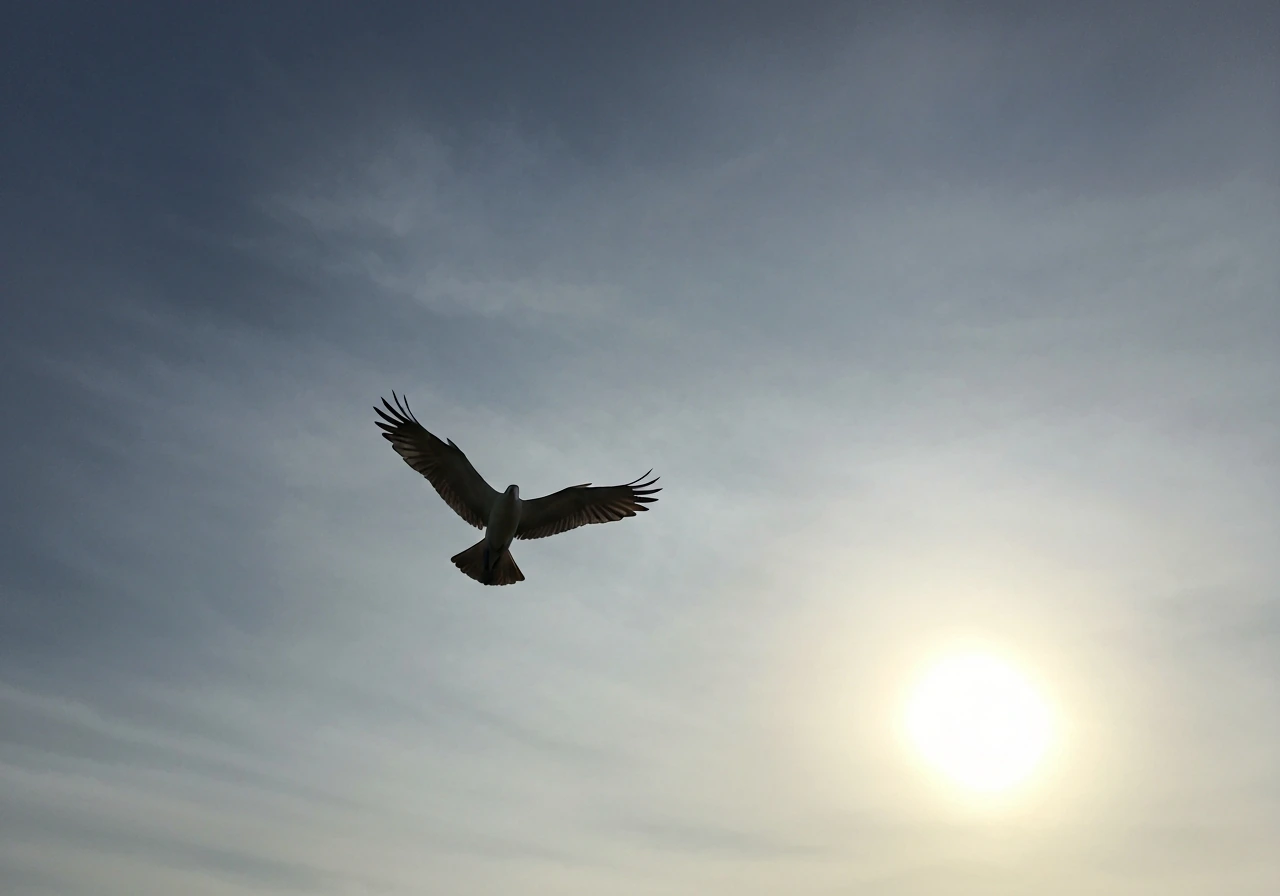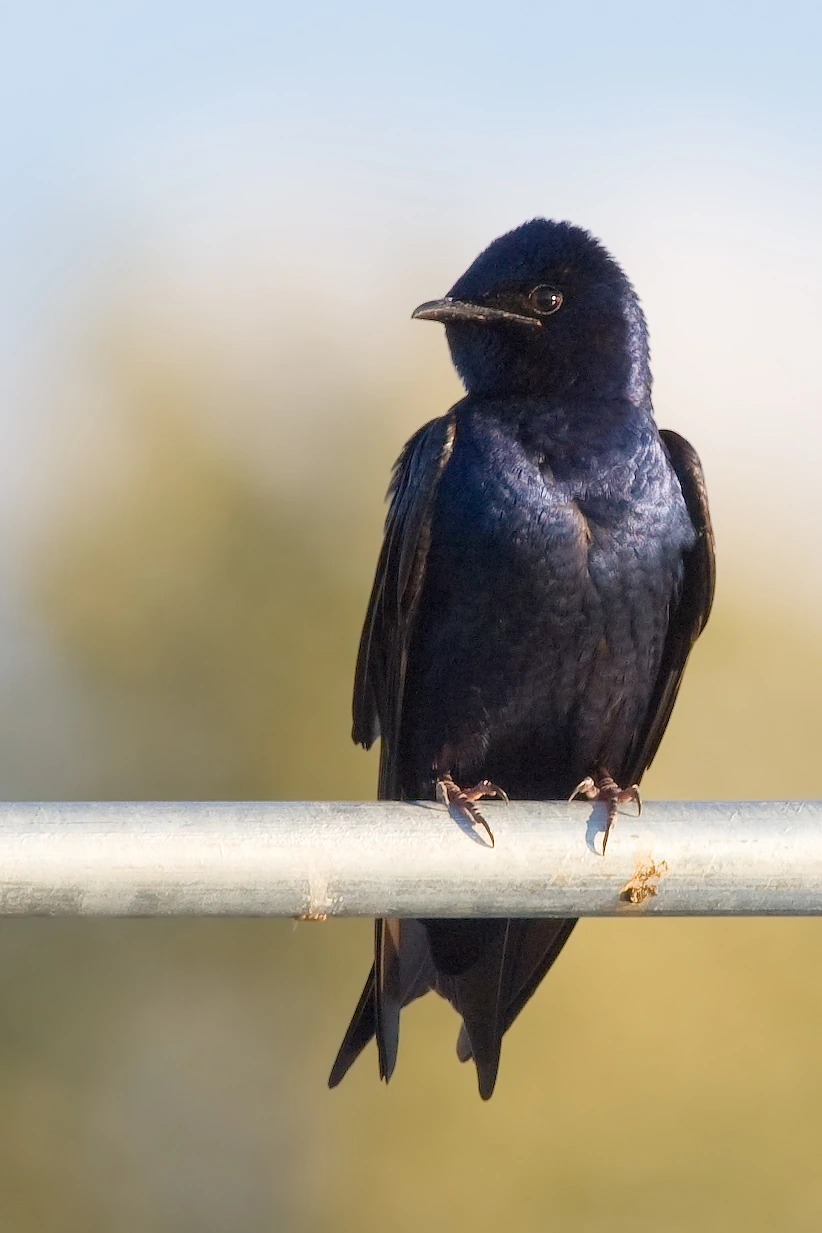
When a bird of prey hovers, swoops, or soars past you, the most immediate explanation is a practical one: a raptor is hunting, riding thermals, or moving through its territory. A kestrel frozen in mid-air above a roadside verge is scanning the ground for voles. A peregrine stooping out of a grey sky is executing one of the most aerodynamically refined attacks in the animal kingdom. That ecological reality is the foundation. But humans have been watching raptors for tens of thousands of years, and every culture that has done so has layered meaning onto the spectacle. Both things can be true at once: the bird is doing what birds do, and the encounter can still feel significant to you. This article walks through the science first, then the symbolism, and ends with practical guidance on what to do when it happens.
Hovering Bird of Prey Pass By You Meaning: Symbol, Safety & ID

What the bird is actually doing: hovering, swooping, and soaring explained
Three behaviors tend to stop people in their tracks, and they are distinct enough that it is worth naming them clearly before anything else.
Hovering (and wind-kiting)
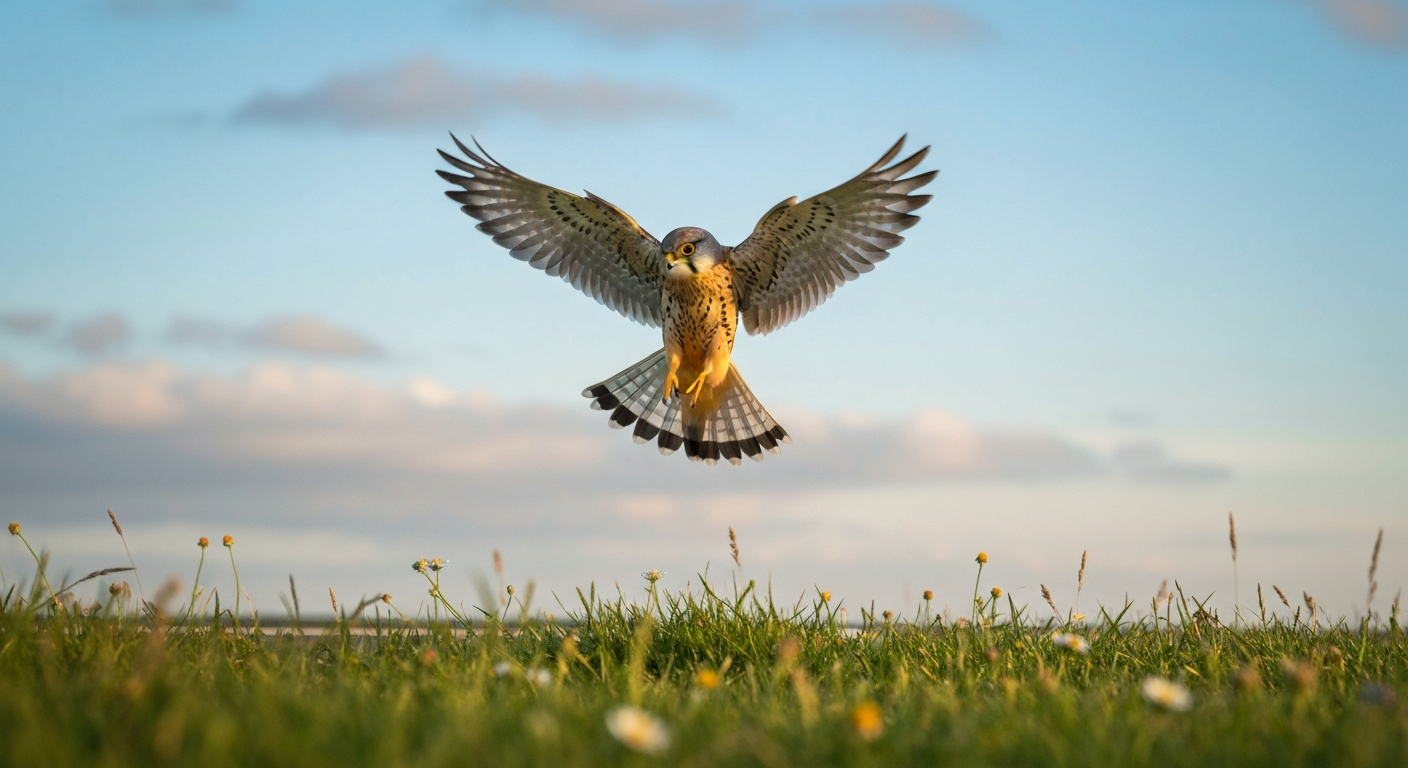
Hovering means the bird holds a fixed position in the air while actively scanning the ground below. Kestrels do this two ways: pure powered hovering (rapid wingbeats, tail spread wide, head eerily still) and wind-kiting, where they lean into a headwind and let it do most of the work. Cornell Lab All About Birds: American Kestrels hover both by rapid wingbeats and by wind‑kiting blank" rel="noopener noreferrer">Cornell Lab All About Birds: American Kestrels hover both by rapid wingbeats and by wind‑kiting.. Both approaches serve the same purpose: getting a stable viewing platform above potential prey. Sustained hovering is energetically expensive, which is why kestrels are choosy about when they use it. Studies of American kestrels show that hovering produces a higher prey-detection rate than perch-hunting, but it burns more energy, so birds switch between the two strategies depending on wind conditions and prey density.
Stooping and swooping
A stoop is a steep, high-speed controlled dive used primarily by falcons to strike aerial prey. The peregrine falcon has become the textbook example: it climbs to altitude, tucks its wings, and drops at speeds that can exceed 180 mph. Biomechanics research shows that stooping optimizes interception probability at high speeds by following a specific curved trajectory, not a straight line. An osprey's plunge-dive is a related but different motion: it hovers briefly to locate a fish, then drops feet-first into water, sometimes fully submerging. Both behaviors look dramatic from the ground and are easy to confuse, but the target (aerial prey versus water surface) and the bird's body angle usually distinguish them.
Soaring
Soaring is sustained flight using rising air rather than muscle power. Birds like vultures, eagles, and most buteo hawks circle inside thermals (columns of warm air rising from sun-heated ground) to gain altitude with minimal flapping, then glide toward the next thermal. Slope soaring and dynamic soaring use wind deflected by ridges or waves as the energy source instead. The result looks effortless because, physiologically, it largely is: a soaring vulture expends very little more energy than sitting still. This is a strategy for covering large distances economically, which is why soaring raptors are so often seen during migration.
Hover vs. soar vs. swoop: a quick comparison
| Behavior | What it looks like | Primary purpose | Who does it most | Energy cost |
|---|---|---|---|---|
| Hovering / kiting | Bird holds fixed position, wings beating or spread into wind, head still | Locate and target ground prey | Kestrels, White-tailed Kite | High (powered hover) to moderate (wind-kiting) |
| Stooping / swooping | Steep, fast dive with wings partly or fully tucked; feet-first plunge for osprey | Strike aerial prey or fish at speed | Peregrine, Prairie Falcon, Osprey, Hobby | High burst; brief duration |
| Soaring | Wide circles on flat or barely moving wings, gradual altitude gain | Energy-efficient travel and thermal climbing | Buteos, eagles, vultures | Very low — exploits rising air |
Identifying what you saw: the common species
Knowing which bird passed you sharpens both the ecological and symbolic reading. Here are the species most likely to be responsible, and the quickest way to tell them apart in the field.
American and Common Kestrel
The world's most dedicated hoverers. Both the American kestrel (North America) and the Common kestrel (Europe, Asia, Africa) are small falcons with long tails and pointed wings. The American male has blue-grey wings; the female is rufous-barred. The Common kestrel male has a grey head and chestnut back. Both species are frequently seen hovering over open grassland, road verges, and rough pasture. The call is a sharp, high-pitched 'killy-killy-killy' (American) or rapid 'ki-ki-ki' series (Common). If you saw a small falcon frozen in mid-air over a field, this is almost certainly your bird.
Peregrine Falcon
Larger and stockier than a kestrel, with distinctive slate-grey upperparts, a pale chest with dark barring, and a bold dark 'moustache' mark on the face. In level flight the wingbeats are stiff and rapid; when stooping, the wings tuck tight and the bird becomes a teardrop shape. Found on every continent except Antarctica, peregrines nest on cliffs and tall buildings in cities. A fast, nearly vertical dive from altitude is their signature. blank" rel="noopener noreferrer">The call is a harsh, scraping 'kek-kek-kek' when alarmed.
Osprey
Medium to large, with a very distinctive M-shaped or bent-wing silhouette in flight. White underparts with a dark wrist patch, a dark eye stripe, and pale head make it hard to confuse once you know the jizz. Ospreys are almost always near water (coasts, rivers, lakes). They hover briefly before a feet-first plunge-dive to catch fish just below the surface. The call is a series of short, high whistles: 'kek-kek-kek' or a longer piping alarm.
Red-tailed Hawk and related buteos
The classic soarer across North American open country. Buteo shape means broad, rounded wings and a short, wide tail, built for circling in thermals rather than speed. The adult Red-tailed Hawk's brick-red tail (visible from above or in good light) is diagnostic, though juveniles lack it. Their drawn-out, descending scream is the raptor call that Hollywood puts on every eagle in every film. In Europe the Common Buzzard fills the same ecological niche and looks broadly similar. If you watched a large hawk turning lazy circles without flapping, this is the most likely candidate in North America.
White-tailed Kite and similar kites
The White-tailed Kite (Americas) and the Black-winged Kite (Old World) are elegant, pale raptors that hover with almost tern-like refinement. Mostly white with grey upper parts and black shoulder patches, they hover lower and more gracefully than kestrels and are often seen over marshes and agricultural land. If the hovering bird looked almost white and floated rather than beat hard, a kite is worth considering.
Why raptors hover, swoop, and soar: the ecology behind the spectacle
Birds of prey are not performing for an audience. Each of these flight modes solves a specific problem in energy management and prey capture.
- Hovering for hunting: A hovering kestrel gets a stable, elevated view of small mammals moving through grass. The height lets it spot prey movement from above; the stillness prevents the shadow-flicker that would alert a vole. The trade-off is energy — hovering costs more than perching, so kestrels use it most when wind allows kiting or when prey density is high enough to justify the cost.
- Stooping for capture: A falcon stooping from height reaches speeds where almost no prey can out-maneuver it. The steep approach angle and curved interception trajectory maximize the probability of a strike before the target can react. It is essentially an optimization problem in physics that evolution solved over millions of years.
- Territory and display: Some raptors use dramatic flight in territorial defense or courtship. Buzzards and Red-tailed Hawks may soar over their territory partly to advertise occupancy to rivals. Peregrines have aerial courtship flights that can look like aggression from below.
- Thermals and migration: Soaring on thermals is primarily about free energy. By climbing in rising air and gliding to the next thermal, hawks and vultures can travel hundreds of miles on migration while barely flapping. Hawk-watch sites along ridges and coastlines track thousands of birds using this strategy each autumn and spring.
- Slope and dynamic lift: Near sea cliffs and hillsides, raptors exploit wind deflected upward by the slope — this is why Peregrine Falcons frequently nest on sea cliffs, giving them both a nest site and reliable lift for effortless patrol soaring.
Cultural and symbolic readings across traditions
The hovering bird of prey has accumulated symbolic freight across cultures that span continents and millennia. The falcon, in particular, carries some of the oldest and most consistent symbolic associations in recorded human history.
Ancient Egypt: the falcon as sky and sovereignty
The falcon-headed god Horus is one of the oldest and most continuously worshipped deities in Egyptian religious history. The falcon represented the sky itself (its two eyes were the sun and moon), royal power, and divine protection. Pharaohs were considered living manifestations of Horus. Artifacts in both the British Museum and the Metropolitan Museum of Art document this association through statues, amulets, and inscriptions spanning thousands of years of Egyptian history. A falcon passing overhead in that cultural context was not incidental: it was a sky-deity moving through its natural medium. That specific symbolic weight is why the falcon remains one of the most potent raptor symbols across Middle Eastern and North African traditions.
European and indigenous North American traditions
In medieval European falconry, the trained falcon was a status symbol and a companion animal, nobility identified closely with their birds of prey, and the sport generated a specialized vocabulary that still echoes in the English language ('haggard,' 'lure,' 'cadge'). A hawk or falcon passing by was read in omen traditions as a sign of sharpness, clarity, or incoming challenge, depending heavily on direction and context. In various indigenous North American traditions, the Red-tailed Hawk carries messenger symbolism, the idea that the hawk arrives to deliver important awareness or a call to pay attention. These interpretations vary significantly between specific nations and should not be generalized as a single 'Native American' view.
Contemporary spiritual and personal practice
Modern spiritual practice, especially in New Age and neo-pagan frameworks, tends to read a hovering raptor as a symbol of focus, elevated perspective, patience, or precision. The hovering posture specifically, the bird suspended in one place, scanning carefully before acting, lends itself naturally to metaphors about taking stock before committing. A soaring raptor is more often read as freedom, perspective, or release. For a deeper exploration of the symbolic meaning of soaring birds, see soaring bird meaning. A swooping or stooping bird tends to carry connotations of decisive action, speed, or a moment arriving. These are not ancient doctrines but they draw on real behavioral characteristics of the birds, which gives them a certain coherence.
Literary and idiomatic uses
Raptors appear throughout literature as symbols of predatory intelligence, war, and clear-sighted ambition. Shakespeare used the hawk extensively (notably in Hamlet and Macbeth) to signify danger, mastery, and the predator-prey dynamic in human power relationships. The idiom 'a great bird swooping' evokes sudden, overwhelming force arriving from above, a reading the behavior itself fully supports. For a focused discussion, see the article on the meaning of 'a great bird swooping'. In journalism and political writing, 'swooping in' carries this same flavor of speed and dominance. The hovering bird, by contrast, tends to suggest surveillance, patience, or menace-in-waiting in literary contexts, given the stillness before the strike.
Dream symbolism
In dream interpretation frameworks (Jungian and folk-tradition alike), a bird of prey hovering over you tends to be read as heightened awareness coming into your life, or alternatively as a sense of being watched or evaluated. A bird that swoops at or past you in a dream is more frequently interpreted as a decisive message arriving, a sudden change, or a confrontation you can no longer avoid. As with all dream symbolism, the emotional tone of the dream matters more than a fixed dictionary reading: the same hovering falcon can feel protective to one dreamer and threatening to another, and both readings are worth taking seriously on their own terms.
What to do in the moment: safety and wildlife respect
Most raptor encounters require nothing from you except stillness and attention. However, a few situations call for deliberate action.
- Stay still and watch. Moving quickly or making noise will flush the bird before you get a good look, and you will lose the chance to identify it properly. Most raptors will complete their hunting behavior or move on within a few minutes.
- Keep distance from nests. If a raptor is dive-bombing or repeatedly calling near you, you are likely too close to a nest or fledgling. Back away calmly and give the bird more space. This is especially true for ospreys, which defend nests aggressively.
- Do not approach injured birds without preparation. A grounded raptor that cannot fly is either injured or a very young fledgling. Do not handle it without gloves and a container — talons cause serious injuries. Contact a licensed wildlife rehabilitator or your local wildlife authority.
- Protect small pets if a large raptor is persistently circling. This is rare but documented: Red-tailed Hawks and Great Horned Owls have taken small rabbits and occasionally very small pets. Supervised outdoor time is the practical response during active hunting sessions in your immediate area.
- Do not feed raptors or attempt to attract them with bait. Beyond being ineffective, it can create habituation problems that harm the bird in the long term.
How to record what you saw
A good record of a raptor sighting is useful whether your interest is scientific, symbolic, or simply personal. These details make the difference between a vague memory and something genuinely useful later.
- Time and date: note the exact time and date while it is fresh. Light conditions change through the day and affect color perception significantly.
- Location: GPS coordinates if possible, or a description precise enough to return to (specific field, road junction, water body).
- Behavior: was the bird hovering, stooping, soaring, or perched before taking flight? How long did the behavior last? Did it make a kill?
- Flight direction: which direction did it approach from and which way did it leave? This matters both for identification (migration routes) and for symbolic traditions that assign meaning to cardinal directions.
- Size and silhouette: compare to a known reference — smaller than a crow, crow-sized, or larger? Wing shape (pointed vs. rounded), tail length (long vs. short/wide)?
- Plumage notes: any distinctive colors, markings, or patterns? Underside visible or only the back? Pale belly, dark hood, banded tail?
- Photograph or video: even a blurry photo is useful for later comparison. Set your phone to burst mode and hold steady. Shoot toward bright sky only if necessary — bird against sky loses detail fast.
- Audio: if the bird called, try to record it immediately on your phone. Even a few seconds of call is often enough to confirm a species using eBird's ML-based identification tools.
- Your own reaction: if you are keeping a personal record for symbolic or spiritual reasons, note your immediate emotional response before you have time to rationalize it. That instinctive reaction is often what people find most meaningful later.
Interpreting the sighting responsibly
The encounter carries more meaning when you bring specific context to it rather than reaching for a generic reading. Here is how to approach interpretation in a way that respects both the bird and your own intelligence.
Start with the species
Different species carry different symbolic histories. A kestrel hovering over you connects to a long tradition of falcon-as-focus and falcon-as-hunter. A Red-tailed Hawk soaring overhead sits in a very different set of cultural associations than a peregrine stooping past your window. Knowing the species gives you the right symbolic vocabulary to work with rather than a generic 'raptor' reading that could mean almost anything.
Consider the behavior specifically
A hovering bird of prey passing by you is a very specific event, different from a soaring bird, a perched bird, or a bird in a stoop. The hovering posture, patient, fixed, scanning from height, has consistent symbolic resonances across cultures (vigilance, precision, elevated perspective) that a soaring or swooping bird does not. If you are going to draw personal meaning, start with what the bird was actually doing, because the behavior is where the most reliable symbolic material lives. The related articles on hovering bird of prey meaning and soaring bird meaning go deeper into those specific behavior readings if you want to follow one thread further.
Weight timing and personal context
Experienced practitioners in any symbolic tradition will tell you that timing matters enormously. A raptor overhead on a day when you are facing a decision, beginning something new, or dealing with grief will register differently than the same bird on an unremarkable Tuesday afternoon, not because the universe has different intentions on different days, but because you are bringing different attention and different questions. The significance you find in an encounter is shaped by what you bring to it, and there is nothing intellectually dishonest about acknowledging that.
Respect cultural specificity
Falcon symbolism in ancient Egyptian tradition, hawk symbolism in specific indigenous North American nations, and the role of kestrels in European folk omens are distinct bodies of knowledge developed over centuries within their own contexts. Borrowing from them thoughtfully means acknowledging their origins rather than flattening them into a single generic 'spirit animal' reading. If a particular tradition resonates with you, spend time learning it properly rather than extracting a single phrase from it.
Avoid over-interpretation
A kestrel hovering over a road verge is almost certainly looking for a vole. It is not there because of you. The most honest and ultimately most meaningful approach is to hold both things at once: the bird is being a bird, and you are a human observer capable of finding meaning in what you witness. That does not require the bird to be a messenger. It only requires you to be paying attention, which is perhaps the symbolic instruction the encounter is actually offering.
FAQ
What does it mean when a bird of prey hovers, swoops, or soars past you — in plain observational terms?
Literally: hovering (also called wind‑hovering or kiting) is the bird holding a near‑stationary position above a point while searching for prey; swooping/stooping is a rapid, often steep dive used to intercept prey (falcons) or a feet‑first plunge (ospreys) for fish; soaring is sustained flight using rising air (thermals or slope/dynamic lift) to gain altitude or travel with minimal flapping. These are distinct flight modes with recognizable body shapes and wing actions.
Which raptor species are most likely to hover, swoop, or soar where people see them?
Common hoverers: kestrels (American/Common/European), some kites (white‑tailed kite, Elanus spp.). Common swoopers/stoopers: peregrine falcons and many falcons (high‑speed stoops), ospreys (plunge‑dives for fish). Common soars: buteos such as Red‑tailed Hawks, turkey vultures, many eagles and vultures. Local field guides determine exact species by region.
How can I identify whether a raptor is hovering, swooping or soaring when I see it? (plain ID tips)
Hover: stationary or slow lateral drift, rapid small wingbeats and often a pumped tail; usually low over fields or roads. Swoop/stoop: sudden tuck of wings, rapid straight or curved descent, very high speed (falcons); ospreys show a distinct feet‑first plunge and splash. Soar: broad, rounded wings, slow wingbeats or none while circling on thermals; long glides between climbs. Note silhouette (wing shape, tail length), flight behaviour, habitat and calls to help species ID.
What are the ecological and behavioral reasons birds of prey use each flight mode?
Hovering: active searching/hunting over open ground where perches are limited — improves prey detection but is energetically costly (kestrels specialize in this). Swooping/stooping: an attack tactic optimized for high intercept speed and success (falcons) or plunge‑diving to capture fish (ospreys). Soaring: energy‑efficient travel and altitude gain using thermals or slope lift—useful for long distance movement, migration, or searching large areas for carrion/food.
How do the aerodynamics differ between hovering, swooping, and soaring? (comparison)
Hover vs Soar vs Swoop — quick comparison: Hover: high wingbeat frequency, wing/tail morphing, high energy cost, low horizontal speed, precise station‑holding. Soar: minimal flapping, uses rising air (thermals/slope), low energy per distance, circling climbs and long glides. Swoop/Stoop: wings tucked or semi‑tucked, aerodynamic shaping for speed, converts potential energy to kinetic, short duration high‑speed intercept. (Sources: kestrel kinematics, peregrine stoop biomechanics, thermal‑soaring literature.)
What cultural or mythic meanings are commonly attached to a raptor passing nearby?
Raptors have varied cultural symbolism: protection, kingship and sky power (e.g., falcon/Horus in ancient Egypt); vision, authority, and freedom in many European and Indigenous contexts; scavenging species (vultures) may symbolize death and renewal in some traditions. Specific meanings vary widely by culture, historical period and local folklore; consult region‑specific sources before assuming one universal symbolism.