
The wren is one of the most symbolically loaded small birds in world folklore, and the core meaning people most often attach to it is this: resilience, resourcefulness, and a kind of joyful tenacity that punches way above its weight. In European and Celtic tradition it is literally called "the king of all birds," not because of its size (it is tiny) but because of its cleverness and its song. Spiritually, a wren sighting or dream tends to point toward themes of quiet strength, self-expression, and good fortune, though the exact interpretation depends on context, culture, and what the bird was actually doing when you noticed it. Understanding the wee bird meaning can help you see how that wren message fits your situation and mindset wren sighting or dream.
Meaning of Wren Bird: Symbolism, Omens, and Folklore

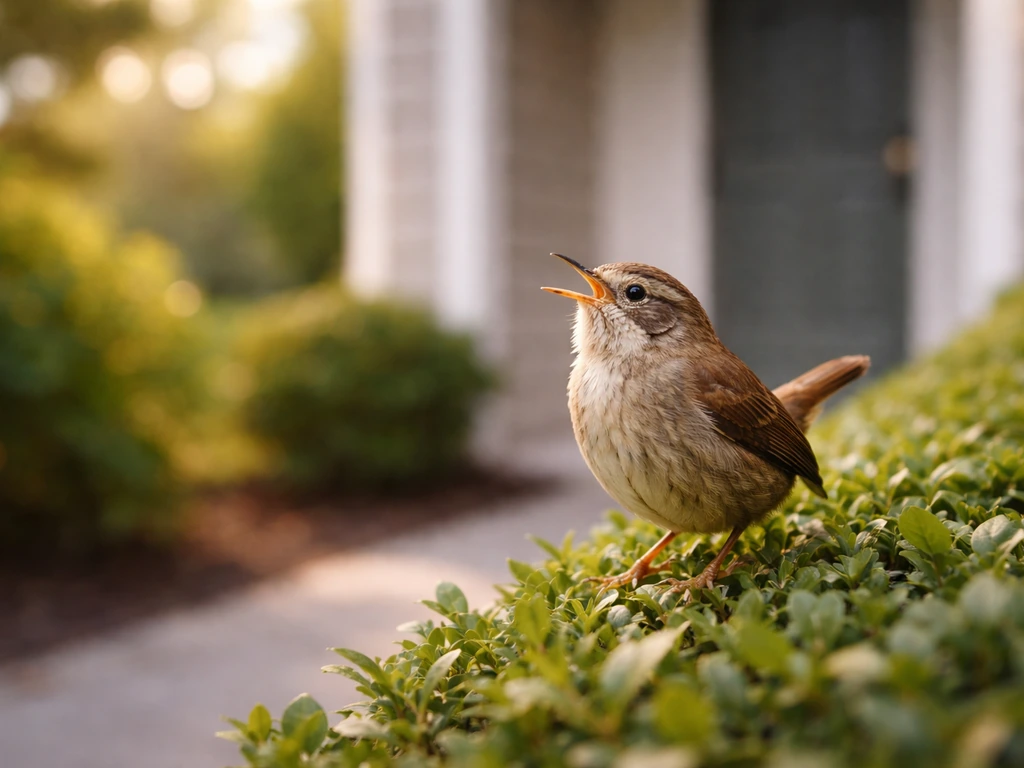
What a wren actually is (the literal bird)
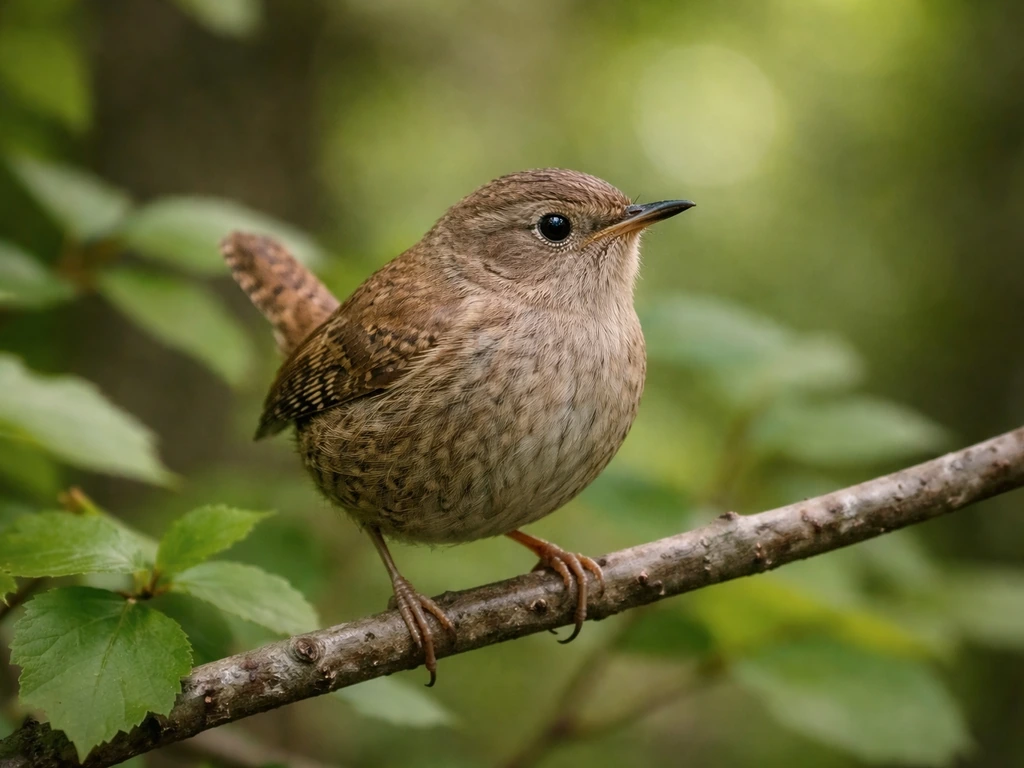
Wrens belong to the family Troglodytidae, a large passerine family of small songbirds. Most wren species are found in the Americas, ranging from tiny house wrens to the rock wren of cliff and canyon habitats, the desert-dwelling cactus wren, and many others. Only one species crosses into Europe: the Eurasian wren (Troglodytes troglodytes), which is simply called "the wren" across Britain, Ireland, and much of continental Europe. That European species is the one at the center of most of the mythology and folklore covered on this page.
The word "wren" traces back through Middle English forms like "wrenne" and "wrenna," with the deeper origin uncertain. Despite its murky etymology, the name has been in consistent use for centuries and has spread well beyond ornithology: it appears as a surname, a given name, and even a collective nickname (the "Wrens" were members of the Women's Royal Naval Service). The house wren, one of the most familiar North American species, was formally named as early as 1791. What all these birds share is a compact body, often a cocked tail, and a song that is startlingly loud for their size.
Wren symbolism in folklore and mythology
The single most persistent folklore theme around the wren is its paradoxical status as "king of all birds." The story, told across Celtic and broader European traditions, describes a competition among birds to see who could fly highest. The wren, too small to win on its own, hid on the eagle's back and then launched itself from the eagle's peak, flying just a little higher and claiming the title by wit rather than brute strength. That image of the small creature outplaying the powerful one by cleverness runs through nearly every symbolic association the wren carries.
The divinatory angle is just as old. One of the earliest written records comes from Cormac's Glossary, a 9th-century Irish text, which connects the Old Irish word for wren (drean or druí-én) directly to the word for druid, framing the wren as a "druid bird" capable of prophecy. Early Irish tradition treated the wren's behavior and song as messages about the future. This is not casual folk belief: it is documented in a scholarly glossary compiled by a bishop, which gives it unusual historical weight.
The ritual "Hunt the Wren" (or Wren Day) tradition reinforces this dual role of reverence and ritual sacrifice. Practiced on 26 December (Saint Stephen's Day) in Ireland, the Isle of Man, and parts of Wales, the custom involved a community parade centered on a wren, originally a real one, now universally a replica. The bird was carried on a decorated pole or in a bush while participants sang carols and collected donations. Scholars trace the practice to pre-Christian origins, and the wren's status as "king" is central to every version of the story. In Manx tradition specifically, fishermen would not put to sea without carrying a dead wren, believing it protected against storms.
How different cultures read the wren
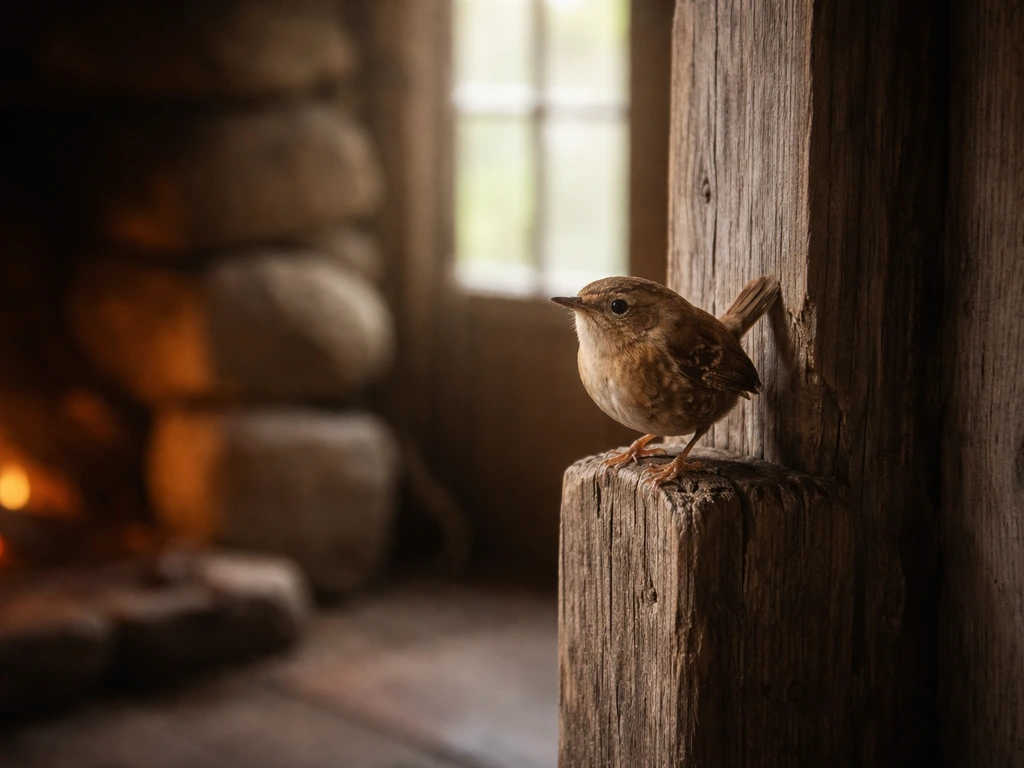
The Celtic world gave the wren its richest symbolic life. In Celtic tradition, the wren's song was treated as a direct channel for divination, with Celts listening to it as a message about the future. One legend connects the wren to the goddess Cliodhna, who is said to have taken the form of a wren, layering the bird with divine feminine transformation energy. A Celtic calendar framework also places the wren in association with winter and with the transitional energy around 26 December, making it a liminal-season bird in that tradition.
In broader European folklore, the wren's "king" status comes with a protective taboo: in regions where Wren Day was traditional, it was considered deeply unlucky to harm a wren at any other time of year. Killing one outside the ritual context was said to bring misfortune on a household. This is consistent with a wider pattern in bird folklore where a bird held as sacred is simultaneously revered and, in a controlled ritual context, sacrificed to release its power.
In North American contexts, particularly among indigenous traditions of the Americas where multiple wren species are native, the specific symbolism varies by tribe and species. Modern spiritual and New Age interpretations have largely absorbed the European and Celtic frameworks and applied them broadly, so if you are reading about wren symbolism on a general spirituality website, you are almost certainly reading an adaptation of the Celtic/European tradition rather than a distinctly American indigenous one.
Spiritual meanings: when a wren shows up
Most spiritual frameworks treat a wren sighting as a positive sign, particularly one associated with resourcefulness, a can-do attitude, and the reminder that size and status are not what determine success. Many people also compare wren symbolism with nearby ideas like “wattle meaning bird” when they are mapping meanings across different small bird symbols. A quick way to understand wee bird meaning is to connect the symbol to qualities like resourcefulness and the ability to be heard, even when you are underestimated. The "small but mighty" read is almost universal across modern interpretations. Seeing a wren perched near you or singing loudly is widely interpreted as encouragement to trust your own abilities, especially if you have been feeling overlooked or underestimated.
The distinction between positive and negative meanings usually comes down to the bird's condition and behavior. Here is a practical breakdown:
| Scenario | Common Interpretation |
|---|---|
| Wren singing near you | Good news coming; encouragement for self-expression |
| Wren perching close or entering your space | Positive omen; good fortune, new opportunity |
| Wren appearing repeatedly (multiple sightings) | A message to pay attention; spiritual guidance or confirmation |
| Injured or dead wren | Negative omen; caution advised; potential setback or difficulty |
| Wren appearing around 26 December / winter | Particularly resonant in Celtic tradition; liminal/transitional meaning |
The Celtic framing of the wren as a prophetic bird also feeds into how modern practitioners treat it as a spirit or totem animal. As a totem, the wren is associated with attitude: the willingness to use intelligence over force, to sing loudly regardless of your platform size, and to claim territory with confidence. Some modern spiritual guides connect wren energy specifically to dreamtime work and inner resilience development, rather than treating it as a fixed external omen.
Wren in idioms and everyday language
The wren does not have the same idiom density as birds like the raven, crow, or dove, but it shows up in a few notable everyday contexts. "Jenny Wren" is the best known: a traditional English term of endearment applied to a small, lively woman or girl, drawing directly on the bird's sprightly image. The name became literary through Charles Dickens, who used "Jenny Wren" as the nickname of a character in his novel "Our Mutual Friend," a doll's dressmaker whose small stature and sharp wit mirror exactly the bird's folklore profile. LitCharts provides a character-focused summary of Jenny Wren in Charles Dickens’s Our Mutual Friend, which can be useful for brief context on the character behind the name.
The folk song "The Cutty Wren" is another cultural touchstone, tied to the Wren Day hunting tradition in Ireland and Britain and sung around Saint Stephen's Day (26 December). The song's imagery of hunting a tiny bird with elaborate, oversized equipment has been interpreted as coded social satire, with the wren representing a powerful figure brought low by collective action. Whether or not that reading is historically accurate, the song kept the wren alive in popular consciousness through centuries of oral tradition.
The name "Wren" itself has moved into common use as both a given name and a surname, with the bird's symbolic associations of cleverness, song, and spirited independence often cited by parents choosing it. The famous architect Christopher Wren carries the surname as a proper name with no direct symbolic intent, but the word's broader cultural currency draws from the same symbolic well.
Wrens in literature, dreams, and personal interpretation
In literature
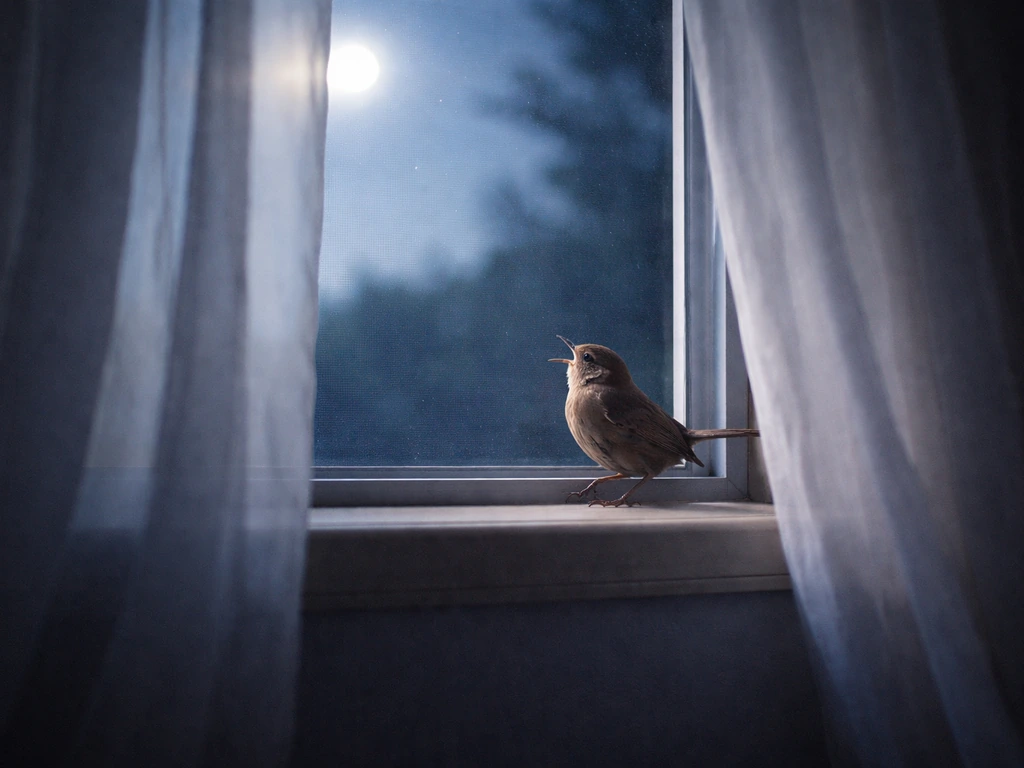
The wren's literary appearances tend to lean on two qualities: its smallness and its song. Poets have used the wren to represent the underdog, the overlooked voice that nonetheless fills a space with beauty. Dickens's Jenny Wren is the sharpest example of this: a physically small and disadvantaged character whose inner life and imagination are vast. The wren as a literary symbol almost always encodes the idea that what looks minor from the outside contains surprising depth or power.
In dreams
Dream interpretations of the wren center on resilience and quiet strength. A wren singing in a dream is commonly read as a sign of joy, self-expression, or a desire to be heard. The key interpretive principle used by most dream guides is context-dependency: what the wren was doing, your emotional response to it, and what was happening around it matter more than any single fixed meaning. Hearing a wren sing is treated differently from seeing one injured, which is treated differently again from watching one build a nest.
- Wren singing: themes of joy, communication, and the desire to express yourself
- Wren building or nesting: themes of home, security, and careful planning
- Wren flying freely: positive energy, freedom, or incoming good news
- Injured wren: a warning to pay attention to something fragile in your waking life
- Wren perching close to you: personal guidance, feeling watched over or supported
The honest caveat with dream interpretation is the same one that applies across bird symbolism: context is everything, and personal associations always modify general meaning. If wrens have a specific personal meaning in your life (a childhood memory, a meaningful encounter, a cultural tradition you grew up with), that will always outweigh any generic guideline.
Figuring out what your wren sighting or dream means for you
The most practical approach is to start with the universal layer (small but mighty, clever, vocal, resilient) and then narrow it by context. A wren appearing repeatedly, in an unusual location, or at a significant time (the winter season is especially resonant given the Celtic calendar tie) is worth taking seriously as a symbol. A one-off garden sighting is more likely just a bird. The difference between meaningful symbolism and coincidence is usually pattern and personal resonance, not the sighting itself.
If you are comparing wren symbolism to related small songbirds, it is worth noting that each species carries its own symbolic profile. The warbler, for instance, tends to be read through the lens of its migration and its urgent, complex song rather than the wren's "king" archetype. The warbler bird meaning is often tied to themes of travel, timing, and expressive voice. The weaver bird's symbolism revolves heavily around community and construction rather than individual wit. Many people also look up the awebo bird meaning to compare how different birds are read in folklore and spirituality. The wren's distinctiveness as a symbol comes specifically from that combination of tiny size, royal folklore title, and loud, confident voice, a combination that is genuinely unusual in bird symbolism. If you are also looking up the willow bird meaning, compare how each bird's tone and cultural associations shape the message you take from seeing or dreaming about it wren's distinctiveness as a symbol.
FAQ
What is the meaning of a wren bird if it appears outside of winter or the 26 December period?
In most modern readings the core themes still apply (small but mighty, self-expression, clever resilience). The seasonal tie mainly intensifies the meaning in Celtic-informed traditions, so outside that window you usually interpret the message as “now is the time to speak up” rather than a strictly time-bound omen.
Does the meaning change if I only hear a wren, but never see it?
Yes, many divination-style guides treat hearing as an invitation to express yourself (your voice is being noticed), while seeing is more about your current situation and confidence in action. If the song feels distant or obstructed, interpret it as a sign you may need to remove distractions to be heard clearly.
Is a wren a bad omen if the bird looks injured or is acting strangely?
A wounded or distressed wren is usually not read as “bad luck,” but as a cue to slow down and check your environment and emotional state. Common practical interpretation is to address something fragile (health, a relationship, a creative project) rather than expecting negative events.
How should I interpret repeated wren sightings, and when should I consider it coincidence?
Treat it as symbolic when it forms a pattern tied to your decisions or emotions (for example, showing up around interviews, creative goals, or times you feel underestimated). If you are not experiencing any personal resonance or the sightings happen randomly across unrelated contexts, it is often just a bird.
What does it mean if a wren appears near my home or on my property?
Nearby appearances are often read as “local” encouragement, meaning the message is about your home base: personal boundaries, communication with family, or your ability to make something work with limited resources. For a more grounded reading, pair the symbolism with what is going on around your doorway, garden, or work area when you notice it.
How do I interpret a wren dream if I do not remember whether it was singing or building a nest?
Go with the most emotionally vivid element. Singing dreams typically point to voice, confidence, and joy, while nesting/building can point to preparation, stability, and creating a supportive foundation. If the dream feels anxious, interpret the wren as asking you to express yourself in safer ways, such as planning before speaking.
Are modern New Age and Celtic-style wren meanings the same?
They overlap heavily, but they are not identical. Celtic-informed folklore emphasizes “king” folklore, prophetic song, and ritual associations, while many New Age interpretations translate that into mindset tools (resilience, inner strength). If you follow a specific tradition, stick to its framing first, then use the mindset adaptation as a secondary layer.
What should I do if I find a wren in distress in my yard?
From a practical standpoint, prioritize humane care. Keep a safe distance, avoid handling unless you know what you are doing, and contact local wildlife rehabilitation if the bird cannot fly or appears seriously injured. Symbolically, you can treat it as a reminder to nurture something vulnerable, but do not let symbolism replace real-world safety.
Do different wren species have different symbolic meanings?
Often, general symbolism is applied to “the wren” as a single archetype. However, because many regions have multiple wren species, some practitioners try to tailor meanings based on habitat (cliffs, deserts, gardens). If you want accuracy, anchor the meaning to what you can observe (behavior, song, location) more than to the species name.
What is the “wren spirit” or totem meaning, and how do I know it is relevant to me?
Totem-style use is about consistent personal lessons, not a one-time omen. You generally know it is “your” totem when themes like underdog courage, confident speaking, and resourcefulness keep recurring during important life periods. A simple test is to pick one area where you feel overlooked and actively practice “wren energy” for a few weeks, then reflect on changes.
Is it ever lucky or protective to see a wren, even if I feel unlucky in general?
Yes, many readings treat the wren as a corrective signal, shifting attention from fear to agency. If you feel stuck, interpret the wren as “small actions count” and look for a concrete next step you can do today (send the message, start the draft, fix the plan), rather than waiting for a dramatic outcome.
How does the wren meaning compare to other small birds like warblers or weavers?
A quick distinction is that the wren archetype centers on cleverness and loud self-expression (the “king” paradox), while warblers are more often read through timing and migration-driven urgency, and weavers through community and construction. When you compare, match the bird’s most visible trait in the moment (song, movement, building, location) to the meaning layer.

Meaning of Munster bird searches: folklore, symbolism, idioms, spelling variants, and quick ways to verify the reference
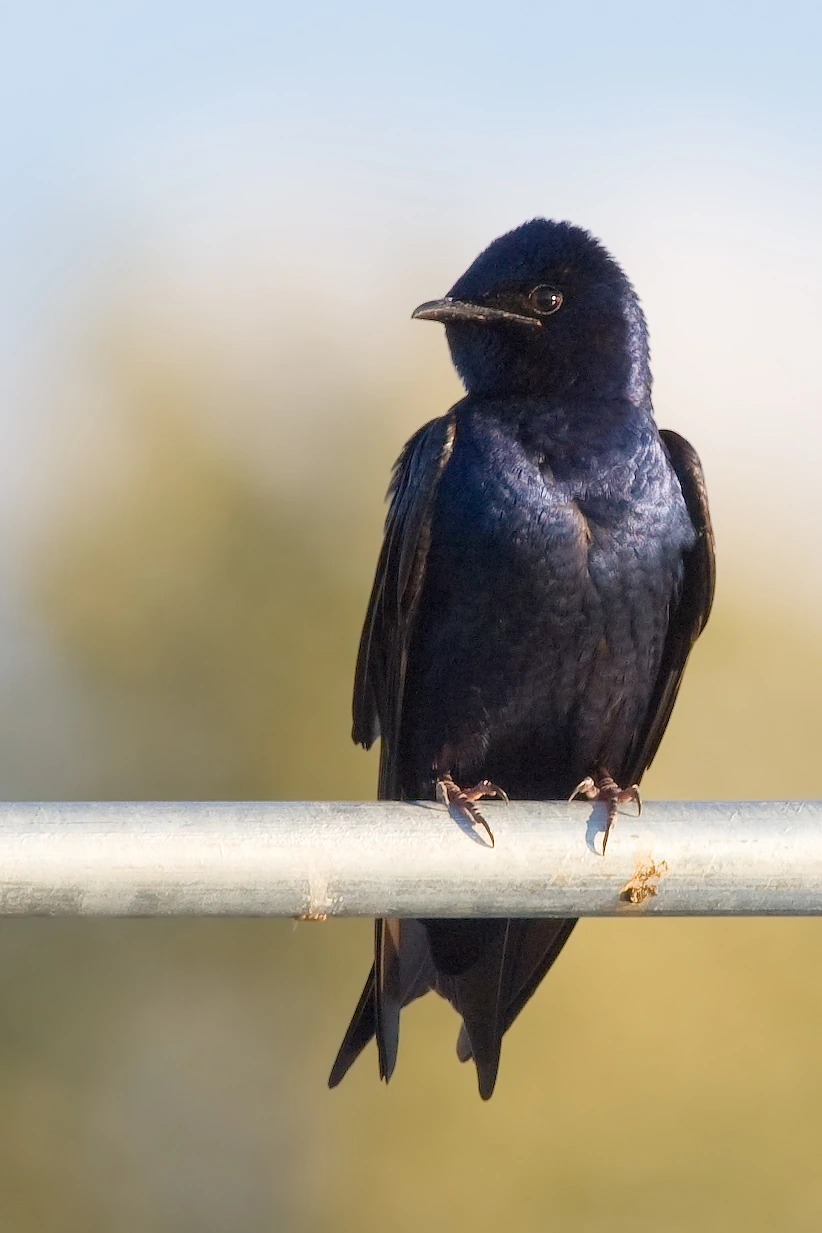
Learn martin bird meaning with symbolism, folklore, and how to identify the right species for omens and dreams.

Hovering bird meaning: quick answers, species ID, symbolism, safety tips and how to record sightings.