
If you searched 'taradactle bird meaning,' you almost certainly meant pterodactyl. If you meant the phrase in terms of symbolism, you can compare it to common interpretations in kurt geiger bird meaning. The spelling varies wildly online ('taradactle,' 'taradactyl,' 'taradactile'), but the target is the same: the blank" rel="noopener noreferrer">prehistoric flying reptile that most people picture when they hear about giant winged creatures from the dinosaur era. Technically, pterodactyls are not birds at all, they are extinct flying reptiles called pterosaurs. But their cultural life is vivid, and their symbolic meaning is well worth unpacking.
Taradactle Bird Meaning: What It Really Refers To

Marcus Blackwell
26 Jun 2026

Spot the intended meaning: what 'taradactle' most likely refers to
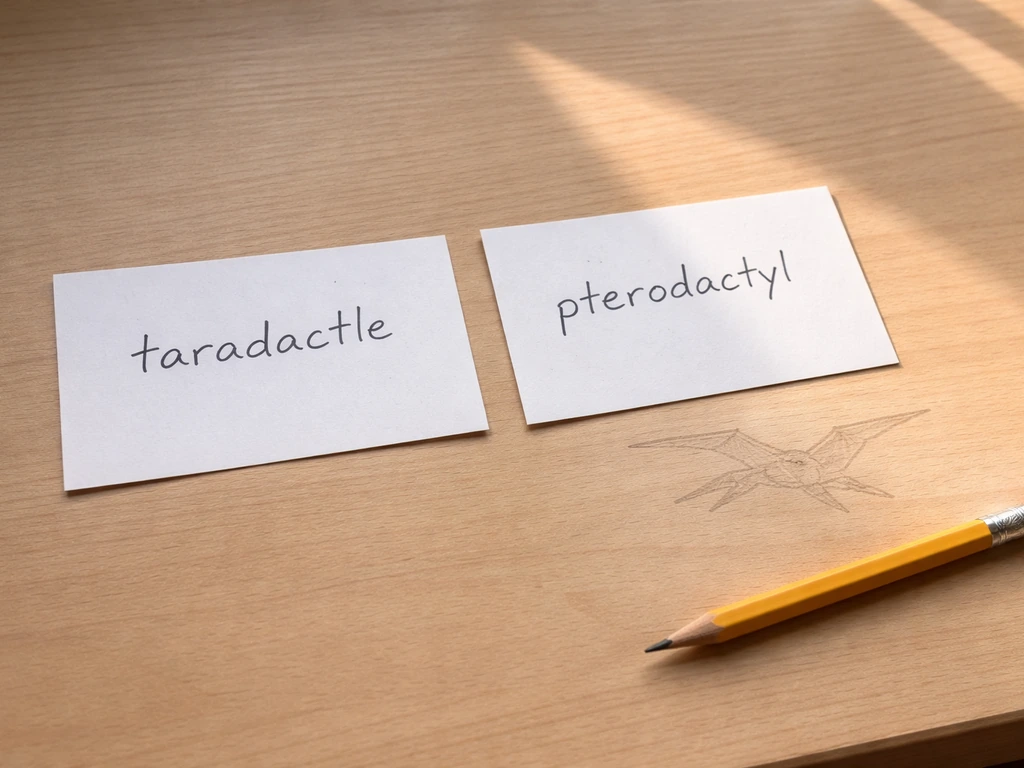
The word 'taradactle' does not appear in any dictionary as a standard term. What you are most likely dealing with is one of three things: a phonetic misspelling of 'pterodactyl,' a slang nickname built on the '-dactyl' suffix (like 'Taradactyl' as a nickname for someone named Tara), or a meme/insult term. Context matters a lot here, so it helps to know where you first encountered the word.
Reddit communities offer some of the clearest evidence of how this spelling gets used in the wild. In r/TreasureHunting, one user wrote 'or a taradactle? ... Pterodactyl?', directly equating the two. In r/Atlantology, the same swap happened: a user wrote 'turned into a Taradactle' and was immediately asked 'You mean a Pterodactyl?' So the community consensus is pretty consistent: when people write 'taradactle,' they mean pterodactyl.
The slang route is also worth flagging. Urban Dictionary has several entries for 'taradactyl', some mean 'a girl whose looks are as that of a bird,' some treat it as a cute nickname for a girl named Tara, and others veer into unrelated territory entirely. FastSlang lists 'taradactile' as slang for an extremely clumsy or awkward person. If you saw the word in a social media comment or meme, one of these slang readings might be what the writer intended rather than the prehistoric creature.
Quick answer: the likely bird and its core symbolism
Pterodactyl (the word people usually mean) refers to pterosaurs, a group of extinct flying reptiles that lived alongside the dinosaurs. Merriam-Webster defines pterodactyl as an extinct flying reptile, and Cambridge Dictionary describes it as 'a very large flying animal that lived many millions of years ago.' The name itself comes from the Greek 'pteron' (wing) and 'daktylos' (finger), literally 'wing-finger,' which refers to the elongated fourth finger that supported the wing membrane. Oxford University Museum of Natural History notes that the genus name “Pterodactylus” is part of Pterosauria and frames “pterodactyl” as a specific scientific label within that broader group.
Symbolically, the pterodactyl sits at the intersection of power, prehistoric mystery, and the concept of being first. According to National Geographic, pterosaurs were the first vertebrates to achieve powered flight, before birds, before bats. That 'first flier' status gives the creature a specific symbolic weight: it represents primordial energy, ancient wisdom, and a kind of raw, pre-civilized freedom that modern birds don't quite carry. When people use pterodactyl imagery in symbolic or spiritual contexts, those are the core themes they are usually drawing on.
Symbolic meanings in mythology and folklore

Pterodactyls don't appear in ancient mythology the way ravens, owls, or eagles do, those cultures didn't know pterosaurs existed. The symbolic life of the pterodactyl is largely a modern construction, built on what we now know about these creatures scientifically and culturally. But that doesn't make the symbolism any less real in how people actually use it.
The Natural History Museum frames pterosaurs as creatures that transport you into a prehistoric world the moment you encounter them, and that 'time-travel' quality is exactly what shows up in cultural symbolism. In pop culture and informal folklore, the pterodactyl represents: the ancient and unknowable, the idea of something so old it predates categories, and a kind of wild, untamed flight that modern birds have domesticated over millions of years.
In some indigenous and shamanic traditions, large flying creatures that don't fit neatly into known animal categories are treated as threshold beings, existing between worlds, carrying messages across time. A Reddit thread in r/Shamanism showed a user identifying a pterodactyl-like figure in ceremonial art from Ecuador, asking what spirit it might represent. That kind of interpretive work, applying the pterodactyl image to spiritual contexts, has become genuinely common, even if it sits outside classical mythology.
Spiritual and personal-interpretation uses: dreams, omens, and energy
Dreaming about a pterodactyl is more common than you might think, judging by how many dream interpretation communities discuss it. The creature tends to show up in dreams during periods of significant personal change, confrontation with something unfamiliar, or situations where the dreamer feels overwhelmed by something large and ancient, whether that is a family dynamic, a career shift, or an unresolved fear.
Popular dream interpretation sites (including Dreamology Insights) frame pterodactyl dreams around themes of prehistoric instincts coming to the surface, a need to break free from constraints, and occasionally warnings about something from the past returning. A Reddit post in r/Dreams described a pterodactyl 'leaving my home and flying into the sky,' which the community read as a symbol of releasing something old or heavy. In r/DreamInterpretation, another user described a pterodactyl dream in terms of being given a profiler's perspective, seeing something clearly that others couldn't see. So the creature often carries a 'rare vision' quality in dream symbolism.
As a spirit animal, the pterodactyl is treated as genuinely unusual. One memorable Reddit comment in r/AskReddit put it well: 'A pterodactyl. Because no one has an extinct spirit animal.' That captures the cultural niche the creature occupies, it signals originality, an affinity for the ancient, and a certain resistance to being categorized alongside conventional animals. If you are drawn to pterodactyl energy in a spiritual reading, the themes usually cluster around: first-mover independence, primordial strength, and the freedom that comes from existing outside normal boundaries. If you are curious about the tgpu bird meaning, it is a similar kind of internet-symbolic interpretation rather than a literal species identification pterodactyl energy.
| Symbolic theme | What it means in practice |
|---|---|
| Primordial flight | First to achieve powered flight; symbolizes raw, unconditioned freedom and being ahead of one's time |
| Ancient wisdom | Pre-dates human civilization entirely; associated with deep instinct over learned knowledge |
| Threshold being | Exists between the familiar and the unknowable; used in shamanic contexts as a messenger across worlds |
| Rare/extinct spirit animal | Signals uniqueness, originality, and refusal to fit standard categories |
| Dream appearance | Often linked to releasing old patterns, confronting ancient fears, or gaining unusual clarity |
Idioms, slang, and common cultural references involving that bird
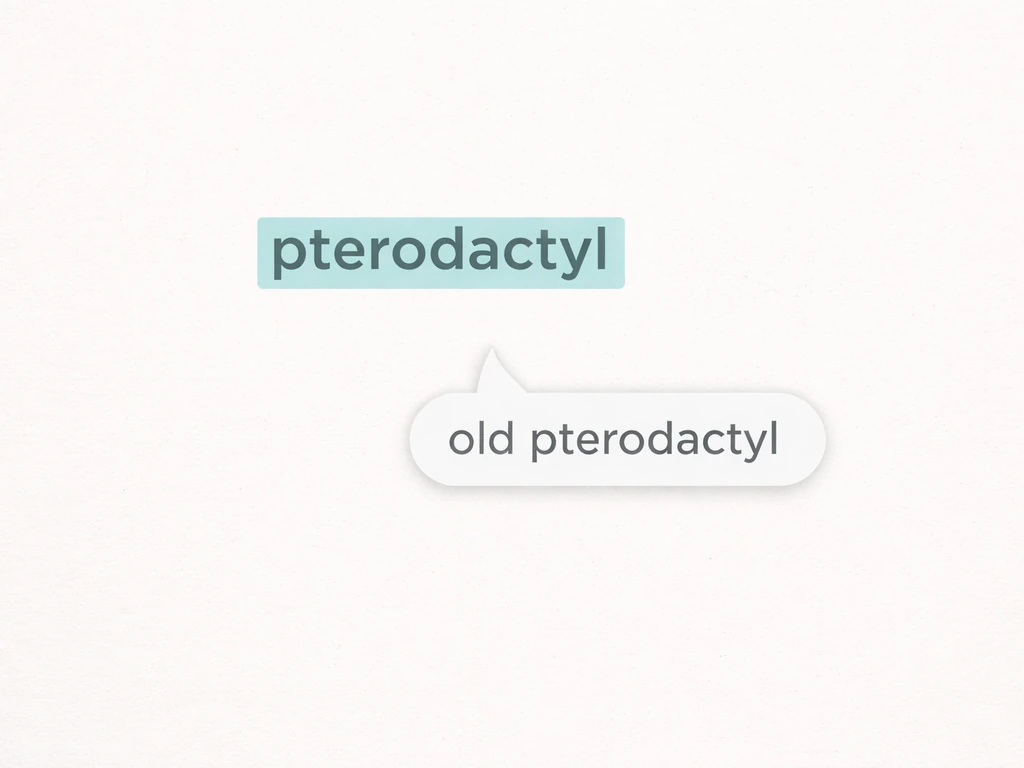
Because 'pterodactyl' is not a conventional bird, it doesn't appear in traditional idioms the way a dove or raven would. But it has developed its own slang ecosystem, and the 'taradactle/taradactyl' variants are right in the middle of that.
- 'Old pterodactyl' — informal insult for someone extremely old-fashioned or out of touch, drawing on the extinction angle
- 'Taradactyl' as a nickname — when a person named Tara is particularly loud, energetic, or dramatic, the nickname plays on the creature's screeching reputation
- 'Taradactile' as clumsy-person slang — FastSlang documents this usage for someone spectacularly awkward or crash-prone, referencing the ungainly ground movement of the real animal
- Meme usage — 'pterodactyl screech' is a well-established internet meme format meaning an inarticulate, high-pitched reaction to something overwhelming or exciting
- 'Extinct spirit animal' joke — used online to signal that someone is so unique or strange they identify with a creature that no longer exists
If you encountered 'taradactle' in a social media caption, a group chat, or an online comment, there is a real chance the slang meaning was intended rather than the symbolic one. The '-dactyl' suffix has become productive in internet language, attaching to names and words to suggest something large, loud, prehistoric, or clumsy.
How to confirm the right bird if the term is nonstandard
If you are still not sure whether 'taradactle' was meant as pterodactyl, a different creature, or a piece of slang, here is a practical way to work it out. If you meant the tagalog phrase people use for this word, look up the t-bird meaning in tagalog for the exact translation and usage.
- Go back to where you first saw or heard the word. Was it in a quote, a comment, a video, or someone speaking aloud? Audio mishearings often produce unusual spellings like this one, and looking at the original source clears things up fast.
- Search 'taradactle pterodactyl' together. You will find Reddit threads and social media posts where the community has already made the connection — this is the fastest confirmation available right now.
- If you saw it in a spiritual or dream context, search 'pterodactyl dream meaning' or 'pterodactyl spirit animal' directly. Those will surface the actual symbolic resources, since nobody has written those guides under 'taradactle.'
- If the word appeared in a slang or meme context (especially attached to a person's name or as a descriptor for someone's behavior), check Urban Dictionary and FastSlang directly for the variant spelling. The meaning there will be completely different from the prehistoric creature.
- If you think there is a real bird involved that was just mispronounced badly, try describing the physical features instead — large wingspan, crested head, long beak — and search for birds matching that description. Sometimes what people call a 'pterodactyl' is actually a Great Blue Heron, a Shoebill Stork, or even a large vulture seen in poor lighting.
That last point is genuinely useful. Several real birds get called pterodactyls in casual conversation because of their silhouette or prehistoric appearance. The Great Blue Heron, in particular, is regularly described as looking like 'a living pterodactyl' by birdwatchers, and the Shoebill Stork carries a similar ancient-creature energy. If someone described a real bird they saw as a 'taradactle,' it is worth considering those candidates. Both carry their own rich symbolic histories that are worth exploring separately from pterosaur lore. The tanager bird meaning can also be explored, since different birds tend to carry different symbolism in folklore and modern interpretation.
The bottom line: 'taradactle bird meaning' almost always resolves to pterodactyl, and pterodactyl symbolism clusters around primordial freedom, ancient instinct, and rare individuality. If the slang route fits your context better, it points toward clumsiness, nicknames, or loud personality jokes. Either way, you now have enough to confirm which direction applies to your situation and follow it through to the actual meaning.
FAQ
Is “taradactle bird meaning” always referring to a pterodactyl?
Most of the time, yes. In online usage, “taradactle” or “taradactyl” is usually a playful misspelling or internet nickname pointing to “pterodactyl.” If you tell me where you saw it (caption, comment, dream post, or spirit-animal page), I can help narrow whether it is likely the prehistoric creature or a slang jab.
What if someone uses “taradactle” to describe a bird they saw in real life?
If the sentence treats “taradactle” like a real animal you can see outdoors, it may be describing a living bird with a prehistoric silhouette. The article already flags Great Blue Heron and Shoebill Stork as common “looks like a pterodactyl” comparisons. In that situation, the “meaning” is often just vibe-based, not a strict pterosaur symbol.
How can I tell whether “taradactle” is slang or the pterodactyl reference?
Look for naming patterns. If it appears next to a person’s name (for example, “Taradactyl” as a nickname for “Tara”), it is more likely a personal nickname than a reference to pterodactyls. If it appears as an insult or label for behavior, it is often one of the clumsiness or awkwardness slang readings connected to the “-dactyl” style.
Does the meaning change depending on whether I saw it in memes versus dream or spirit pages?
Context clues matter more than spelling. If you see it in a meme, comment thread, or username-style text, it often uses “-dactyl” as an exaggerated adjective (big, loud, awkward, prehistoric-sounding). If you see it in a “meaning of dreams” or “spirit animal” context, it is more likely being used symbolically as a threshold, freedom, or “ancient instinct” type of sign.
In dream interpretations, what detail should I pay attention to besides the pterodactyl image?
For dream use, a helpful filter is the dreamer’s emotion, not only the creature. If the dreamer feels overwhelmed, the symbol often reads as “ancient pressure” or a big unresolved issue rising. If the dreamer feels relief or escape, it more often reads as release, breaking constraints, or letting go of something heavy tied to the past.
Is there one universal spiritual meaning for pterodactyls, or does it vary by tradition?
Treat “pterodactyl symbolism” as a modern association rather than a fixed traditional meaning. When people assign it spiritual weight, they are usually blending the “first flier” idea, prehistoric mystery, and threshold-between-worlds themes. So different communities may emphasize different aspects, even when they use the same creature.
Should I interpret “taradactle” literally, or as symbolism most of the time?
If you are building a story or reading, avoid assuming it is a literal species identification. The article explains that “taradactle/taradactyl” can function like an internet-symbolic label, so the safer approach is to interpret the intent (joke, nickname, clumsy insult, or symbolism) first, then map it to themes.
What is a fast way to decide what “taradactle bird meaning” means in a specific post?
A quick decision aid is to classify the surrounding text: (1) If it discusses “meaning,” “symbol,” “spirit,” or “dream,” interpret symbolically. (2) If it discusses “what bird it looked like,” interpret as a real-bird comparison. (3) If it includes personal names or a behavior callout, interpret as slang/nickname. Then you can decide whether to look up pterodactyl themes or bird-specific symbolism.
Why are there conflicting “taradactle” meanings online, and how do I resolve them?
Because “taradactle” is not a standard dictionary word, you may not find a definitive definition that fits every use. Instead, the most reliable method is to cross-check the usage against the “-dactyl” slang pattern and the sentence role (noun meaning a creature, nickname, or insult). If you share the exact sentence, you can usually resolve it in one step.