
Tanagers are brilliantly colored songbirds belonging to the family Thraupidae, one of the largest bird families in the world with over 400 species spread mostly across tropical and subtropical regions of the Americas. When people search for 'tanager bird meaning,' they're usually after one of three things: the spiritual or symbolic message behind a tanager sighting, what a tanager in a dream might represent, or simply what the bird is before applying any meaning to it. TGPU bird meaning is often asked about in the same spirit as tanager symbolism, so it can help to treat any “meaning” search as a clue to the message style you are seeking. This guide covers all three, and it starts with that last point on purpose, because 'tanager' is a surprisingly slippery label that gets applied to birds in more than one family.
Tanager Bird Meaning: Symbolism, Colors, Omens, Dreams

First: What Exactly Is a Tanager?
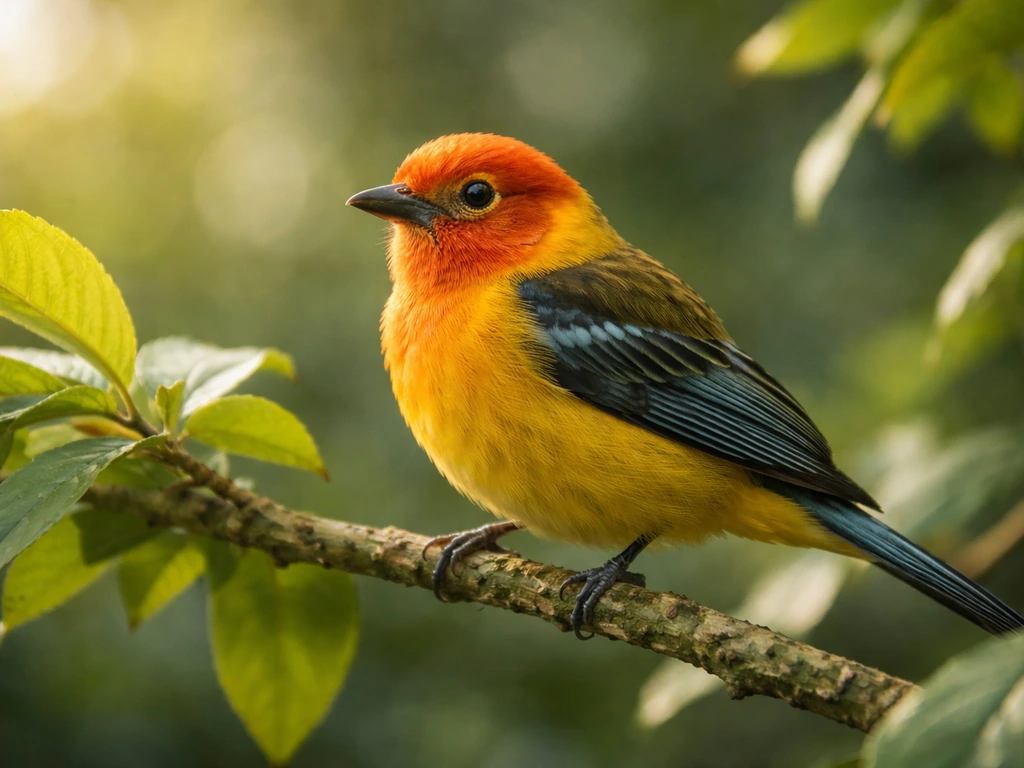
A tanager, in the strictest scientific sense, is a member of the family Thraupidae. These are small-to-medium-sized perching birds found almost entirely in the New World, with the overwhelming majority living in tropical forests and gardens from Mexico down through South America. They eat a varied diet of fruit, seeds, insects, and in some species, nectar.
BirdWeb describes tanagers as a diverse New World family in which many members live in the tropics, they are typically medium-sized with stout generalized bills suited to eating fruit and insects, and temperate-zone species show sexual dimorphism with brighter males and drabber females. Males tend to be vividly colored, while females are often much drabber.
That sexual dimorphism is especially pronounced in the temperate-zone species that North American birdwatchers are most familiar with.
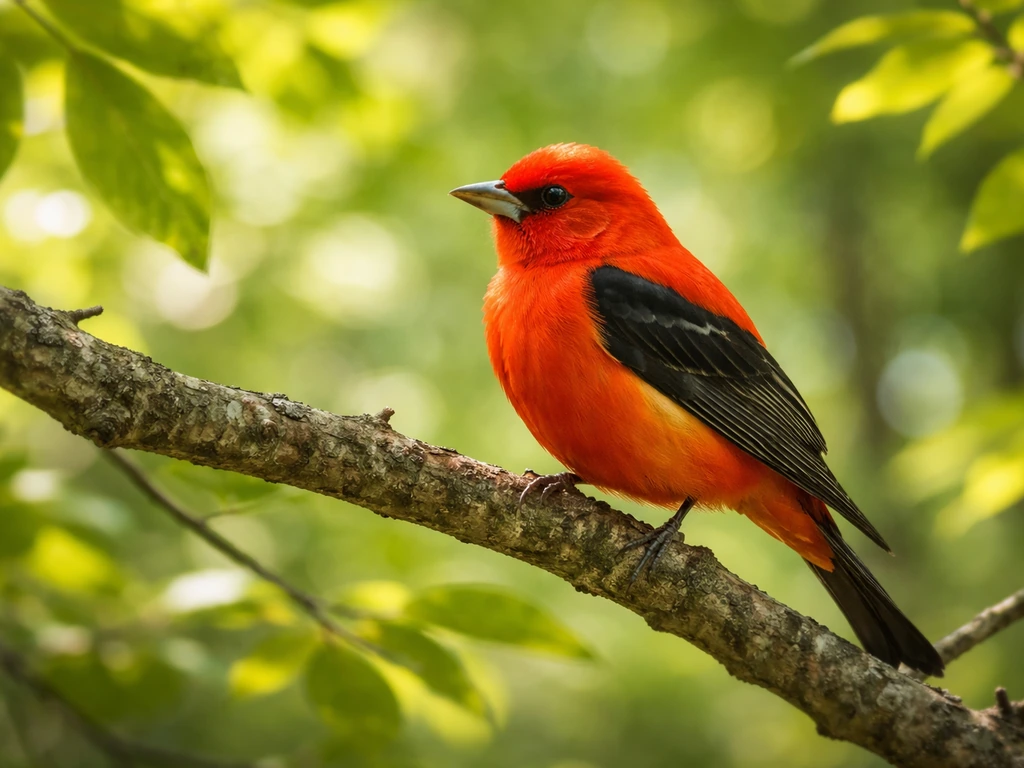
Here's where it gets a little confusing: some of the most well-known 'tanagers' in North America, including the Scarlet Tanager and the Western Tanager, technically belong to the family Cardinalidae, not Thraupidae. Taxonomists have moved the genus blank" rel="noopener noreferrer">Piranga and a few related genera out of Thraupidae based on genetic evidence. So when a North American birdwatcher says 'I saw a tanager,' they're often describing a Cardinalidae bird, while a birder in the Amazon might be talking about a true Thraupidae member. The symbolism and lore people associate with these birds doesn't always make that distinction, so I'll treat them together here under the cultural umbrella of 'tanager.'
Tanager Symbolism Across Cultures and Folklore
Tanagers don't carry the heavy mythological freight of ravens or owls, but they hold meaningful symbolic space in the cultures that live closest to them. In Mesoamerican and Andean folk traditions, brilliantly colored birds were rarely just decoration. They were messages. The vivid plumage of tanagers, particularly the reds and golds, linked them to solar energy, abundance, and the life force that animated the natural world. In many indigenous communities throughout Central and South America, a brightly colored bird appearing unexpectedly near a home was read as a sign of good fortune or an ancestor's visit.
In North American folk belief, the Scarlet Tanager in particular developed associations with passion, vitality, and sudden change. Its habit of appearing dramatically in temperate forests during spring migration, then disappearing back into the canopy almost immediately, gave it a reputation as a fleeting but powerful visitor. Some Appalachian and Eastern Woodlands traditions treated any bright red bird (tanager included) as a carrier of urgent news or a signal to pay attention to what was happening around you at that moment.
Across broader folk symbolism, tanagers generally represent joy, beauty, and the reward of paying close attention to the natural world. They are not birds people stumble onto; you have to look for them, or be lucky enough to catch them in an open moment. That quality, rare visibility despite constant presence, feeds directly into their symbolic reading as birds associated with hidden gifts and overlooked blessings.
How People Use 'Tanager' as a Name, Nickname, and Cultural Reference
Unlike 'eagle' or 'hawk,' the word 'tanager' hasn't produced a wide catalog of idioms in English. It doesn't show up in proverbs the way a wren or a robin might. What it does appear in, consistently, is naming. 'Tanager' has been used as a boat name, a place name (there's a Tanager, Nevada, for example), a military designation, and a brand label, all drawing on the bird's associations with speed, brightness, and tropical color. The word itself has a musical, almost exotic quality that makes it appealing as a proper name.
In casual speech, calling someone a 'tanager' or saying someone 'showed up like a tanager' usually carries the sense of someone who arrived brilliantly, briefly, and memorably. The comparison emphasizes vivid presence over staying power. It's more of a poetic allusion than a fixed phrase, but it shows up in literature, personal essays, and bird-watching communities as shorthand for that specific quality of dazzling-but-transient.
It's worth noting that 'tanager' can refer to other things entirely depending on context. Because the label can also show up in search results as “t-bird meaning,” it helps to confirm you are reading about the bird and not another use of the name t-bird meanings. Wikipedia flags a disambiguation page for the word. If you're researching bird symbolism and come across the word in an unusual context, confirm it's the bird before applying any of the meanings here. This is a reminder that applies across the broader category of bird names, including things like t-bird meanings or terms like 'tgpu bird,' where the label doesn't always point to the animal.
What Tanagers Represent Spiritually
In spiritual and metaphysical traditions, tanagers are most often read as symbols of joy, creative energy, and emotional openness. Their extraordinary color is rarely treated as accidental in these frameworks. Bright plumage, across many spiritual systems, signals a message that is meant to be noticed, not ignored. A tanager sighting in a spiritual context is typically interpreted as a prompt to embrace vibrancy in your own life, to resist dullness, and to allow yourself to be seen.
Some spiritual practitioners, particularly those working within nature-based traditions, associate tanagers with the solar plexus and heart chakras because of the bird's dominant colors (yellows, oranges, reds, and greens depending on species). In this reading, a tanager appearing in your life points to themes of personal power, emotional warmth, and the courage to express yourself authentically.
In shamanic and animist traditions of Central and South America, colorful birds often serve as messengers between the human world and the spirit realm. A tanager in this role would carry a message from ancestors or guiding spirits, particularly one that arrives unexpectedly or behaves unusually, such as landing nearby, making extended eye contact, or appearing in an unlikely location.
Color-Based Meanings: Red, Orange, Blue, and Golden Tanagers
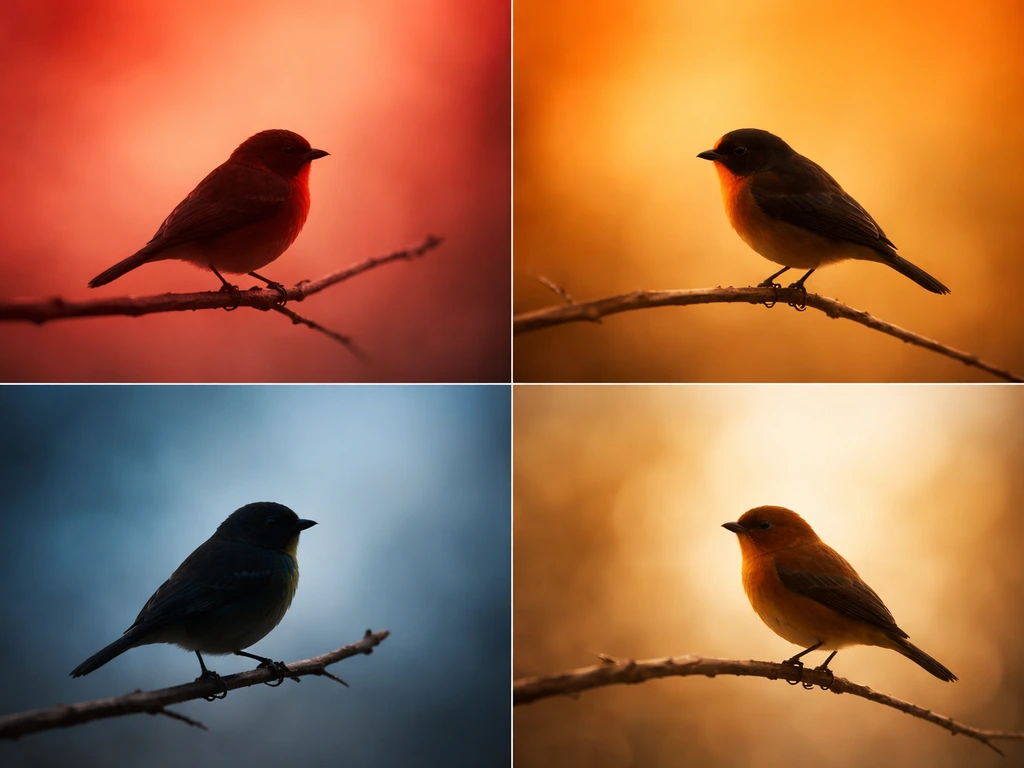
One of the most practical things you can do when interpreting tanager symbolism is to note the bird's color. Tanagers are one of the most color-diverse bird groups on the planet, and the color significantly shapes the symbolic reading most people apply.
| Tanager Color | Common Species Example | Symbolic Associations |
|---|---|---|
| Red | Scarlet Tanager (Piranga olivacea) | Passion, urgency, vitality, bold action, warning or alert |
| Orange/Red | Western Tanager (Piranga ludoviciana) | Warmth, creativity, enthusiasm, new beginnings in a new territory |
| Blue | Blue-gray Tanager (Thraupis episcopus) | Calm, communication, loyalty, emotional clarity, spiritual peace |
| Golden/Yellow | Golden Tanager (Tangara arthus) | Abundance, solar energy, optimism, prosperity, divine favor |
| Green | Bay-headed Tanager (Tangara gyrola) | Growth, renewal, healing, connection to nature and fertility |
| Multi-colored | Paradise Tanager (Tangara chilensis) | Complexity, full-spectrum living, the integration of opposites |
Red tanagers, especially the Scarlet Tanager, carry the most urgent symbolic weight in North American tradition. Red birds, broadly, signal attention, action, and sometimes danger in folk omen systems. The Scarlet Tanager's red is balanced with black wings, which some interpretations read as a reminder that brilliance and shadow coexist. The Western Tanager's yellow-orange-red combination leans more toward celebration and creative fire, without the same edge of urgency.
Blue tanagers like the Blue-gray Tanager, common across much of Central and South America and one of the most frequently encountered tanagers in urban tropical gardens, are often connected to emotional serenity and clear expression. If a blue tanager showed up in your dream or crossed your path, the traditional symbolic read would lean toward a message about speaking your truth or finding stillness in a chaotic period.
Golden and yellow tanagers consistently map onto prosperity and solar symbolism across multiple traditions. In Andean folk belief, yellow birds near the home were associated with incoming abundance, whether material wealth, a good harvest, or an improvement in family fortunes. Multi-colored species like the Paradise Tanager, which looks almost painted with a deliberate palette of turquoise, green, purple, red, and black, tend to be read as symbols of life's full complexity and the reward of not reducing experience to a single dimension.
Tanagers in Dreams, Omens, and Everyday Signs
If you saw a tanager in a dream, the first thing to register is the color and behavior. A perching tanager, still and observant, generally signals a moment of clarity coming your way. A tanager in flight through a dream landscape reads as freedom, opportunity, or an invitation to pursue something you've been hesitating on. A tanager that appears and then disappears suddenly is often interpreted as a fleeting opportunity, something you'll need to act on quickly or it will pass.
In omen traditions, seeing a tanager unexpectedly in your yard or on a walk is almost universally read as a positive sign. These birds don't typically linger in open, visible spots, so catching a good look at one is treated as a small gift from the universe in folk belief. Some people in the American South specifically associate a first Scarlet Tanager sighting of the spring with good luck for the season ahead, similar to the way a first robin sighting is treated in broader American folk culture.
If a tanager flies into your window (a sadly common event given how bright some species are and how reflective windows appear), folk belief is more divided. Some traditions treat any bird-window collision as an omen of disruption or change. Others separate the outcome by whether the bird recovers. A bird that flies off after recovering is read as a temporary disruption that resolves; one that doesn't survive is taken as a heavier warning. In either case, the color of the bird still shapes the interpretation in the way the table above outlines.
For practical dream interpretation, here's a useful sequence: first, identify the dominant color of the tanager in your dream, then note what it was doing (resting, singing, flying, approaching you, fleeing), then match that to a current situation in your life where that quality (urgency from red, calm from blue, abundance from gold) feels relevant. Most symbolic systems work best when you bring the symbol to your specific life context rather than applying a one-size meaning.
Identifying the Right Tanager Before You Apply Any Meaning
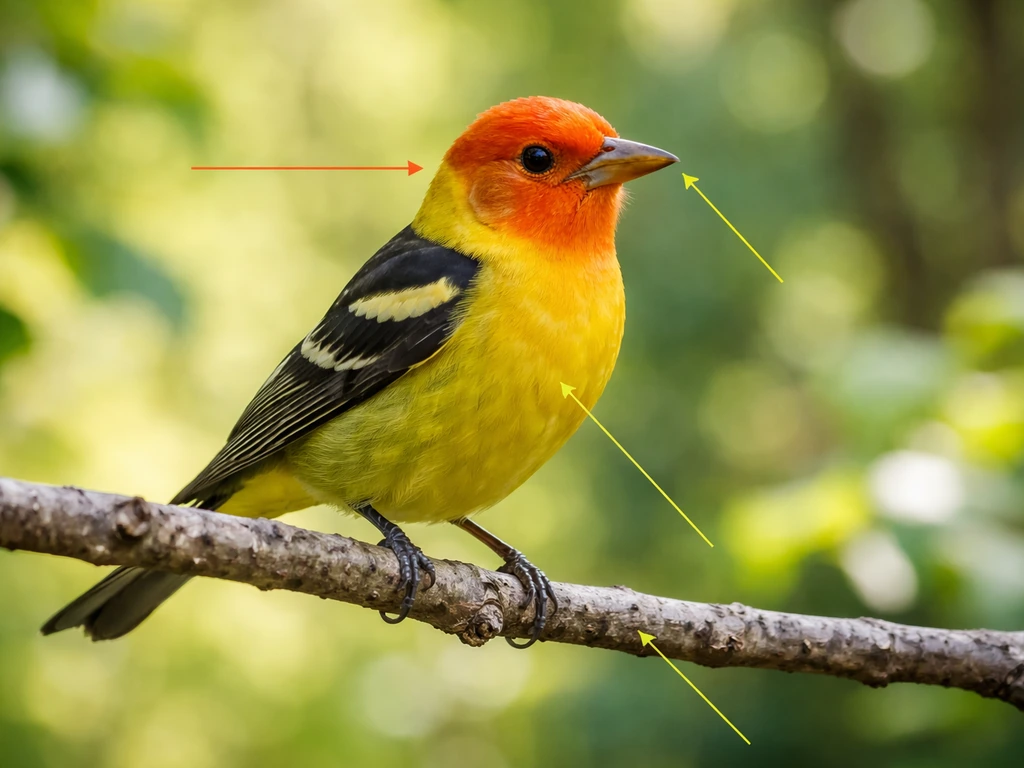
This matters more than people realize. 'Tanager' gets applied loosely, and if you're trying to interpret meaning, you want to make sure you're applying the right one. If you want to compare meanings, you can also look up kurt geiger bird meaning as a related example of how context changes interpretation. Here's a practical checklist.
- Where did you see it (or dream it)? If you're in North America, you're most likely dealing with a Piranga species: Scarlet Tanager (eastern U.S. and Canada), Western Tanager (western U.S. and Canada), Summer Tanager (southern U.S.), or Hepatic Tanager (southwestern U.S. down through Central and South America). If you're in Central or South America, your options expand dramatically to hundreds of true Thraupidae species.
- What color was it? Use the color table above as a first filter. Red-and-black in the eastern U.S. is almost certainly a Scarlet Tanager. Yellow-orange-red in the West is most likely a Western Tanager. All-red in the South is a strong candidate for a Summer Tanager.
- Watch out for look-alikes. The most common confusion points in North America: male Northern Cardinals look similar to some red tanagers but have a crest and thick seed-cracker bill. Orioles can be mistaken for orange tanagers at a distance. If you're unsure, a quick image search of the species candidates for your region will clarify things fast.
- For dreams or non-physical encounters: don't over-identify the species. If the bird in your dream was simply 'colorful and tropical-looking,' work with the color and general tanager symbolism rather than trying to pin down an exact species. The symbolism doesn't usually require that level of precision.
- Cross-check the bill shape if you can. True Thraupidae tanagers have stout, generalized bills suited for both fruit and insects. Piranga/Cardinalidae tanagers have slightly more pointed bills, sometimes with a small notch or serration. This is a minor distinction for symbolic purposes but helpful if you're trying to make a precise ID.
A Note on Naming Confusion
Because 'tanager' is such a broad and sometimes misapplied label, it's easy to end up looking up symbolism for the wrong bird entirely. If you still want a quick, single-bird-style guide, you can also look up taradactle bird meaning as a nearby comparison point for how readers connect symbolism to bird identity. This is the same kind of problem that comes up with other bird labels that don't map cleanly to a single species or family. The practical fix is always the same: anchor your identification to color, region, and behavior before you go looking for meaning. Once you have a confident ID, the symbolic traditions that apply to that specific bird become much more useful and accurate.
If you spotted a tanager recently and want to make sure you have the right interpretation, start with where you were when you saw it, what it looked like (especially dominant color and any secondary colors), and what it was doing. In Tagalog, people often ask what “tanager” means, so the “t-bird meaning in Tagalog” question is usually about the proper translation and how the word is used. Those three data points will land you on the right bird almost every time, and from there, the symbolism in this guide will give you a solid, culturally grounded reading to work with.
FAQ
If I saw a Scarlet or Western Tanager, do I use the same tanager bird meaning?
Yes, but rely on color plus behavior more than the species name. Many “tanager” sightings are actually Cardinalidae (like Scarlet or Western Tanager), and different traditions attach different weights to similar colors. If you can identify the dominant plumage color and whether the bird was perched, singing, or actively approaching, you can use the meaning framework without getting stuck on taxonomy.
How should I interpret tanager bird meaning in dreams when the dream has multiple colors and actions?
If your tanager dream features mostly red tones, sudden movement, or the bird disappearing quickly, the “fleeting opportunity” style reading fits best. If it is more blue or golden and the bird stays calm in place, the interpretation shifts toward clarity, emotional steadiness, or improvement rather than urgency. The framework works best when you match dream color to the kind of action your waking life currently needs.
What tanager bird meaning applies if a tanager flies into my window?
Window collisions are a special case because folk interpretation often depends on what happened right after. Instead of treating it as only good or only bad, note the practical outcome, did the bird recover and fly away, did it stay down or appear injured, did you witness a repeat visit. Then blend that with the bird’s color, since red tends to be read as more urgent than blue or yellow.
What if I cannot confidently identify the bird as a tanager (or even the exact color)?
If you cannot get a confident identification, avoid locking into a single omen. Use a “provisional meaning” approach: write down only what you know (rough color, time of day, location, and the behavior you saw). Then compare those to common tanager-color readings until your identification improves, because similar-looking “bright birds” can lead to mismatched symbolism.
Does tanager bird meaning change if the sighting was a one-time event versus repeated visits?
In omen-style readings, the timing matters. A first-of-season sighting (like a first vivid red bird in spring) is often treated as a seasonal marker rather than a message about one specific event. If you saw the bird repeatedly over days, folk readings tend to move from “one message” to “ongoing theme,” like a continuing invitation to act on creativity or self-expression.
What is a quick way to personalize tanager symbolism without overthinking it?
Start with the bird’s dominant color and its most noticeable action, then connect it to one current life situation. For example, red with urgency maps well to a decision you have been delaying, blue with stillness maps well to communication or boundaries, gold/yellow maps well to growth, resources, or household stability. Keep it to one anchor theme so the interpretation stays coherent.
Is it okay to use tanager bird meaning from internet posts, or do I need to confirm the exact bird first?
Yes, but use it carefully. The article treats “tanager” as a cultural umbrella because the label can be applied across families. If you want a more precise reading, confirm the bird type by region and key features, then apply symbolism associated with that exact color combination. Otherwise, you can unintentionally borrow meanings from a different bird category.
What does tanager bird meaning suggest if the bird appears in an unlikely place?
If the bird is in an unusual location (like inside a house area, on a street, or far from trees), many traditions treat that as “unexpected arrival,” which increases the messenger or urgent-notice feeling. Pair that with behavior, for instance, extended eye contact or landing nearby often reads as direct communication, while just passing through can read as a brief cue.
If I’m asking “tanager” in Tagalog, does the symbolism change or just the word usage?
Tagalog and other language-use can shift meanings through translation choices, especially when the word is used as a label for a bird that is not always taxonomically exact. If your question is about language, confirm what term “tanager” is replacing locally and whether it refers to the bird or a borrowed name. Then you can apply the symbolism framework based on the actual sighted bird’s color and behavior.
Kurt Geiger Bird Meaning: Identify the Bird and Its Symbolism
Decode Kurt Geiger bird symbolism by identifying the exact bird from your item, then learn its meaning and uses.