A harrier is a medium-sized bird of prey in the genus Circus that blank" rel="noopener noreferrer">hunts by gliding low over open fields and marshes, and its symbolic meaning centers on themes of focused pursuit, keen perception, patient strategy, and the ability to operate effectively in liminal spaces between land and sky. If you spotted one and are wondering what it means, or you keep encountering the word and aren't sure whether you're dealing with the actual raptor or something figurative, you're in the right place.
Harrier Bird Meaning: Literal Identification and Symbolism

Marcus Blackwell
19 Jun 2026
Why "harrier bird" confuses so many people
The confusion here comes from a few different directions at once. First, "harrier" isn't a household name the way "hawk" or "falcon" is, so a lot of people who spot one in the field aren't sure what they're looking at. Second, the word itself has a non-bird meaning in English: a harrier is also a person or thing that harries, meaning someone who pursues, torments, or harasses relentlessly. That double meaning bleeds into search results and makes it genuinely hard to find what you're after. Third, harriers are frequently misidentified as other raptors, especially peregrines or rough-legged hawks, so people sometimes arrive at the word "harrier" after a Merlin app suggestion they're not sure they trust.
On this site, the focus is on bird symbolism and meaning in cultural, folkloric, and figurative contexts, so if you searched "harrier bird meaning" here, you're most likely interested in what the harrier represents: what seeing one signals, what traits people associate with it, and how it shows up in symbolic or spiritual frameworks. That's what most of this article covers. But it helps to start with a clear picture of the actual bird, because the symbolism grows directly out of how it behaves.
What a harrier actually is (the literal bird)
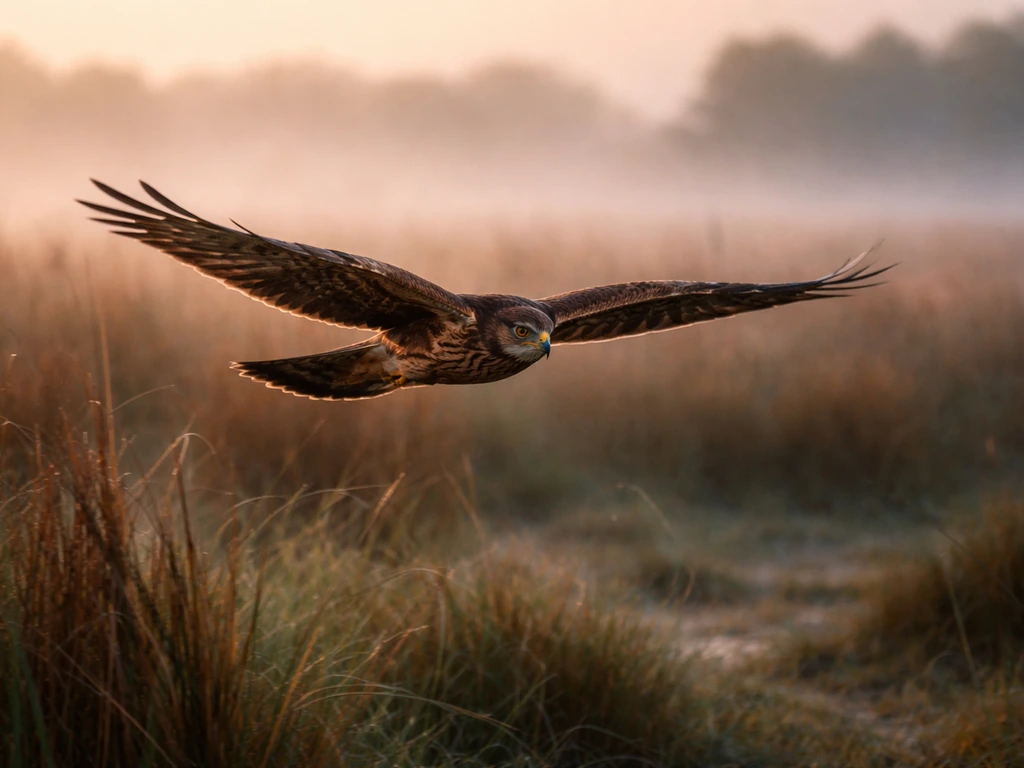
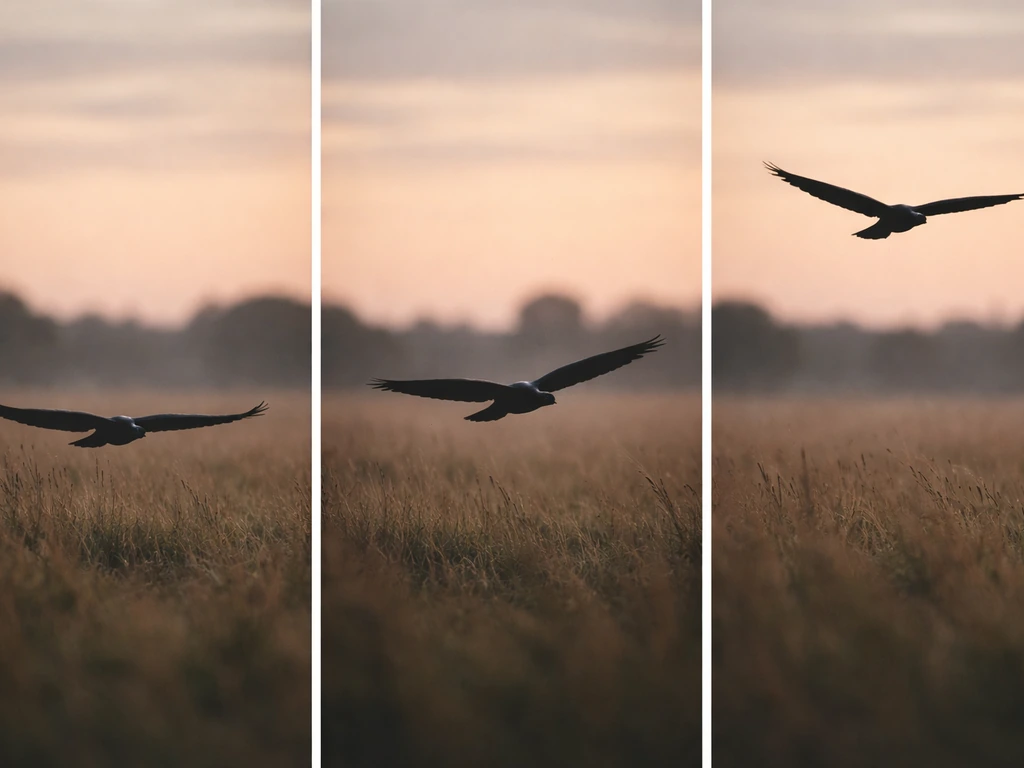
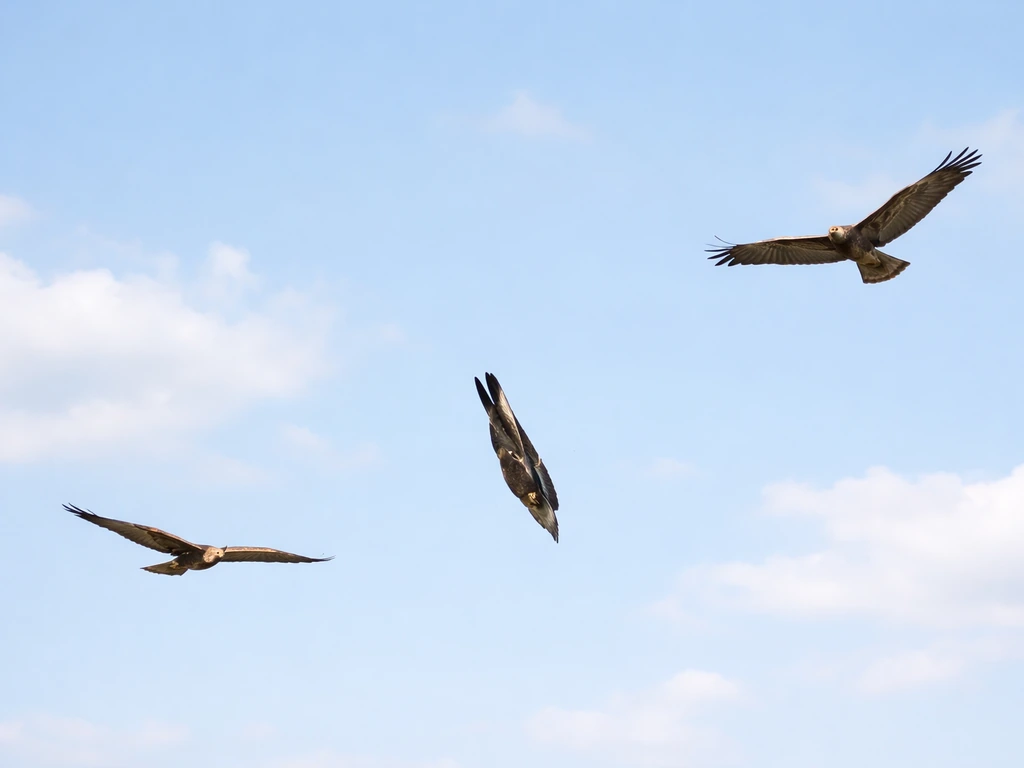
Harriers belong to the genus Circus within the family Accipitridae, which makes them true raptors related to hawks and eagles. There are roughly 16 species worldwide, and the one most North American readers will encounter is the blank" rel="noopener noreferrer">Northern Harrier (Circus hudsonius). In the UK and Europe, the Hen Harrier and Marsh Harrier are more common. What sets all harriers apart from most other birds of prey is their hunting style: they fly very low to the ground, often just a few feet above grass or marsh, gliding in a slow, buoyant, tilting flight with their wings held in a distinctive V-shape (called a dihedral). The Northern Harrier also has a bold white patch at the base of the tail, which makes it one of the more recognizable raptors in flight once you know what to look for.
Unlike hawks that stoop from a height or falcons that pursue in a high-speed chase, harriers rely on surprise and sensory acuity. They have a facial disc similar to an owl's, which helps funnel sound toward their ears so they can locate prey hidden in tall grass purely by sound. That's not a commonly known fact about hawks, and it matters symbolically because it makes the harrier a rare raptor that hunts with both sight and hearing, a detail that recurs in how different traditions interpret them.
Harrier vs. other birds of prey: a quick comparison
| Feature | Harrier | Falcon (e.g. Peregrine) | Red-tailed Hawk |
|---|---|---|---|
| Flight style | Low gliding, tilting V-shape | Fast, powered stooping dive | Soaring high on thermals |
| Hunting method | Surprise from low altitude, uses sound | High-speed aerial pursuit | Visual scanning from perch or soar |
| Habitat | Marshes, open grasslands, farmland | Cliffs, cities, open sky | Forest edges, open country, roadsides |
| Distinctive field mark | White rump patch, facial disc | Pointed wings, dark "mustache" marks | Brick-red tail (adult) |
| Symbolic themes | Patience, dual senses, liminal space | Speed, precision, ambition | Vision, authority, broad perspective |
What harriers symbolize in culture and folklore
Harriers don't appear as frequently as ravens or owls in well-known mythology, but they carry a rich symbolic weight in the traditions where they do show up. The core themes that run through most interpretations are pursuit, patience, and the ability to work at the boundary between two worlds. Because they fly between the sky and the earth without fully inhabiting either, harriers have long been associated with transition, liminality, and the ability to move between states, whether that's physical environments, emotional states, or spiritual planes.
In British and northern European folklore, the Hen Harrier in particular was associated with both protection and danger. Farmers observed that harriers kept small rodent populations in check and therefore treated them as guardians of the land, but the same bird was feared by gamekeepers for preying on partridge and grouse. That dual reputation, protector and predator simultaneously, feeds into a broader symbolic theme of necessary disruption: the harrier doesn't destroy for the sake of it, but it does what needs to be done, even when it's uncomfortable.
Across various Indigenous North American traditions, raptors that hunt low to the ground are sometimes associated with earth medicine and grounded power, as opposed to high-soaring eagles, which carry sky or solar symbolism. The Northern Harrier's hunting style, close to the earth, patient, relying on both senses rather than brute force, positions it in some interpretive frameworks as a symbol of humble, practiced wisdom. It doesn't announce itself from on high; it works quietly and thoroughly.
- Focused pursuit: harriers don't give up on a target easily, and their low, methodical quartering of a field symbolizes sustained effort over dramatic bursts
- Dual perception: the harrier's use of both sight and sound is frequently read as a metaphor for listening as well as looking, for not rushing to conclusions
- Liminal navigation: flying at the threshold between earth and sky places harriers symbolically at crossroads and transitions
- Protective disruption: the dual role of guardian and predator speaks to the idea that real protection sometimes requires difficult action
- Patient strategy: harriers do not hurry; they work a territory systematically, which maps onto themes of planning, preparation, and trust in process
Idioms, slang, and figurative uses of "harrier"
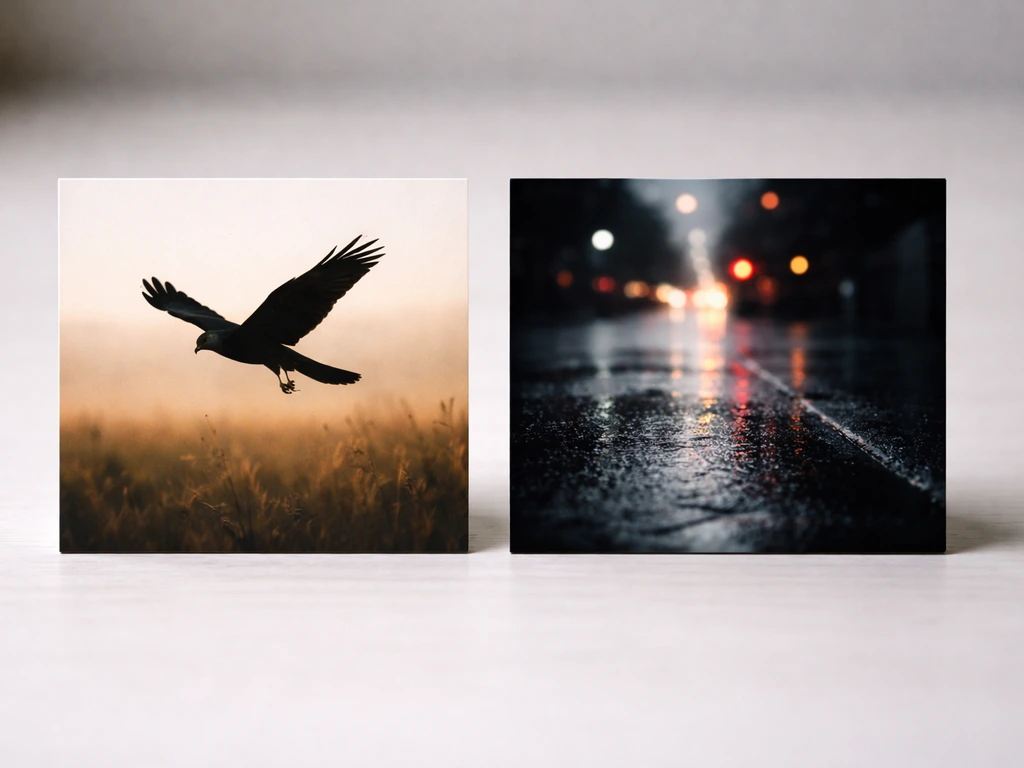
The figurative use of "harrier" in English leans heavily on the non-bird sense of the word. In some contexts, people also discuss hern meaning bird as a related term when exploring bird symbolism. To harry someone means to subject them to persistent pressure, pursuit, or attack, and a harrier in that sense is the agent of that harassment. Phrases like "hounded and harried" appear in older English literature to describe someone relentlessly pursued or worn down. The word shares roots with the Old English "hergian," meaning to ravage or plunder, and that etymological weight gives "harrier" a sharper, more aggressive edge than most bird names carry.
In modern figurative use, calling someone a harrier (or describing a situation as having a harrier quality) suggests relentless, low-level pressure rather than a single dramatic confrontation. It's the kind of pursuit that wears you down slowly rather than one decisive blow. Interestingly, when the bird and the figurative meaning collide in poetry or literature, they tend to reinforce each other: the harrier as a bird that methodically quarters a field until it finds what it needs is an apt metaphor for the figurative harrier who simply won't let something go.
In contemporary slang and informal usage, "harrier" doesn't appear as a standalone bird-idiom the way "albatross" (a burden) or "swan song" (a final act) does. Instead, its figurative power tends to show up in descriptive language: someone might describe a persistent competitor, a nagging problem, or an unrelenting critic as "a harrier" without necessarily connecting it to the bird at all. That ambiguity is worth keeping in mind if you encountered the word in a non-ornithological context.
Harriers in mythology and spiritual symbolism
In Celtic traditions, birds of prey that hunted at dusk or in low, secretive flight were sometimes regarded as messengers between the living world and the otherworld, and harriers fit that mold. Their tendency to appear suddenly from tall grass or reed beds, then vanish again just as quickly, gave them a slightly uncanny quality that lent itself to interpretations involving hidden knowledge or messages from unseen sources. Spotting a harrier at a moment of personal decision was sometimes taken as a sign to trust your instincts, particularly your quieter instincts rather than the loudest voice in the room.
In some folk divination traditions, particularly those rooted in British and northern European rural life, birds that appeared unexpectedly over the threshold of a property were read as omens. A harrier seen circling a home or farmstead was typically interpreted as a call to be vigilant, to pay attention to what you might be missing, especially in practical matters of land, livelihood, or family protection. The gender dimorphism in harriers (males are silver-grey; females and juveniles are brown-streaked) was also occasionally given symbolic weight, with the male associated with clarity and the aerial perspective, and the female with groundedness and nurturing endurance.
From a modern spiritual or intuitive symbolism standpoint, the harrier is often read as an invitation to practice discernment: not just looking, but listening; not just acting, but observing first. If you're drawn to harrier symbolism in a personal or spiritual context, the consistent message across traditions is some version of: slow down, use all your senses, and trust what you notice before you move. That's a different energy from the bold, high-soaring hawk or the swift falcon, and it resonates with people going through periods of quiet preparation rather than outward action. The harrier's symbolism isn't about standing out. It's about being effective.
If harrier symbolism interests you alongside related birds, it's worth knowing that the heron carries some overlapping liminal-water-land themes, while the hermit bird archetype speaks to solitary spiritual practice. The meaning of heron bird sightings is often tied to patience, stillness, and the ability to navigate change near water the heron carries. The harrier sits somewhere in between: solitary in its hunting, yes, but deeply engaged with the physical world around it.
How to figure out what the harrier means for you specifically
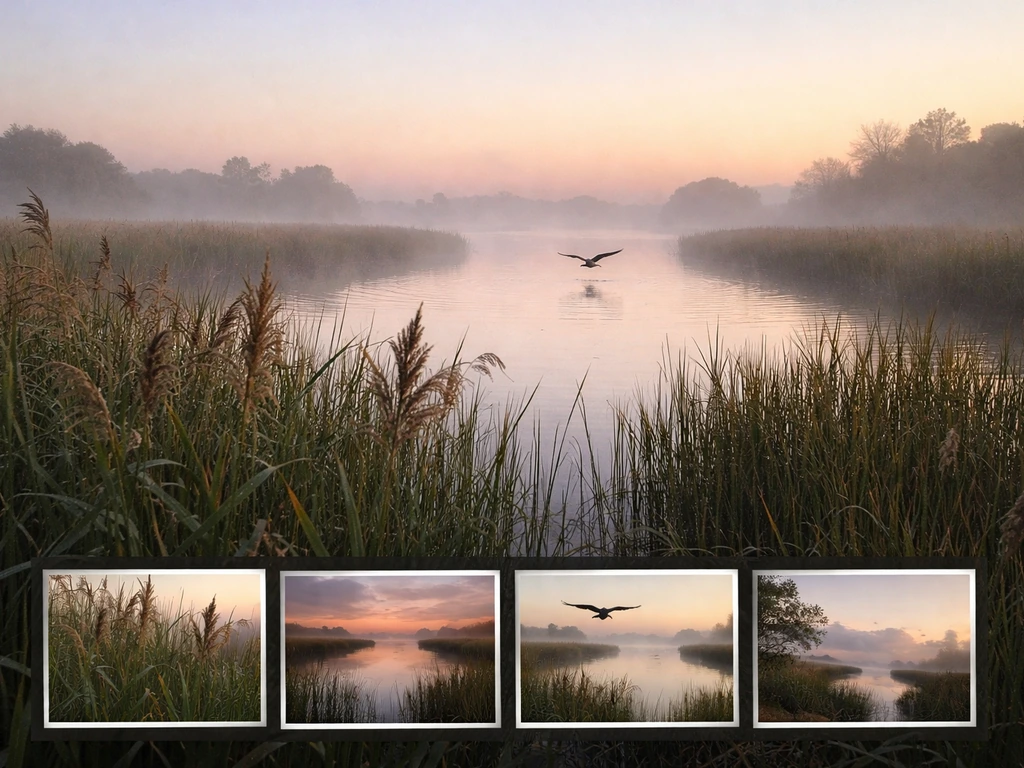
Symbolic meaning only gets useful when it connects to context, and with harriers, context matters a lot. Here are the practical questions to ask yourself if you had an encounter you're trying to interpret, or if you keep coming across the word or image and want to understand its relevance. what does code bird mean in a hospital might be a helpful comparison if you are trying to interpret meaning in a real-world context.
- Where did you see it? Harriers in their natural habitat (marsh edges, grasslands, open farmland) carry the full weight of their liminal symbolism. A harrier spotted in an unusual setting, say, close to a city or over water it doesn't normally hunt, might emphasize the theme of adapting to unexpected territory.
- What was it doing? A harrier quartering a field methodically reads differently from one that suddenly appeared overhead and vanished. The methodical hunter suggests patience and sustained effort. The sudden appearance suggests a message about paying attention right now.
- What time of day was it? Morning harrier sightings are often read as linked to intention-setting and preparation. Evening sightings, especially at dusk when harriers are active, lean toward themes of transition, endings, and threshold moments.
- What was happening in your life at that moment? Bird symbolism is most meaningful when it mirrors something you were already processing. The harrier's core themes (focused pursuit, using all your senses, operating at a boundary) are most relevant if you're navigating a situation that requires strategy over force, or patience over speed.
- Did you notice the color? A silver-grey male harrier carries lighter, more clarifying energy in symbolic frameworks. The brown-streaked female or juvenile is associated with groundedness, camouflage, and working quietly without recognition.
- Was it a single encounter or a recurring one? A one-time sighting might be coincidental. If you're seeing harriers repeatedly, or keep encountering the word, image, or concept in unrelated places, that pattern is worth sitting with more intentionally.
Once you've worked through those questions, the interpretive framework gets much clearer. The harrier almost never shows up symbolically as a dramatic, life-altering omen. Its energy is quieter and more practical than that. It tends to appear when you need a reminder to stay close to the ground, gather more information before acting, and trust that methodical effort will pay off. If that matches what's happening in your life, you have your answer. If it doesn't, it may simply have been a harrier doing harrier things, which is also fine and genuinely worth appreciating on its own terms.
FAQ
If I see the word “harrier” in a poem or online post, how can I tell whether it means the bird or the figurative “harrying” person?
Look for context cues. Bird meaning usually references fields, marshes, low flight, prey, or sensing by sound, while the figurative sense often pairs with words like hounded, tormented, relentless, or pressure. If the writing discusses motivation or annoyance in a human situation without any landscape details, it is more likely using the verb “to harry,” not the raptor.
Are Northern Harriers and other harrier species likely to have different symbolism, or is the meaning always the same?
Many symbolic themes overlap, because the common thread is low, patient hunting and liminal ground-to-sky movement. That said, readers often assign extra flavor based on the species most associated with their region (for example, Hen Harrier in UK storytelling). If you want consistency, use the shared core, then add one local trait you can observe (tail patch visibility for Northern Harrier, low marsh hunting for others).
What’s the most common misidentification issue when people think they saw a harrier?
The biggest mistake is confusing low-gliding behavior with other raptors that hunt near the ground, such as rough-legged hawks. A practical check is flight posture and field marks: harriers typically show a distinctive V-shaped wing dihedral and a facial disc that supports sound-location hunting. In practice, if you only saw a distant bird without wing shape or tail-base visibility, avoid overcommitting to the ID.
How should I interpret a harrier sighting if it happens during a stressful period, but my situation feels “urgent” rather than “patient”?
Harrier symbolism is usually about effective method, not necessarily slow timing in your life. If you feel urgency, treat the message as “gather more sensory information before you escalate,” then act in a focused way. The transition theme can also fit urgent transitions, because liminality is about being between states, not only about waiting.
Does the harrier symbol mean I need to be “aggressive” toward my problem, given the figurative meaning of harry/harrier?
Not usually. The article’s bird symbolism emphasizes discernment, listening, and targeted pursuit, not harassment for its own sake. If the figurative “harrier” tone shows up in your interpretation, translate it into firm persistence or follow-through, without turning it into vindictiveness or repeated provocation.
If I keep encountering the harrier image but nothing changes, how do I avoid forcing a meaning?
Treat repeated encounters as a prompt for observation, then set a time-box. Try one concrete action that matches the symbol (for example, slow down and check overlooked details in one area for a week). If that yields no insight, it may simply be a nature encounter or a metaphor you are resonating with aesthetically, not a directive.
How can I use the “listening” aspect of harriers in a real-life interpretation?
Since harriers locate prey through sound as well as sight, apply it as “information through observation.” Concretely, pause before deciding and ask, “What am I hearing indirectly?” (patterns in feedback, recurring concerns, quiet cues from others, or environmental signals you usually ignore). Then wait for confirmation before a major move.
What should I do if I am interpreting harrier symbolism during a major life transition and I’m not sure which side I’m on yet?
Use the liminal frame explicitly. Instead of asking “What decision should I make?” ask “What can I prepare while I’m in-between?” Harrier guidance typically points to groundwork, patience, and staying close to reality, so you build options rather than forcing a premature conclusion.
Is it safe to interpret harrier sightings as omens for family or home protection?
In the folk-omen tradition, some people read unexpected birds over a property as a vigilance cue. The safest modern translation is practical attention, not fear: check real-world safety basics (maintenance issues, boundaries, communication clarity) and avoid treating the sighting as a prediction of harm. If you need immediate help, rely on actual assessments and professionals rather than symbolism.
Can gender differences in harriers change the meaning I should draw from an encounter?
Gender dimorphism can add nuance for some symbolism traditions, but field identification is not always reliable. If you cannot confidently distinguish male versus female or juvenile, keep the meaning at the species level (low, ground-adjacent, sensory hunting). If you can, you can optionally map male to clarity, female to endurance, but do not base major decisions solely on that attribution.
Next Article
Hern Meaning Bird: What It Really Refers To
Learn what hern means with bird searches, common misspellings, real bird terms, symbolism, and quick ID steps.