The 'lirpa loof bird' is not a real species. It is 'April Fool' spelled backwards, and that is the entire joke. The phrase turns up in April Fools' pranks, classroom worksheets, local newspaper gags, and internet memes as a deliberate signal that what you are reading is fictional. When you see 'lirpa loof,' 'loof lirpa,' or the variant 'sloof lirpa' attached to a bird (or any creature), you are looking at a long-running wordplay tradition that dates back at least to 1909.
Lirpa Loof Bird Meaning: April Fool Wordplay Explained

Marcus Blackwell
7 Aug 2026
Real species or elaborate joke?
There is no bird called the lirpa loof in any ornithological record, taxonomy database, or field guide. No scientific name, no genus, no sighting logs. Debunking articles and fact-checking pieces confirm this categorically: the sloof lirpa bird does not exist as a biological taxon. If you searched for it because someone told you to look out for one in your backyard, congratulations, you have been on the receiving end of one of the oldest recurring pranks in the English-speaking world.
The fictional 'species' shows up with invented field-guide details: fabricated habitat ranges, made-up calls, fake migration routes. That specificity is intentional. The more convincing the fake description sounds, the better the prank lands. Some versions even include mock Latin binomial names to complete the illusion.
The wordplay hiding in plain sight
Spell 'lirpa loof' backwards and you get 'fool april,' which rearranges cleanly to 'April Fool.' This type of reversal is called an anadrome (or a simple backwards spelling), and it has been a go-to device for pranksters because it is just obscure enough to fool the uninitiated while being instantly recognizable to anyone in on the joke. The same trick works with 'loof lirpa' (reverse: 'april fool') and 'sloof lirpa' (reverse: 'april fools').
The earliest printed example I have been able to locate comes from Mary E. Blain's Games for All Occasions, a party manual copyrighted in 1909 and now freely available via Project Gutenberg (ebook #24597). Blain uses the name 'Madam Loof-lirpa' and helpfully adds the parenthetical: '(April fool spelled backwards.)' That parenthetical tells you everything: even in 1909, the author expected some readers to need the nudge. The device was already a shared cultural reference rather than a new invention, which suggests it probably predates that publication by at least a few years.
A second documented landmark came much later: on April 1, 1984, the BBC magazine programme That's Life! staged a fake 'Lirpa Loof' animal segment at London Zoo. The televised hoax pushed the name into mainstream British popular culture in a way that community bulletins and party games never quite managed. By the time the internet arrived, 'lirpa loof' was already embedded in the collective prankster vocabulary. A 1974 bulletin from the Puget Sound Mycological Society also used 'Loof Lirpa' as a fake species name, noting in parentheses that it was the native name spelled backwards, showing the tradition was alive and well across the Atlantic and across different subject areas decades before the BBC segment. Spore Prints, Bulletin of the Puget Sound Mycological Society (April 1974) includes a parenthetical noting that 'Loof Lirpa' is the native name spelled backwards Spore Prints — Bulletin of the Puget Sound Mycological Society (April 1974).
Where and when you are most likely to encounter it
The term clusters around a single date: April 1. That said, its contexts have diversified considerably over time.
- April Fools' newspaper and newsletter articles: local papers and community bulletins run fake wildlife discovery stories under a byline of 'Loof Lirpa' or 'Lirpa Loof.' The Insurance Journal, for example, has a documented 'Lirpa Loof' author page with entries dated April 1.
- Classroom pranks and teacher resources: elementary-school teachers use fake 'Lirpa Loof bird' worksheets as gentle April Fools' lessons. Sites like TeachersPayTeachers carry products built around the gag, and edu.com has published teacher guides for it. The prank doubles as a media-literacy exercise.
- Internet memes and social media posts: images of real birds (or fantastical illustrated creatures) get relabeled as the 'Lirpa Loof' every April 1, circulating on Twitter/X, Facebook, and birding community forums.
- Community and hobbyist group newsletters: the Puget Sound Mycological Society used it in 1974; similar organizations in natural history, gardening, and amateur science continue the tradition.
- Radio and television: the 1984 BBC That's Life! segment is the most famous broadcast example, but local radio stations have used the name as part of April Fools' wildlife reports.
How a one-day joke became a recurring cultural meme
The lirpa loof works so well as a meme for a few interconnected reasons. First, the backwards spelling is just translucent enough: most people do not instinctively reverse words when they read, so 'lirpa loof' slides past initial scrutiny. Second, pairing it with a bird gives pranksters a rich body of legitimate-sounding detail to play with. Birds have scientific names, Latin taxonomy, migratory data, and measurable physical traits. A fake field-guide entry for the 'Lirpa Loof Warbler (Avis aprilus foolicus)' can be dressed up to look entirely plausible. Third, the prank is gentle. Nobody is seriously misled for long, and the reveal is satisfying rather than harmful, which makes it socially shareable.
Journalism and media analysts who survey April Fools' hoaxes (including commentary pieces from NPR-affiliated outlets and JSTOR Daily essays on zoological jokes) consistently place the lirpa loof within a larger tradition of invented prank fauna, alongside the snipe hunt, the jackalope, and other beloved fake animals. Media Mischief on April Fools’ Day, Capital Public Radio / NPR‑style commentary (lists ‘Loof Lirpa’ as a recurring wink‑wink pseudonym meaning April Fool) Media Mischief on April Fools’ Day — Capital Public Radio / NPR‑style commentary (lists ‘Loof Lirpa’ as a recurring wink‑wink pseudonym meaning April Fool). What distinguishes lirpa loof from those examples is the built-in decoding mechanism: the backwards spelling lets the joke reveal itself the moment you look closely. That self-signaling quality is why educators have adopted it. A snipe hunt requires an accomplice to explain the joke; a lirpa loof worksheet teaches the student to crack the code themselves.
Online, the meme spreads in annual cycles. Each April 1 brings a fresh wave of posts, often from people who only just discovered the trick and are delighted to share it. That cycle of rediscovery is itself part of what keeps the tradition alive. It is, in a small way, a genuinely democratic piece of folklore: no copyright, no single author, no authoritative version.
What it symbolizes (with honest caveats)
Because the lirpa loof bird is a constructed joke rather than a creature from mythology or folklore, any symbolic meaning it carries comes entirely from its prank context. That is worth stating plainly before we explore those meanings, because it is tempting to over-read invented terms. With that caveat noted, here is what the phrase reliably signals in practice.
| Symbolic layer | What it signals | Comes from |
|---|---|---|
| Hoax and trickery | Someone is pulling your leg, playfully and transparently | The prank tradition itself |
| Playful deception | The intent is humor, not malice; the reveal is built in | The self-decoding backwards spelling |
| Cultural in-group marker | Knowing the joke marks you as literate in April Fools' culture | Decades of shared use in media and communities |
| Folly and gullibility (gentle) | Being fooled is humanizing, not humiliating; the joke is designed to be kind | The April Fools' tradition broadly |
| Media literacy prompt | Pause, read carefully, question the source | Classroom and educator use |
The phrase does not carry the deep mythological freight of a real bird like the raven or the owl. If you are looking for rich symbolic traditions around actual birds, the lapwing (associated with deceit and trickery in some folklore traditions, fittingly enough) or the symbolic readings attached to other real species will give you more to work with. But within its own narrow context, the lirpa loof is a perfectly coherent cultural symbol: it means 'this is a joke, and now you are in on it. For a comparison, see the entry on lily bird meaning, which discusses how invented and real birds carry symbolic meanings. '
How to read the phrase when you encounter it
If you come across 'lirpa loof bird,' 'loof lirpa bird,' or 'sloof lirpa bird' in any context, here is a reliable decoding process.
- Check the date: if the publication or post date is April 1 (or close to it), the phrase is almost certainly a deliberate April Fools' gag. That alone resolves most cases.
- Reverse the words: write out 'lirpa loof' and read it backwards. You will see 'fool april' immediately. The same check works for 'loof lirpa' and 'sloof lirpa.'
- Check the byline or author name: publications running April Fools' content sometimes use 'Loof Lirpa' or 'Lirpa Loof' as a pseudonym byline. If the author name reverses to 'April Fool,' the article is the joke.
- Look for suspiciously perfect field-guide detail: fake lirpa loof entries often include elaborate invented Latin names, precise but unverifiable habitat data, and enthusiastic citation of non-existent sources. The more convincing it sounds, the more likely it is a prank.
- Search a taxonomy database: the Cornell Lab of Ornithology's eBird, the IOC World Bird List, and the Clements Checklist all cover recognized species. A 30-second search will confirm no lirpa loof appears anywhere in legitimate ornithology.
Using the term responsibly as a writer or communicator
The lirpa loof gag is genuinely fun, but it requires a light touch when you deploy it. The Society of Professional Journalists' Code of Ethics advises transparency and recommends explaining methods when deceptive devices are used in journalism. That principle translates well here: if you write a lirpa loof prank piece for a newsletter, a classroom, or a social post, make sure the reveal is accessible within the content itself or immediately after. The backwards-spelling device is the built-in reveal, but not everyone knows to look for it.
Online platforms increasingly require or strongly encourage explicit parody and satire labeling to prevent misinformation from spreading beyond its intended audience. A joke that stays on April 1 in a local newsletter is low-risk; the same content shared without context on social media in July can genuinely confuse people who encounter it out of season. Tagging it with 'April Fools,' 'parody,' or a direct note that the species is fictional costs you nothing and keeps the joke clean.
Tone matters too. The lirpa loof tradition works because it is warm and inclusive. The prank invites the reader into the joke rather than leaving them embarrassed. Writing that leans mean-spirited (mocking people for not catching it, for instance) misses the spirit of the thing entirely. Keep it generous.
Audience considerations
- Children and classrooms: the lirpa loof worksheet is an excellent media-literacy exercise when the teacher is ready to explain the reveal. Frame it as a puzzle, not a gotcha.
- General readers and social followers: label the post as April Fools' content, either in the caption or the first line. The backwards-spelling trick is the joke; the label does not spoil it.
- Birdwatching communities: birding forums and Facebook groups run lirpa loof posts every April 1 as a community tradition. Regulars will recognize it immediately; newcomers will appreciate a quick note explaining the gag.
- News and journalism contexts: if you are writing a news-adjacent piece, follow SPJ guidance. Explain clearly that the species is fictional and that the name reverses to 'April Fool.' Do not let the joke run without acknowledgment.
Ready-to-use examples
These short examples show how the term fits naturally into different formats. Adapt them freely.
- Social post (April 1): 'Rare sighting in the backyard this morning: the elusive Lirpa Loof Warbler. Field marks include a backwards-spelling call and a strong association with April 1. Happy April Fools' Day! 🐦'
- Classroom worksheet header: 'Today we are going to identify a mystery bird called the Loof Lirpa. Read the field guide carefully, then see if you can figure out what is really going on.'
- Newsletter byline gag: 'Wildlife report by Loof Lirpa, Staff Naturalist. (Hint: try reading that name backwards.)'
- Social post (reveal): 'If you looked up the Sloof Lirpa bird after yesterday's post, try spelling it backwards. April Fools!'
- Explainer sentence for an article: 'The so-called Lirpa Loof bird is not a real species; the name is 'April Fool' spelled backwards, a recurring joke used in pranks, classroom exercises, and community newsletters every April 1.'
Images that work well with this topic
Because the lirpa loof is a fictional creature, the most effective images play on the tension between plausible-looking documentation and obvious absurdity. Here are the types that work best, along with sample caption text.
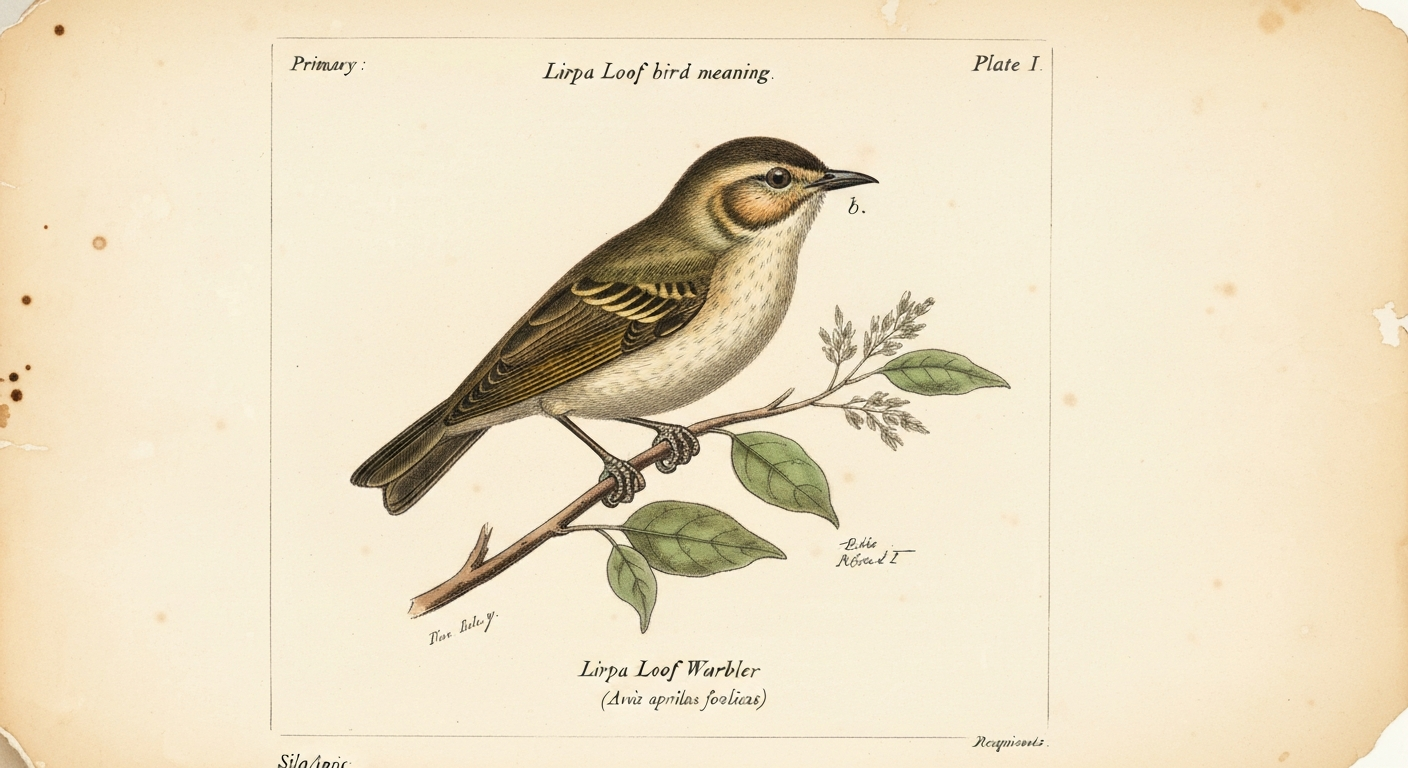
- Mock vintage field-guide plate: an illustration styled like a 19th-century ornithological print, showing a generic small passerine labeled 'Lirpa Loof Warbler (Avis aprilus foolicus).' Caption: 'Plate I: The Lirpa Loof Warbler, illustrated for the first (and only) time. Note: this species does not exist.'
- Meme screenshot or social-post mockup: a screenshot of a viral April 1 post announcing a lirpa loof sighting, ideally with visible engagement metrics. Caption: 'Annual April Fools' tradition: the Lirpa Loof makes its rounds on social media every April 1.'
- Vintage prank poster: a faux-retro circus or museum poster advertising a 'Live Loof Lirpa on Display.' Caption: 'The prank-animal tradition goes back centuries; the Lirpa Loof is one of its cleverest modern iterations.'
- Classroom worksheet image: a scan or photo of a teacher's lirpa loof bird identification exercise. Caption: 'Educators use the Lirpa Loof worksheet as a gentle April Fools' lesson in critical reading and media literacy.'
- Side-by-side text graphic: the words 'LIRPA LOOF' with an arrow and the reversed text 'FOOL APRIL' beside it. Caption: 'The whole joke is in the spelling. Read it backwards.'
Related entries worth reading next
The lirpa loof sits in interesting company on this site. The sloof lirpa variant ('April Fools' rather than 'April Fool' reversed) follows the same logic and appears in many of the same contexts; that entry goes deeper on some of the variant spellings and their specific documented appearances. If the trickery and deception angle caught your attention, the lapwing is a genuinely fascinating real bird with a long association with cunning and misdirection in European folklore, quite the contrast to the invented lirpa loof. The lily bird and limbless prey entries explore other corners of bird-related language and symbolism that round out the picture of how birds function as cultural shorthand across very different registers.
How to verify the claims in this entry
Everything stated here can be checked against primary or reliable secondary sources. Mary E. Blain's Games for All Occasions (1909) is freely searchable on Project Gutenberg as ebook #24597; search for 'Loof-lirpa' and you will find the exact parenthetical note. The BBC That's Life! segment from April 1, 1984, is documented in Wikipedia's coverage of the programme and in various media retrospectives on notable British April Fools' hoaxes. The Puget Sound Mycological Society's Spore Prints bulletin from April 1974 is cited in mycological archives. Teacher-resource sites including edu.com and TeachersPayTeachers carry current examples of classroom lirpa loof materials. For the journalism-ethics framing, the Society of Professional Journalists publishes its Code of Ethics publicly at spj.org. No ornithological database (eBird, IOC World Bird List, Clements Checklist) lists a lirpa loof, sloof lirpa, or loof lirpa species; that absence is itself the verification.
If you encounter a source that treats the lirpa loof as a genuine species without any April Fools' framing, treat that source with skepticism. The joke only works because it mimics legitimate documentation closely enough to fool a quick reader. Applying the same critical reading skills the prank is designed to teach is exactly the right response.
FAQ
Headline and meta description — what should I title the article and its meta description?
Headline: "Lirpa Loof Bird (aka Loof Lirpa): What It Means and How to Use the Joke". Meta description: "Learn why ‘Lirpa Loof’ (or ‘Loof Lirpa’) isn’t a real bird, its origin as ‘April Fool’ spelled backwards, common contexts and symbolic uses, and how writers can use the gag responsibly."
Quick answer — what is the lirpa loof bird in one paragraph?
The lirpa loof (also written Loof Lirpa, Sloof Lirpa) is not a real species but a joking device: its name is simply “April Fool” spelled backwards and is used as a wink‑wink signifier in April Fools’ pranks, classroom exercises and internet memes. Documented in printed party/game manuals by 1909 and popularized in modern mass media (notably an April 1 television stunt in 1984), the phrase functions as an in‑text signal that a piece of content is playful or fictitious rather than zoological fact.
Etymology and origin evidence — where did the phrase come from and what primary evidence exists?
The device is an anadrome (a word or phrase read backwards) of “April Fool.” A printed example appears in Mary E. Blain’s Games for All Occasions (1909), which explicitly lists Loof‑lirpa and notes it as “April fool spelled backwards.” Later local bulletins and community publications (e.g., mid‑20th‑century newsletters) use the variant; BBC’s That’s Life staged a Lirpa Loof hoax on Apr 1, 1984, helping bring the name to wider public attention. These sources support a long‑running jokey usage rather than any biological origin.
Cultural and meme analysis — how and where is the term used today?
Lirpa/Loof appears across several overlapping arenas: April Fools’ media hoaxes and satirical articles, classroom activities and teacher resources (used as a harmless prank for children), local newsletters and community humor pieces, and online meme culture where creators use it for playful deception or as a recognizable in‑group wink. It fits into a broader tradition of invented prank fauna (snipe hunts, jackalope, etc.). Modern platform norms and journalism practice treat it as a conventional signal of fiction or satire.
Is lirpa loof a real species or a joke?
It is a joke. There are no scientific records or taxonomic descriptions supporting a real bird called lirpa loof/loof lirpa/sloof lirpa. Contemporary fact‑checking pieces, hobbyist debunks and educational explainers uniformly identify it as fictional and recommend revealing the prank by Apr 2 or clearly labeling satire to avoid misinformation.
Symbolic meanings — what does the lirpa loof represent and what caveats apply?
Typical symbolic meanings: playful deception, hoax or trickery, cultural in‑joke for April Fools’ participants, and lighthearted folly. Caveats: meaning depends on context and audience — in some settings the device is harmless fun, but in others (sensitive news topics, public safety, medical or financial contexts) it can mislead or cause harm; always consider potential consequences and audience literacy with satire.
Next Article
Lily Bird Meaning: Symbolism, Uses, and Interpretations
Lily bird meaning: literal checks, floral + avian symbolism, cultural uses, tattoos, dreams, interpretation.