In Lewis Carroll's Jabberwocky, the jubjub bird is one of three monsters the father warns his child to avoid, appearing in the line 'Beware the Jubjub bird, and shun / The frumious Bandersnatch!' The poem itself gives you almost nothing else about it. No physical description, no habitat, no sound. What it does give you is the grammar of threat: the word 'beware,' the word 'shun,' and a creature named as a bird. That's the in-poem meaning, and it's honestly enough to work with. Everything richer comes from Carroll's later poem The Hunting of the Snark (1876), where the jubjub gets described as 'a desperate bird' that 'lives in perpetual passion.' That cross-text picture is where most people's interpretations really take root.
Jubjub Bird Meaning in Jabberwocky: Definition and Symbolism

Marcus Blackwell
12 May 2026
What the jubjub bird actually is in Jabberwocky
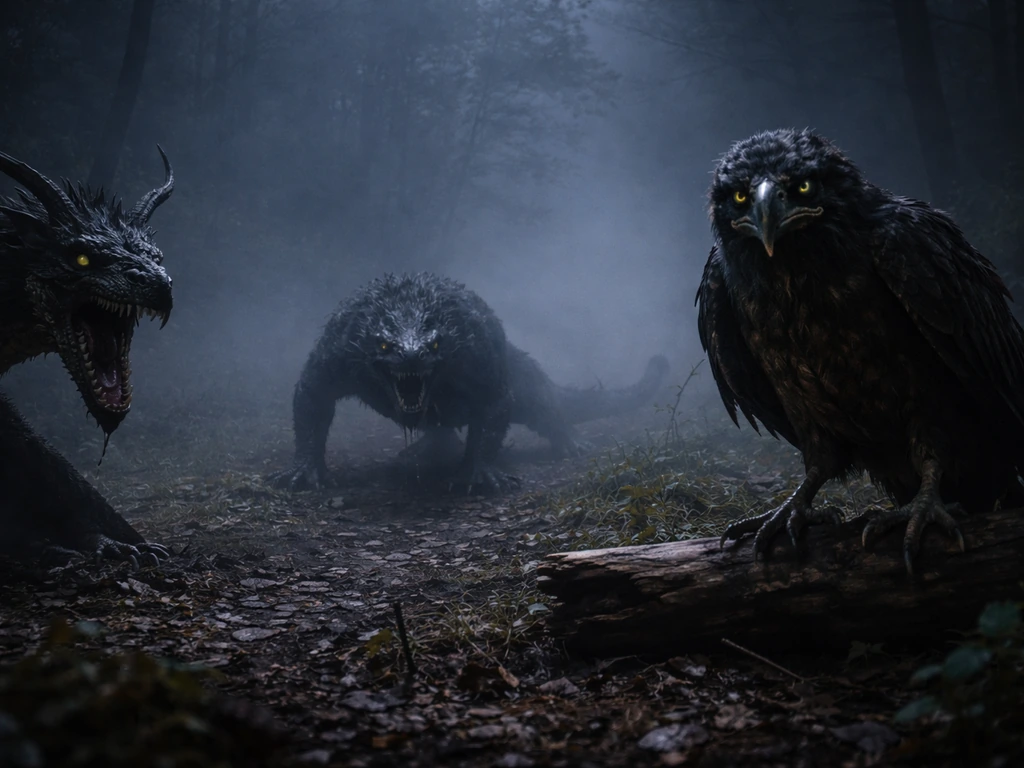
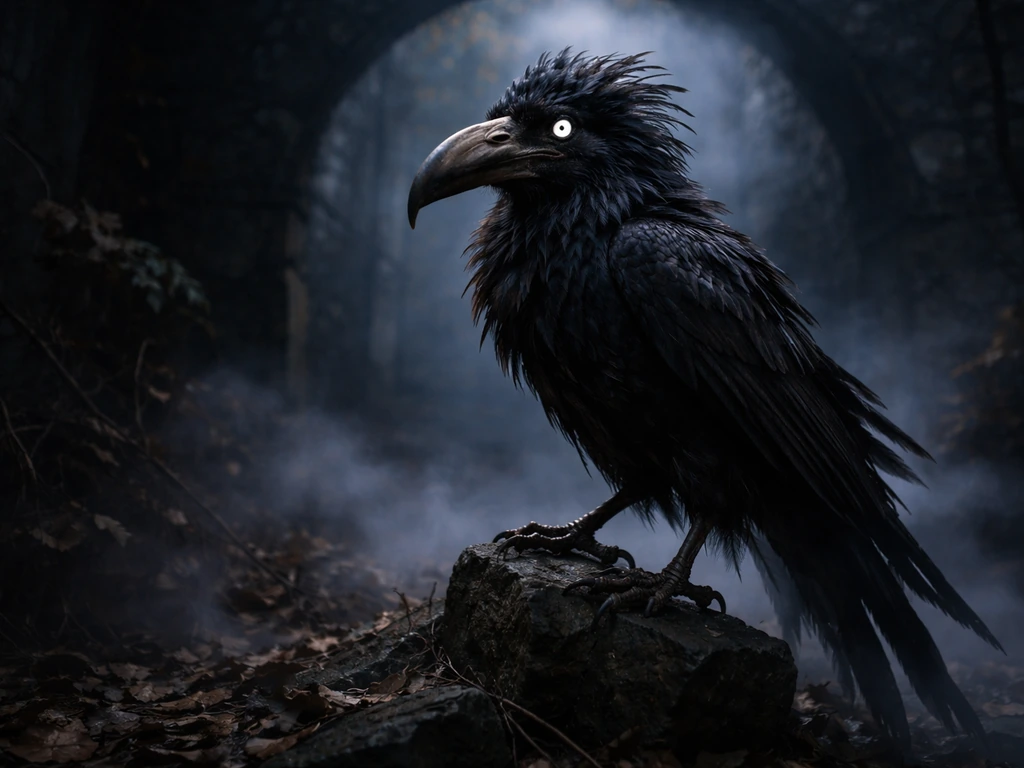
Jabberwocky gives you three beasts to fear: the Jabberwock itself, the frumious Bandersnatch, and the jubjub bird. Within the poem's own lines, the jubjub is defined almost entirely by its position in a list of dangers. It gets no stanza of its own, no description of teeth or claws, no appearance in the hero's quest. It is, structurally, a background menace, the kind of creature a worried parent names before sending a child out the door.
That's not a weakness in the poem, though. Carroll is deliberately working with a warning that feels authoritative precisely because it doesn't explain itself. 'Beware the jubjub bird' lands with the same force as 'don't go into the woods alone.' The danger is assumed, not explained. Readers naturally infer that the jubjub belongs to the poem's semantic field of danger, an avian creature placed alongside genuine monsters, not comic relief.
Where the description actually opens up is in The Hunting of the Snark. In that poem, a character called the Butcher gives what amounts to a mock-encyclopedic lecture on the jubjub, identifying it as 'blank" rel="noopener noreferrer">a desperate bird' that 'lives in perpetual passion.' That phrasing is delivered in a comedic, faux-scholarly tone, but it sticks. It's the closest Carroll ever came to giving the jubjub real behavioral traits, and most literary commentary leans on it heavily.
Why Carroll invented the word and what it might come from
Carroll was a mathematician and logician who delighted in language that felt meaningful without being pinned down to a referent. The word 'jubjub' is a good example of how he worked. Its doubled syllables ('jub-jub') carry an onomatopoeic quality that several commentators have noted sounds genuinely birdlike, the kind of repetitive call you might expect from a real species. Some annotations have even connected it to a bird call rendered as 'jub, jub,' though this remains suggestive rather than confirmed.
There's also a documented etymological thread worth knowing about. 'Jub' appears in older English with meanings like a jerkin or a dialect word for a horse's trot, and these have been proposed as possible raw material Carroll may have drawn on. Wikipedia's Jabberwocky page notes an OED-related etymological thread linking “Jub” to jerkin and a dialect term for a horse's trot in the context of the “Jubjub” wordplay Jub' appears in older English with meanings like a jerkin or a dialect word for a horse's trot. That said, the poem's own text gives no confirmation, and Carroll left no definitive note explaining 'jubjub' the way he famously annotated some of his other coinages. Treating any single etymology as authoritative goes beyond what the evidence supports.
What's more certain is that the word functions through sound symbolism, a real linguistic mechanism where phonetic patterns generate consistent emotional associations even without a dictionary definition. The 'jub' sound carries a soft, slightly rounded quality that can feel both comic and vaguely ominous, which fits perfectly into Carroll's nonsense universe where threat and absurdity coexist. Scholar Craig Haslam has pointed out that 'jubjub' is 'intoned differently every single time' it's performed or read aloud, which reinforces that the word's meaning lives in its sound play as much as any fixed sense.
What the jubjub bird symbolically represents
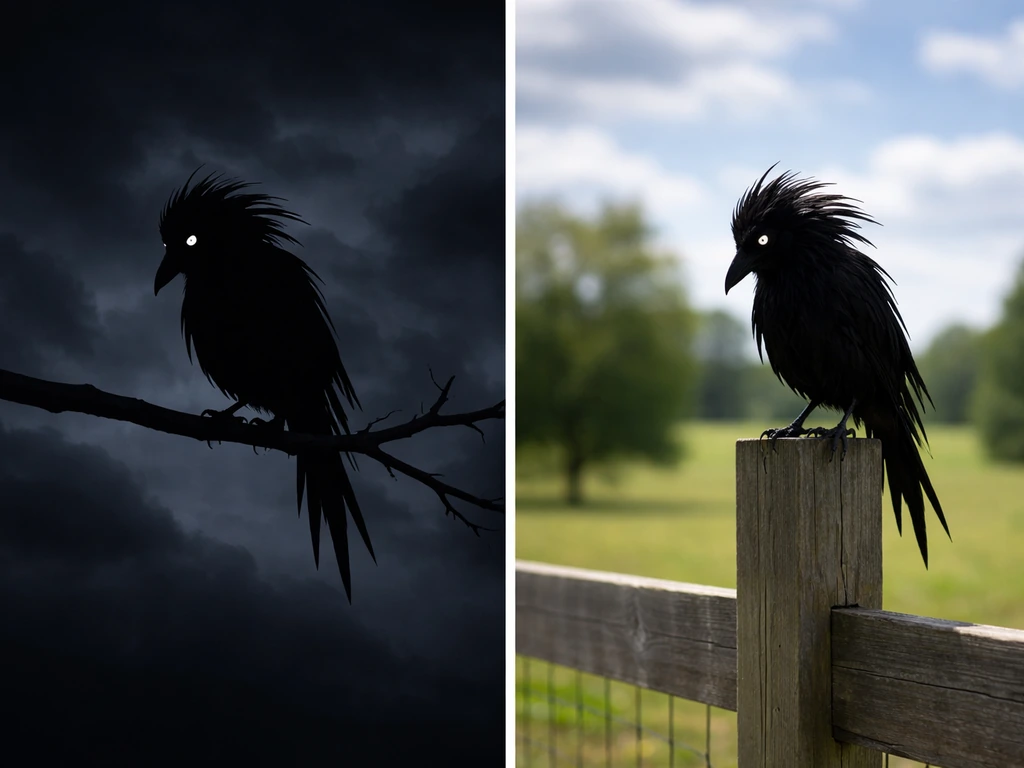
Here's where interpretation does most of its work, and where you need to separate two distinct readings. The first is the in-poem function: the jubjub is an avian menace, part of a graded threat list, something to be feared without explanation. The second is a broader symbolic overlay that critics and readers have layered on top, often drawing from The Hunting of the Snark's 'perpetual passion' description.
In that second reading, the jubjub tends to be interpreted as representing something like overwhelming, irrational intensity. 'Perpetual passion' is a phrase that suggests a creature driven by emotion rather than reason, which fits neatly into Jabberwocky's broader themes of absurdity and the limits of rational understanding. Some readers take this further, seeing the jubjub as a symbol of the kind of danger that comes from uncontrollable forces rather than deliberate malice, an unpredictable, passionate creature rather than a calculating villain.
It's worth being careful here. These are interpretive extensions, not claims Carroll explicitly made. The safer framing is that the jubjub occupies a structural role in the poem analogous to omen-birds in folklore and mythology: a creature named as dangerous, associated with warning, and defined more by its emotional effect on the hearer than by any concrete trait. That's actually a very traditional function for a bird to hold in symbolic literature.
How literary criticism has interpreted the jubjub
The dominant critical approach to the jubjub treats it as a product of Carroll's nonsense method: the creature generates meaning through syntax and position rather than through referential description. Annotators point out that 'Beware the [X]' is a powerful grammatical frame, one that makes whatever fills the X slot feel threatening regardless of what that thing actually is. The jubjub benefits from that structure the same way the Jabberwock does, except the Jabberwock gets a whole stanza of description and the jubjub gets a single line.
A second critical angle focuses on the parody dimension. Carroll was partly mocking the authoritative tone of Victorian natural history writing, the kind of confident zoological cataloguing that named and categorized everything. By giving his invented creatures formal-sounding names and then providing mock-scholarly descriptions (especially in The Hunting of the Snark), he lampoons that genre's pretension to comprehensive knowledge. The Butcher's lecture on the jubjub, with its confident 'perpetual passion' diagnosis, reads like a parody of a naturalist's field notes.
A third strand of criticism, informed by how readers actually process the poem, emphasizes that audiences infer semantic roles from context clues even when explicit definition is absent. If a word appears after 'Beware,' alongside other named dangers, and is labeled a 'bird,' most readers will correctly slot it into the category of 'dangerous non-human creature.' This is a documented feature of how language builds meaning, and it's part of why Jabberwocky works on first reading even though so many of its words are invented.
Where the meaning shifts depending on your context
If you're reading Jabberwocky as a standalone poem with no other Carroll context, the jubjub bird is simply a named avian danger in the father's warning. That's its entire in-poem existence. If you're reading across Carroll's nonsense universe, pulling in The Hunting of the Snark, you get a richer creature: desperate, passionately driven, characterized in a mock-authoritative mode. These two readings aren't contradictory, but they're not the same thing either. In many discussions, people search for the gugu bird meaning, and that curiosity overlaps with how readers read the jubjub as a symbolic warning jubjub bird.
If you're approaching the jubjub from a folklore or mythic angle, looking for connections to traditional monster-birds or symbolic creatures in oral tradition, you'll find the comparison interesting but structurally rather than literally. That said, the phrase ghuggi bird meaning in english is usually used by readers looking for a direct, plain-language interpretation of a “ghuggi” bird reference. Carroll wasn't drawing on a specific mythological bird tradition the way, say, a medieval poet invoking a raven would be. The jubjub is Carroll's invention. Any folkloric resonance it carries is incidental to its sound and structure, not a deliberate citation of tradition.
For general readers who land on 'jubjub bird meaning' while looking up a crossword clue or a literary reference, the most practically useful answer is: it's an invented, nonsense-language avian creature from Jabberwocky that functions as a danger-symbol, described more fully in The Hunting of the Snark as 'a desperate bird' living in 'perpetual passion.' That covers about 95% of what you'd need to know in most contexts.
Connecting the jubjub to broader bird symbolism
Even though the jubjub is an invented creature, it slots comfortably into a recognizable pattern in bird symbolism across literature and folklore. Birds used as omens or warnings appear across cultures: ravens signal death, owls foretell doom, certain mythological birds are invoked in warnings precisely because they're unseen but assumed to be terrifying. The jubjub occupies a structurally similar role, a bird you warn someone about rather than one you describe in detail, because the unknown is more frightening than the known.
The 'perpetual passion' trait from The Hunting of the Snark also has analogues in traditional bird symbolism, where birds are sometimes associated with overwhelming emotion, desire, or instinct. The phoenix burns with passion, the nightingale in classical poetry embodies longing. Carroll's jubjub, with its desperate intensity, fits that emotional archetype loosely, though again, framing this as analogy rather than direct influence is the honest approach.
If you find yourself interpreting other invented or symbolic bird references in literature, the jubjub offers a useful method: first, look at what the bird is asked to do grammatically (is it warned against, worshipped, followed?); second, look at any cross-text or authorial description; third, consider the sound and form of the name itself for emotional connotation. That three-step process works surprisingly well for navigating everything from Carroll's nonsense lexicon to less familiar symbolic birds in world folklore and poetry. The jubjub bird, strange as it is, turns out to be a pretty good teacher.
| Creature / Bird | Source text | Defining trait | Symbolic function |
|---|---|---|---|
| Jubjub bird | Jabberwocky + The Hunting of the Snark | Desperate, lives in perpetual passion | Avian danger-symbol; omen of threat within Carroll's nonsense universe |
| Jabberwock | Jabberwocky | Jaws that bite, claws that catch | Central monster; obstacle to be defeated |
| Frumious Bandersnatch | Jabberwocky + Through the Looking-Glass | Frumious (furious + fuming) | Paired danger with jubjub; unnamed threat category |
| Raven | Folklore and literature broadly | Dark, ominous, death-associated | Omen of death or ill fortune in multiple traditions |
| Owl | Folklore and mythology broadly | Nocturnal, wise or foreboding | Omen of wisdom or doom depending on culture |
FAQ
What does “jubjub bird meaning in Jabberwocky” boil down to if I ignore The Hunting of the Snark?
Inside Jabberwocky, it functions mainly as a named avian danger in the father’s warning. The poem does not give it traits like a habitat, behavior, or physical features, so the “meaning” is largely that it is something you are told to beware and shun, placed in a threat list alongside the other monsters.
Is the jubjub the same creature as the Jabberwock or the Bandersnatch?
No. The poem treats them as separate threats: the Jabberwock is the main monster the child is told to fight, while the frumious Bandersnatch and the jubjub bird are part of the earlier warning framework. They share the role of danger, but they are different named entities.
Why is the jubjub not described in Jabberwocky, and does that change its meaning?
Carroll largely relies on the warning syntax (“Beware the X,” “shun the X”) rather than on descriptive lore. Because the jubjub lacks a descriptive stanza, readers infer its category from its label (bird) and from its placement among dangers, which makes it feel ominous specifically because it is not explained.
What does “perpetual passion” add, and is it meant literally?
In The Hunting of the Snark, “a desperate bird” and “lives in perpetual passion” provide a behavioral emphasis, but the surrounding delivery is mock-encyclopedic. Treat it as interpretive enrichment rather than zoological fact, it supplies a likely emotional temperament (driven, irrational intensity) for readers who want more than Jabberwocky offers.
Do I have to accept etymology guesses about “jub” to understand jubjub?
No. Etymological proposals are speculative, and Carroll did not provide definitive notes for this word the way he did for some other coinages. For practical reading, prioritize function in the sentence (the warning), plus the cross-text “perpetual passion” description if you want a fuller picture.
Is “jubjub” supposed to sound like a bird call?
It likely invites that impression, but it is best treated as sound symbolism and onomatopoeic suggestion rather than as proven transcription. The word’s doubled form, “jub-jub,” tends to feel repetitive, which supports the “birdlike” association some annotations mention.
Why do some people say the jubjub “means” irrational intensity or uncontrollable danger?
That reading comes from the Snark overlay, especially the “perpetual passion” idea, and from the broader theme that Jabberwocky’s threats are not neatly rational. It is an interpretive overlay, not something the Jabberwocky line itself explicitly proves, so it helps to frame it as “symbolic tendency” rather than author-confirmed meaning.
Could “jubjub bird meaning” on the internet be mixing up different Carroll terms?
Yes, confusion happens because “Jabberwocky” and “The Hunting of the Snark” both contain nonsense monsters and mock-scientific commentary. If a source gives you a physical description for the jubjub, check whether it is borrowing from Snark, because Jabberwocky itself gives almost no creature-specific details.
How can I interpret any invented bird reference in nonsense literature the same way?
Use a quick decision process: (1) identify the grammatical role (warned against, chased, followed, worshipped), (2) look for any authorial or cross-text description, and (3) consider phonetic feel (name shape and sound). For the jubjub specifically, step (1) and (2) matter most.
Next Articles
Munster Bird Meaning: Folklore, Symbolism, and How to Verify
Meaning of Munster bird searches: folklore, symbolism, idioms, spelling variants, and quick ways to verify the reference
Martin Bird Meaning: Symbolism, Folklore, and Signs
Learn martin bird meaning with symbolism, folklore, and how to identify the right species for omens and dreams.
Hovering Bird of Prey Pass By You Meaning: Symbol, Safety & ID
Discover literal and symbolic meanings when a hovering bird of prey passes by you, behaviors, species, safety, and how to