A game bird is any bird that is legally hunted for sport, food, or both. If you meant the phrase “gooney bird” instead of “game bird,” it has its own separate slang meaning gooney bird meaning. The word "game" here means hunted animals, not recreation or play. So quail, pheasant, grouse, ducks, geese, woodcock, doves, and snipe are all classic examples of game birds. Whether a specific bird qualifies as a game bird depends on where you are: federal and state wildlife agencies define which species fall into regulated hunting categories, set open seasons, and control how many birds a hunter can take in a day.
Game Bird Meaning: Definition, Examples, and Usage

Marcus Blackwell
13 May 2026
What "game" actually means here

In everyday English, "game" usually means a sport, competition, or something you play. But in hunting language, "game" has a completely separate meaning that goes back centuries: wild animals pursued or taken in hunting. Merriam-Webster defines it exactly that way. Dictionary.com expands it slightly to wild animals hunted for sport, food, or profit. Neither definition has anything to do with fun and games in the recreational sense.
This is why "game bird" reads strangely to people who don't hunt. They hear "game" and expect something playful or idiomatic. But in hunting and wildlife management, it is purely literal. A game bird is a regulated quarry species. If a wildlife agency opens a season on it and requires a license (or a specific stamp like Texas's Upland Game Bird Stamp) to hunt it, it's a game bird by legal definition.
Which birds count as game birds
Game birds fall into two broad regulatory buckets in the United States: migratory game birds and upland game birds. Migratory game birds are managed under federal law because they cross state and national borders. Upland game birds are generally regulated at the state level. Both categories share the core idea: these are birds you can legally hunt during designated open seasons.
Migratory game birds
Federal migratory game bird regulations, governed by the U.S. Fish and Wildlife Service, split these birds into two main groups. Virginia's Department of Wildlife Resources gives one of the clearest plain-language breakdowns: waterfowl (ducks, geese, brant, swans, and mergansers) and webless species (coots, doves, gallinules, moorhens, rails, snipe, and woodcock). That's a useful mental map. If it lives on or near water and migrates, it probably falls somewhere in the migratory game bird category.
Upland game birds
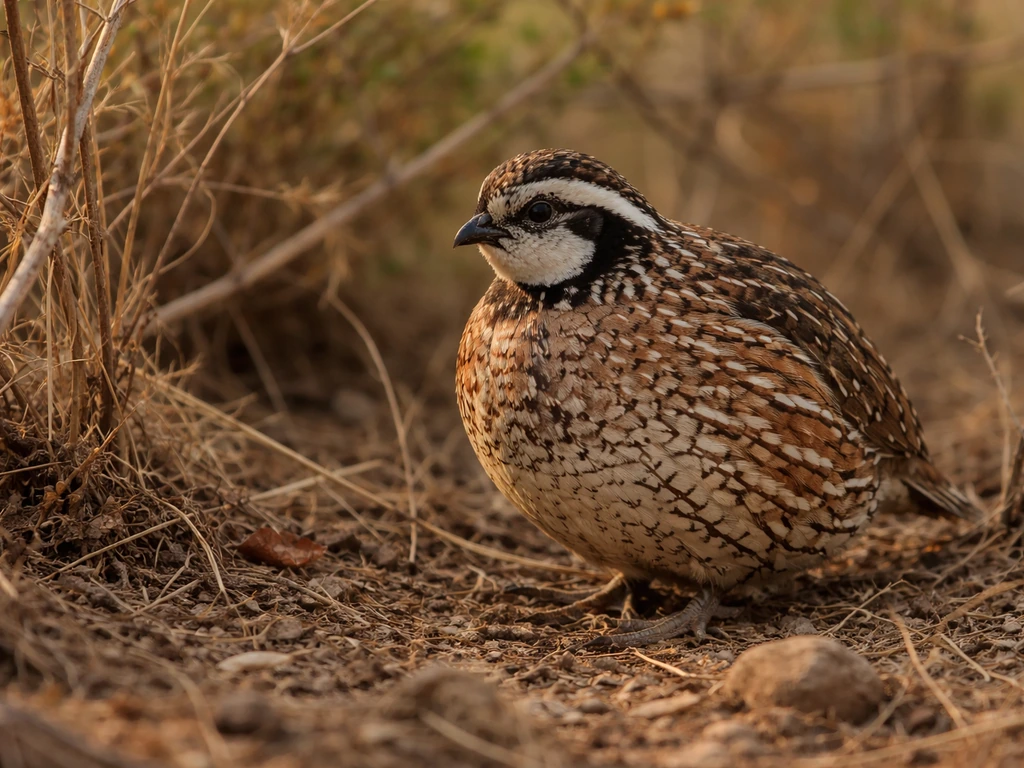
Upland game birds are land-dwelling species typically managed by state agencies. Quail are the classic example: Texas Parks and Wildlife lists bobwhite quail, scaled (blue) quail, Gambel's quail, and Montezuma quail as game bird species in the state. Pheasant and grouse sit firmly in this group too. Pennsylvania's Game Commission describes the ruffed grouse as an upland game bird, and it's one of the most prized species for wing shooters in the northeastern United States.
| Category | Common Examples | Regulated By |
|---|---|---|
| Waterfowl (migratory) | Ducks, geese, swans, mergansers | Federal (U.S. FWS) + state |
| Webless migratory | Doves, snipe, woodcock, coots, rails | Federal (U.S. FWS) + state |
| Upland game birds | Quail, pheasant, grouse, turkey | Primarily state agencies |
| Hawaiian game birds | Species listed in seasonal DLNR guides | State (Hawaii DLNR) |
One nuance worth knowing: a bird can be legally classified as a game bird even when there is no open season on it. Texas Parks and Wildlife explicitly notes this. The "game bird" label reflects the species' regulatory status, not necessarily that hunting is currently allowed.
How the term shows up in real life
You'll see "game bird" most often in three places: hunting regulations, wildlife education materials, and conversations among hunters or wildlife managers. In regulations, the phrase almost always comes bundled with specific compliance language. The U.S. FWS uses terms like "daily bag limit" (the maximum number of birds a hunter can take or possess in a single day), "possession limit," and "open season" whenever it discusses migratory game birds. New York's Department of Environmental Conservation, Pennsylvania's Game Commission, Kansas's Department of Wildlife and Parks, and Hawaii's DLNR all structure their game bird pages around these same regulatory anchors: species lists, season dates, and bag limits.
In hunter education, the term teaches beginners which birds require what kind of licensing. Texas hunters pursuing upland game birds need an Upland Game Bird Stamp endorsement in addition to a hunting license. Kansas separates federally managed migratory game birds from upland game birds governed by state law. These distinctions matter a lot legally, but they all flow from that same root definition: game bird means a bird you're permitted to hunt under regulated conditions. blank" rel="noopener noreferrer">Cornell LII — Definition: Migratory game birds from 50 CFR § 20.11 notes that in U.S. federal hunting law, “migratory game birds” are defined as migratory birds included under the U.S. migratory bird conventions and for which there are open seasons, belonging to specific bird families (e.g., waterfowl-related and webless migratory birds plus woodcock/snipe families).
In casual conversation among hunters or birders who know the vocabulary, "game bird" is just shorthand for "a bird species open to hunting." Someone might say "we spotted a few game birds out near the pond" and mean they saw ducks or pheasants in a huntable area. The regulatory weight drops away in casual use, but the meaning stays the same.
Where game birds and bird symbolism get tangled up
This site spends a lot of time with birds as symbols: what a goose represents in folklore, the cultural weight of a seagull, the layered meanings of geese in different traditions. The seagull bird meaning is often tied to freedom, adaptability, and messages connected to the sea. Game birds can show up in that symbolic space too, but the phrase "game bird" itself is almost never an idiom or a metaphor. It doesn't have a figurative meaning the way "early bird" or "bird in hand" do. The phrase "gay bird meaning" is a different kind of symbolism people look up for certain birds. Texas Parks & Wildlife — Game Birds (Hunter Education) notes that texas Parks & Wildlife (TPWD) uses “game birds” as a hunting-management category, and the page distinguishes which species are considered game birds and subject to specific hunting requirements/endorsements (e.g., an Upland Game Bird Stamp endorsement for hunting upland game birds, and notes that some species may be “considered a game bird” even if there is no open season).
That said, individual game bird species carry real symbolic weight in literature and culture. The pheasant appears in Chinese art as a symbol of beauty and good fortune. Grouse hunting scenes in 19th-century British literature signal class and landed gentry. The dove, technically a migratory game bird under U.S. federal law, is one of the most symbol-laden birds in human history, representing peace, the Holy Spirit, and new beginnings across dozens of traditions. Ducks and geese show up in mythology, folklore, and the goose bird's rich symbolic history across cultures. If you are curious about the goose bird meaning in folklore, this bird can carry symbolism that goes well beyond hunting categories.
So the birds themselves carry symbolism. Because the term shows up in both hunting and symbolism, people also search for the goose bird meaning in culture and folklore. The term "game bird" usually doesn't. When you see "game bird" in a hunting regulation, a wildlife guide, or a conversation about the outdoors, it's doing literal regulatory work. If you were wondering about the seal bird meaning, it helps to know whether you mean the animal itself or a nickname used in a particular story or culture game bird. If you are wondering about the gosling bird meaning, that symbolic association comes from how people interpret baby geese in folklore and culture. When you're reading about what a pheasant or a dove means in mythology or literature, you've crossed into symbolic territory, even if the species is technically a game bird by legal definition.
How to read "game bird" in any sentence

If you're ever unsure what someone means when they say "game bird," run through these quick checks:
- Look for hunting context. Words like season, bag limit, license, stamp, regulations, or species list almost certainly mean the literal hunting definition is in play.
- Check the source. A state wildlife agency page, a hunter education manual, or a federal regulation document? It's the literal regulatory definition, full stop.
- Ask if it's about a specific bird's character or symbolism. If someone is describing what a pheasant represents in Chinese art or what geese symbolize in folklore, they're in symbolic territory even though pheasants and geese are game birds.
- Watch for the word "game" standing alone. If the text talks about "game animals" broadly or "hunting game," the same hunting-language meaning applies. No idiom in sight.
- Consider if "game" could mean competition or sport in context. Only interpret it that way if the whole sentence points to recreational play, not wildlife. In almost every bird-related sentence, the hunting meaning is correct.
The bigger picture
"Game bird" is one of those phrases that sounds like it might have layers, but is actually pretty direct once you know what "game" means in hunting English. It points to a specific, regulated category of birds: species that wildlife agencies have designated as legal quarry, with defined seasons, bag limits, and licensing requirements. Quail, pheasant, grouse, ducks, geese, doves, woodcock, snipe, and their relatives are the core examples. The term does its work in regulatory and hunting contexts, not in idioms or symbolism, even though many of the birds it covers carry rich symbolic histories in culture, mythology, and literature.
FAQ
Does “game bird” mean you can hunt it right now, or just that it is regulated?
“Game bird” usually describes the species’ legal status, not whether hunting is available today. A bird can be designated as a game bird even if the current season is closed or weather has shortened it, so always verify the open-season dates and any emergency closures on your state’s or federal agency page.
What’s the fastest way to confirm a bird species is a “game bird” where I am?
In practice, you confirm game-bird rules using three items: the species list (is it classified as migratory or upland), the open season for your area, and the daily bag and possession limits. Licenses, stamps, and tagging requirements are separate steps, so don’t assume bag limits alone tell you everything.
How do I avoid the most common licensing mistake with game birds?
If you’re new to hunting, the most common mistake is mixing up migratory versus upland rules. Migratory game birds are generally governed by federal frameworks and associated regulations (often including federal stamps or forms), while upland game birds are typically handled by state agencies and may require state-specific endorsements like an upland stamp.
Are all “lookalike” birds legal as game birds if they resemble quail, dove, or grouse?
Not every bird that looks similar to a listed species is legal quarry. Agencies often define seasons and bag limits by species (and sometimes subspecies). If you are unsure of identification, stop and re-check, because misidentifying a lookalike can mean your harvested bird is not covered by the legal definition for the season you were hunting.
If someone hunts for food rather than sport, does “game bird” still apply the same way?
Yes. “Game bird” covers both hunting for food and hunting for sport, but the regulatory requirements still apply either way. The difference is usually not in legal status, but in how you process, store, transport, or consume the bird, which can trigger separate rules in some jurisdictions.
Does “daily bag limit” cover possession too, or is possession regulated separately?
Carrying or possessing game birds outside the allowed time windows and limits can be a violation, even if the birds were legally taken earlier. Check possession limit rules, because some categories restrict total birds you can have in your possession between trips, not just what you can shoot in a single day.
Can game-bird seasons differ within the same state?
Some places regulate by area and species combination. For example, a bird might be seasonally open in one region but closed in another, or bag limits could differ by unit or zone. Always use the specific unit or county/management zone rules rather than assuming statewide rules are identical.
If a bird is a game bird, are there still other restrictions besides open season and bag limits?
Federal and state agencies may treat “game bird” as the legal quarry category, but they can still impose non-season restrictions such as disabled-hunter rules, hunting hours, reporting requirements, or transport rules. So the key is to read the rule set for that species and the time period you’re hunting, not just the definition.
Is “game birds” in casual talk always the same as the legal category?
In casual conversation, people sometimes say “game birds” to mean any huntable birds they saw, but that casual shorthand can hide legal distinctions. If you are planning a hunt, rely on the formal species category (migratory versus upland) and the current regulation, not the way someone uses the phrase at the pond.
Why might a species be called a game bird but still be off-limits during my dates?
The article notes that some species are legally game birds even when hunting is not currently allowed. If you want to know what applies to you this week, look up the current open season and any special restrictions, because the presence of a species on a game-bird list does not guarantee an active season right now.
Next Article
Seagull Bird Meaning: Omens, Traits, Idioms, and What to Do Next
Decode seagull bird meaning: omens, traits, idioms, and how to interpret clues without overthinking.