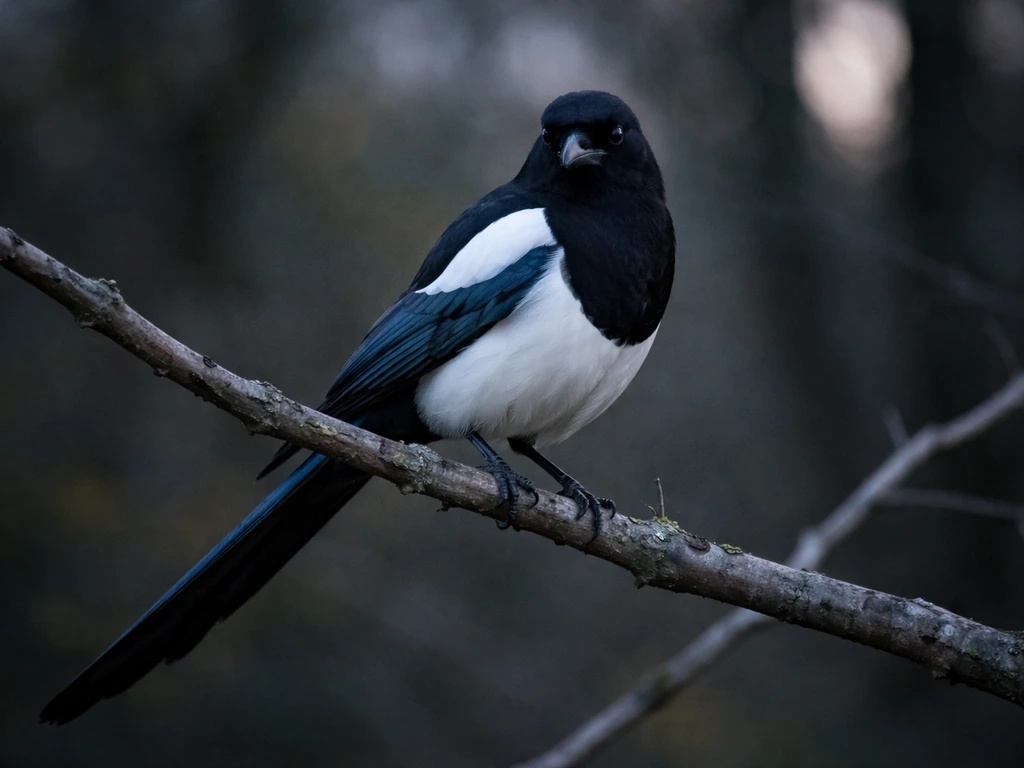
A grackle is a large, iridescent black bird native to the Americas, and if you just saw one and want to know what it "means," the honest answer is: it depends entirely on which lens you're using. Practically speaking, grackles are bold, highly social birds that thrive around people, so spotting one near a parking lot or park is about as ordinary as it gets. Symbolically, grackles carry real cultural weight, especially in Mexican and Native American traditions, and modern spiritual communities tie them to themes of intuition, adaptability, and community. Neither interpretation is wrong. They just answer different questions.
Grackle Bird Meaning: What It Really Symbolizes and Means

Marcus Blackwell
28 Apr 2026
What exactly is a grackle?
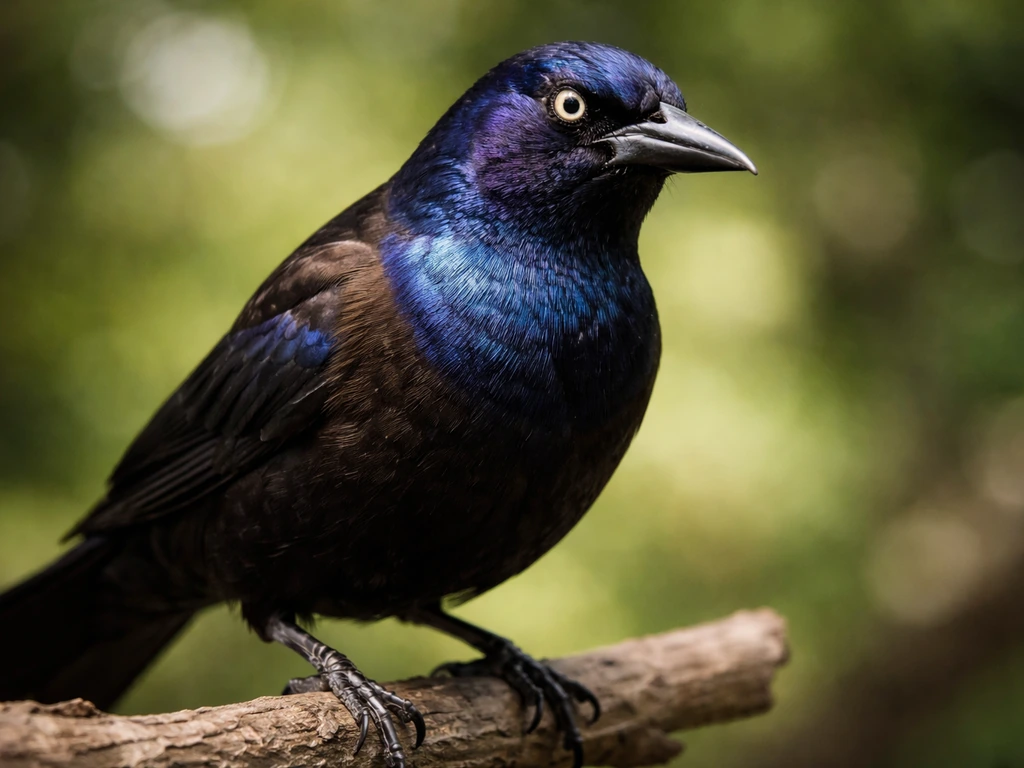
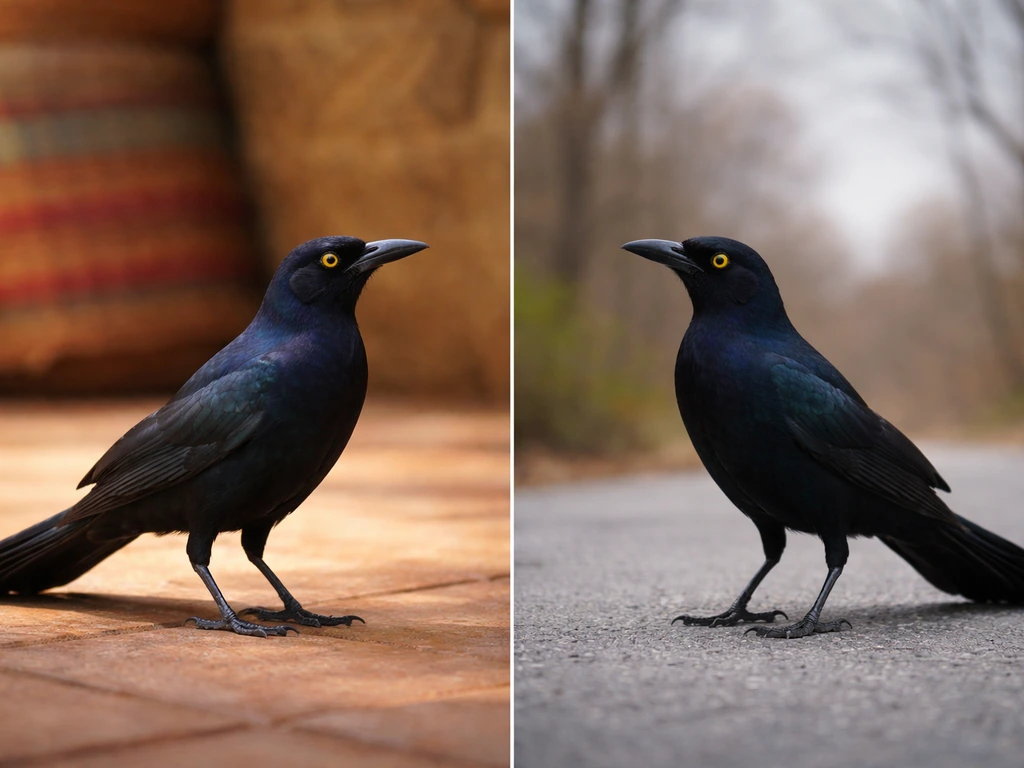
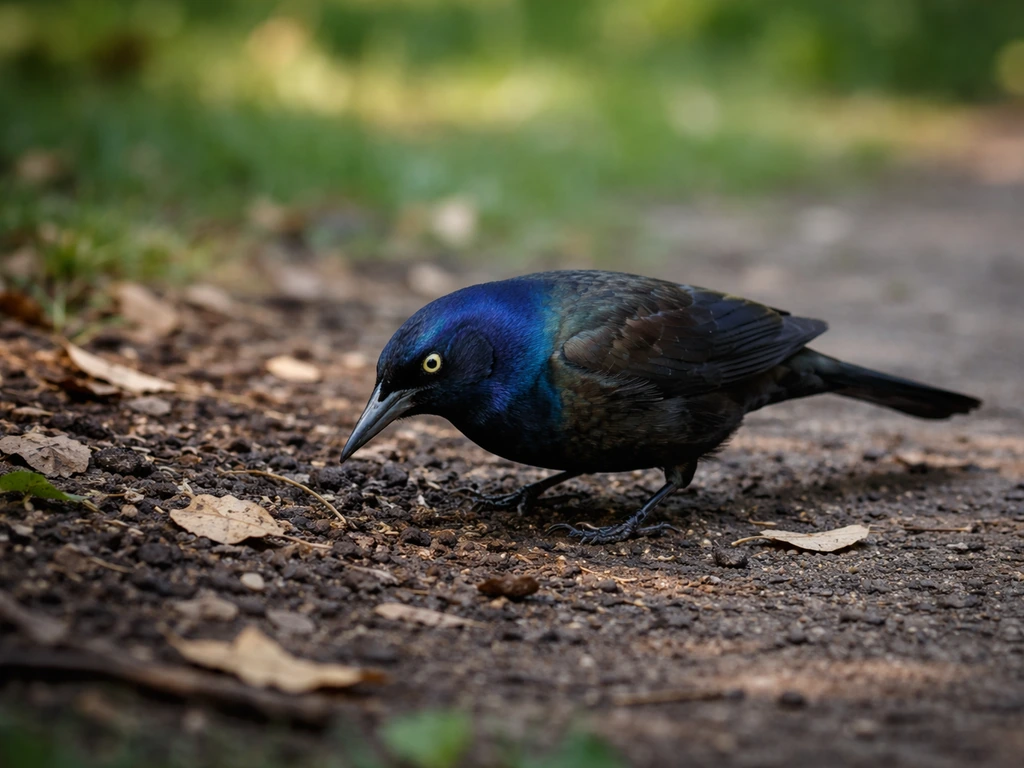
"Grackle" covers several species of New World blackbirds in the family Icteridae, most of them in the genus Quiscalus. The three you're most likely to encounter in North America are the common grackle (Quiscalus quiscula), the great-tailed grackle (Quiscalus mexicanus), and the boat-tailed grackle (Quiscalus major). They share a recognizable look: glossy black plumage with an iridescent sheen (purple, green, or bronze depending on species and light), pale yellow eyes in adults, a long pointed bill, and a notably long tail. Males are the showiest; females tend to be smaller and browner.
The word "grackle" itself comes from the Latin graculus, meaning jackdaw, which already hints at why these birds get tangled up with crow and raven folklore. They look vaguely similar at a distance, they're loud and conspicuous, and they gather in large, sometimes unsettling numbers. But grackles are their own thing entirely, and getting the ID right matters before you start interpreting omens.
Quick ID check: is it actually a grackle?
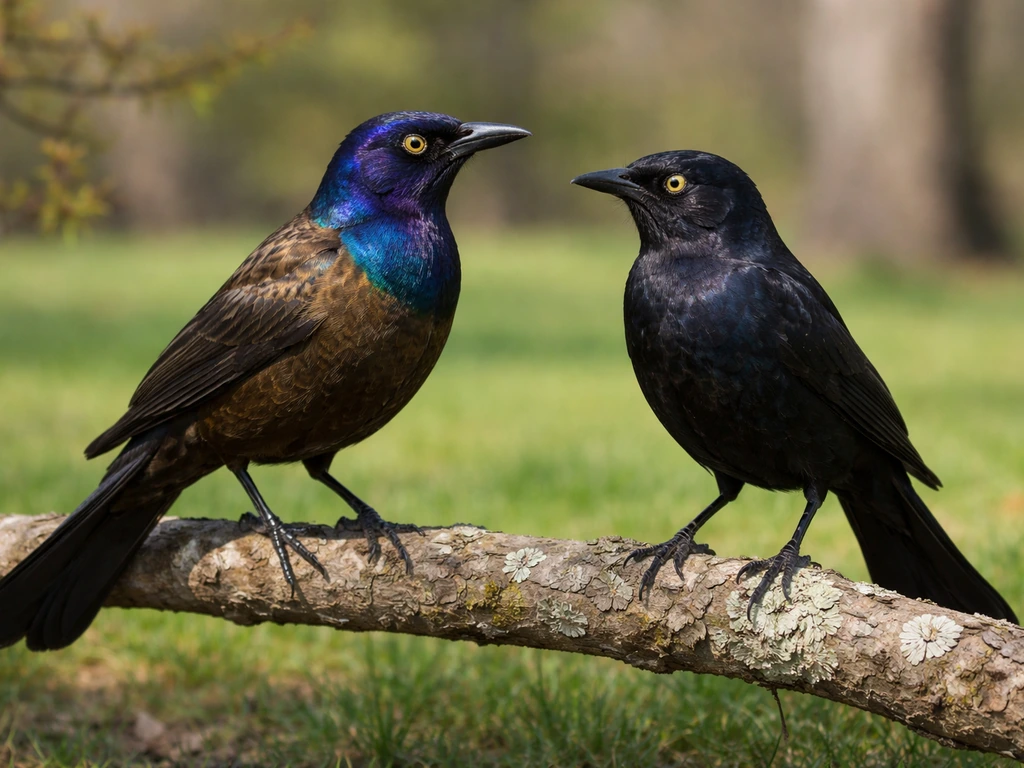
Common grackles have iridescent blue-purple heads, bronze body plumage, pale yellow eyes, and a long dark tail. Boat-tailed grackles (found mostly on the Southeast and Mid-Atlantic coasts) are larger with a dramatic V-shaped or keel-shaped tail. Great-tailed grackles (common in the South and Southwest) have a similar keel tail and a slightly down-curved bill. If you're unsure whether you saw a grackle or a crow, look at the bill: crows have thick, blunt bills while grackles have long, slender, pointed ones. Brewer's blackbird is another frequent mix-up; it's noticeably smaller with a shorter tail. And unlike crows or ravens, grackles show that unmistakable iridescent sheen, especially on the head, when light hits them.
The symbolic meaning of grackles in myth, folklore, and spiritual traditions
Grackle symbolism is most developed in Mexican and Mesoamerican traditions, which makes sense given how embedded the great-tailed grackle is in that landscape. One well-known legend holds that the great-tailed grackle's song contains seven distinct notes representing the Seven Passions of Life. The bird was seen not as a bad omen but as a complex messenger, one that carried the full emotional range of human experience. That's a meaningful distinction from the doom-and-gloom reputation often projected onto black birds in Western European traditions.
In Native American traditions, grackle symbolism varies widely by region and tribe, so any sweeping generalization deserves skepticism. What does appear in multiple cultural frameworks is an association between grackles and community, communication, and vigilance. Because they flock, call loudly, and seem to coordinate group behavior with obvious purpose, many traditions read them as symbols of social bonds and collective awareness.
In contemporary spiritual and intuitive interpretation circles, grackles are most often linked to themes of listening closely, trusting your instincts, and embracing adaptability. Some sources connect a grackle sighting to a nudge toward paying attention to what you might be ignoring, whether in relationships, decisions, or your own inner voice. It's worth noting these interpretations come from modern spiritual communities rather than ancient ethnographic records, but that doesn't make them meaningless. They reflect the qualities people genuinely observe in grackle behavior: the birds are alert, bold, opportunistic, and intensely communicative.
What grackle behavior actually looks like in the wild (and what it might "mean")
A lot of grackle "omens" are really just grackle behavior, and knowing what's normal helps you interpret what you saw more accurately.
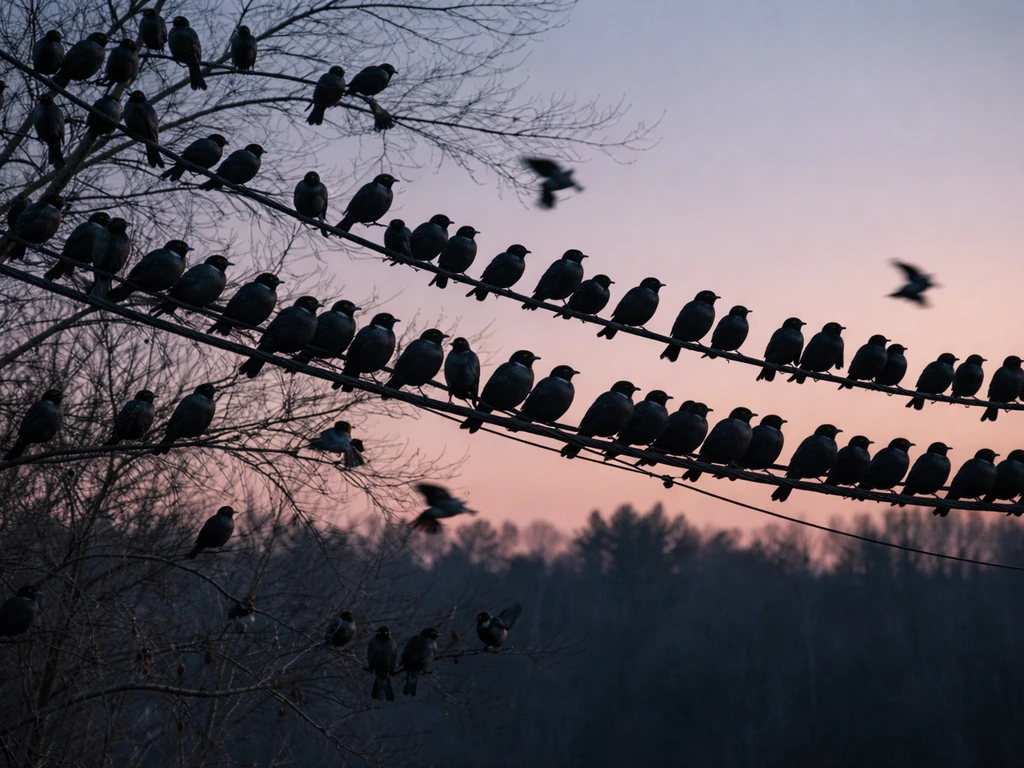
- Flocking and roosting: Grackles, especially great-tailed grackles, gather in enormous communal roosts at night, sometimes filling entire city parks with noise and movement. These dramatic arrivals and departures are what most commonly trigger spiritual interpretations. Behaviorally, they're doing exactly what social birds do: safety in numbers, coordinated foraging.
- Foraging on disturbed ground: Common grackles are frequently spotted right after you mow the lawn or turn soil in a garden. They're hunting insects and grubs exposed by the disturbance. If it feels like they showed up "for a reason," they did: you just made their foraging easier.
- Anting: Common grackles sometimes rub insects on their feathers, a behavior called anting. If you see a grackle doing something that looks odd or almost ritualistic, this is likely what's happening. It's a grooming behavior, possibly for parasite control.
- Loud vocalizations: Grackles produce a distinctive, somewhat discordant screech or deep "chuck." If a grackle called out directly near you, many people interpret this as the bird drawing attention to something. Realistically, they're communicating within their flock, but the timing can feel pointed.
- Solo appearances: Seeing a single grackle is less common than seeing a group, so a solitary bird does stand out. In symbolic traditions, solitary appearances tend to carry more weight than flock sightings.
Grackles, blackbirds, and the idioms that blur the lines
Grackles don't have a dedicated idiom tradition the way crows, ravens, or magpies do. But they frequently get lumped in under the "blackbird" umbrella, and that's where things get interesting. In everyday American English, "blackbird" is used loosely to describe any glossy black bird, so grackle sightings often get interpreted through the lens of general blackbird or crow folklore. Phrases like "a bad omen" or "death is near" trace back to raven and crow mythology in European traditions, not grackle lore. When those meanings get attached to grackles, it's usually a case of misidentification driving misinterpretation.
The Beatles' "Blackbird" is about liberation and resilience, and while it refers to a bird in the thrush family (the Eurasian blackbird), it gets cited in symbolic grackle conversations regularly. Similarly, the nursery rhyme "four and twenty blackbirds baked in a pie" is European in origin and refers to a different species entirely, but the general imagery of many dark birds gathering is something people project onto grackle flocks. If you're tracing a grackle meaning through language and idiom, be aware that most of what you find labeled "blackbird symbolism" wasn't written with grackles in mind. The magpie carries its own rich symbolic tradition (often associated with omens, fortune, and duality) that sometimes bleeds into grackle interpretations, especially in regions where both birds appear.
How grackle meaning shifts depending on where you are
| Region / Tradition | Common Grackle Association | Notes |
|---|---|---|
| Mexico / Mesoamerica | Seven Passions of Life; complex emotional messenger | Specifically tied to great-tailed grackle; grounded in local legend |
| Southern / Southwestern U.S. | Often mislabeled as 'crow' or 'blackbird'; some community/abundance associations | Great-tailed grackle is dominant here; crow folklore sometimes applied incorrectly |
| Eastern / Midwestern U.S. | Adaptability, resourcefulness, urban resilience | Common grackle territory; spiritual meaning is modern and community-sourced |
| Southeastern U.S. coast | Less folklore-specific; sometimes associated with coastal abundance | Boat-tailed grackle range; sparse dedicated symbolism |
| Contemporary spiritual communities | Intuition, listening, vigilance, community | Broad North American application; modern interpretive tradition |
The cultural gap here is real. In Mexico, the great-tailed grackle is woven into daily life and legend in a specific, meaningful way. In the United States, most grackle symbolism is either borrowed from crow/raven traditions or constructed by modern spiritual communities working from observed bird behavior. Neither is fraudulent, but knowing which tradition you're drawing from helps you hold the interpretation more lightly or more seriously depending on your own background.
How to interpret your grackle sighting accurately (without over-reading it)
If you want to work through what you saw and land on an interpretation that actually fits, here's a practical approach:
- Confirm the bird first. Before assigning any meaning, make sure it was actually a grackle. Check for the long, slender bill, pale yellow eyes, iridescent sheen on the head (especially that blue-purple color), and the long tail. Compare it against Brewer's blackbird (smaller, shorter tail), crows (thick blunt bill, no iridescence), and ravens (much larger, deeper call). If you're on the East Coast and it had an exaggerated keel-shaped tail, it may have been a boat-tailed grackle. If you're in Texas or the Southwest, great-tailed grackle is the most likely candidate.
- Note what the bird was doing. Was it alone or in a flock? Was it foraging, calling, roosting, or just passing through? Behavior gives you more interpretive material than the sighting alone. A single grackle that called out and made direct eye contact is a different experience from a flock of fifty birds roosting in a nearby tree.
- Note the season and time of day. Grackles flock most dramatically during migration and winter roosting periods. A massive flock in October is normal seasonal behavior. A solitary grackle in early spring, right after you've been wrestling with a decision, feels different in context.
- Separate the behavioral observation from the interpretation. What you saw is a fact. What it means is a choice. If the intuition-based interpretation resonates with something you've been thinking about, that's worth sitting with. If it doesn't, you're not obligated to force a meaning onto a bird that was just looking for bugs.
- If the grackle (or a flock) is causing a practical problem, treat it as a wildlife issue, not a sign. Grackles can damage crops, foul surfaces in large roosts, and become genuinely disruptive in urban areas. The USDA-APHIS has wildlife damage management resources specifically for grackles. Symbolism and practical management aren't mutually exclusive, but if you have a roost of two hundred grackles in your parking lot, the actionable step is deterrence, not interpretation.
The honest takeaway on grackle meaning
Grackles are genuinely interesting birds that sit at an unusual crossroads: common enough to be overlooked, striking enough to demand attention, and culturally rich enough (at least in Mesoamerican tradition) to carry real symbolic weight. The most accurate "meaning" of a grackle sighting depends on where you are, which species you saw, and what framework you're bringing to the encounter. If you’re trying to pin down the griffin bird meaning, it also depends on the tradition or symbolism source you’re using.
If you’re also curious about the majestic bird meaning behind what you see, remember that species and cultural context are what shape the interpretation. If you’re also curious about a crested bird meaning, the same rule applies: species and cultural context change the interpretation. Griffin bird meaning also depends heavily on the cultural lens you use, so context is key when you interpret it.
If you’re searching for ceiling bird meaning, use the same basic idea: context and cultural framework matter more than a one-size-fits-all definition. A ceiling bird can have a different symbolic interpretation depending on local folklore and the context of the sighting ceiling bird meaning. In the same spirit, some people also search for African ceiling bird meaning, but the takeaway is still that context shapes what the sight is taken to suggest. If you're drawn to the spiritual interpretation, the themes of intuition, community, adaptability, and paying attention are coherent and consistent with how the birds actually live.
If you’re comparing grackle symbolism with a bird with crown meaning, remember that “meaning” usually changes with species and cultural lens. To dig into that idea, you’ll want to look at the species’s traditional symbolism and the specific culture doing the interpreting bird with crown meaning. If you're looking for a practical explanation, grackles are urban opportunists that follow food, warmth, and safety, and their presence near you is almost always about their needs, not yours. USDA APHIS lists several blackbird species associated with wildlife damage and notes health concerns from large flocks and roosting, along with information on damage and management [Operational Activities](https://www. aphis.
usda. gov/operational-wildlife-activities/starlings-blackbirds). Both of those things can be true at once, which might itself be the most grackle thing about grackle meaning. The African ceiling bird meaning in symbolism is often discussed in relation to local interpretations of birds as signs or omens.
FAQ
If I saw a grackle near my home, does that mean anything beyond normal bird behavior?
It often does not. Grackles are opportunistic, so if they were near trash, pet food, a fruit tree, or a typical roost site, the most likely explanation is food and safety rather than a spiritual or personal message. If the sighting happened at a known feeding or nesting area at the same time of day, prioritize practical causes first.
How can I tell the difference between a grackle and a crow or a blackbird without getting fooled by distance?
Focus on three traits together: bill shape (grackles have a long, pointed bill), body scale (grackles are usually sleeker and sit lower in their posture than crows at a similar distance), and the iridescent sheen on the head when light hits. If you see no iridescence and the bill looks thick and blunt, that strongly favors a crow.
Does the grackle “meaning” change if it was a male versus a female?
Many modern symbolic readings do, but sightings can still be misread. Males are typically more visibly iridescent and larger, while females are duller and smaller. If your interpretation relies on “male energy” or “messages,” try verifying the sex by appearance first, not by assumptions about behavior alone.
What if I saw a grackle in a place where grackles usually are not found?
That can matter for accuracy. If the location is outside the bird’s typical range or habitat, you might be looking at a different species or a misidentification. In that case, it’s better to treat the “meaning” question as secondary until you confirm the bird ID (including tail shape, eye color in adults, and sheen).
Are grackle omens more meaningful if they happen repeatedly?
Repetition can increase personal significance, but it does not automatically make the interpretation truer. A common edge case is seasonal flocking, when multiple visits coincide with mating or food availability. A practical decision aid is to track what changed in your environment (new food source, construction, weather, landscaping) alongside what you felt during the sightings.
Why do some websites connect grackles to death or bad luck if those ideas seem different from what grackles actually do?
That connection is usually an umbrella effect from crow and raven folklore plus loose “blackbird” language, not a grackle-specific idiom tradition. If the claim does not specify the cultural framework (for example, a particular regional Mexican legend versus general Western black-bird anxiety), treat it as a broad projection rather than a grounded grackle meaning.
What should I do if I want to interpret a grackle sighting spiritually, but I’m worried about overreading it?
Use a two-step filter: first, note observable facts (time of day, location, flock size, behavior like foraging or calling). Second, translate only the themes that match the behavior you actually saw, such as vigilance if it was alert and calling, or adaptability if it seemed to use a new human-adjacent food source. This prevents generic doom or success predictions that do not fit the encounter.
Does the species matter for meaning, like common versus great-tailed versus boat-tailed grackles?
Yes, for accuracy and often for regional symbolism. Great-tailed grackles have stronger ties in Mesoamerican contexts in particular, while common grackles are more widely encountered across much of North America and may be interpreted through general blackbird or crow-adjacent symbolism. If you cannot confidently tell the species, stick to the more general themes of community and communication rather than specific cultural claims.
Could “grackle bird meaning” actually be about the place or situation where I saw the bird?
Often, yes. Because grackles gather where food, warmth, and safety concentrate, the sighting can reflect your situation indirectly (for example, an active social environment, an overlooked resource, or a need to pay attention to what is right in front of you). A useful approach is to ask what the bird-like behavior would suggest in your context: are you foraging effectively, or are you ignoring an accessible option?
Next Article
Magpie Bird Meaning: Symbolism, Folklore, and Spiritual Signs
Magpie bird meaning, symbolism and folklore plus spiritual sighting signs, practical guidance, and journaling prompts.