The cockatiel bird meaning covers a few different layers depending on what brought you here: you might be curious about spiritual symbolism, trying to decode a dream, or simply wondering what cultural weight this small crested bird carries. The short answer is that cockatiels symbolize communication, emotional transparency, joy, and the courage to express yourself openly. But the fuller picture is worth exploring, because cockatiels bring some unusually specific symbolic detail that generic "parrot symbolism" simply doesn't capture.
Cockatiel Bird Meaning: Symbolism, Dreams, and Spirit Guidance

Marcus Blackwell
2 Apr 2026
If you keep seeing the towa towa bird in stories or dreams, you may also want to explore its own bird symbolism and traditional interpretations towa towa bird meaning. If you want the deeper symbolism behind seeing it, review the drain me towa bird meaning next towa towa bird meaning.
What a cockatiel actually is (and why it matters for symbolism)
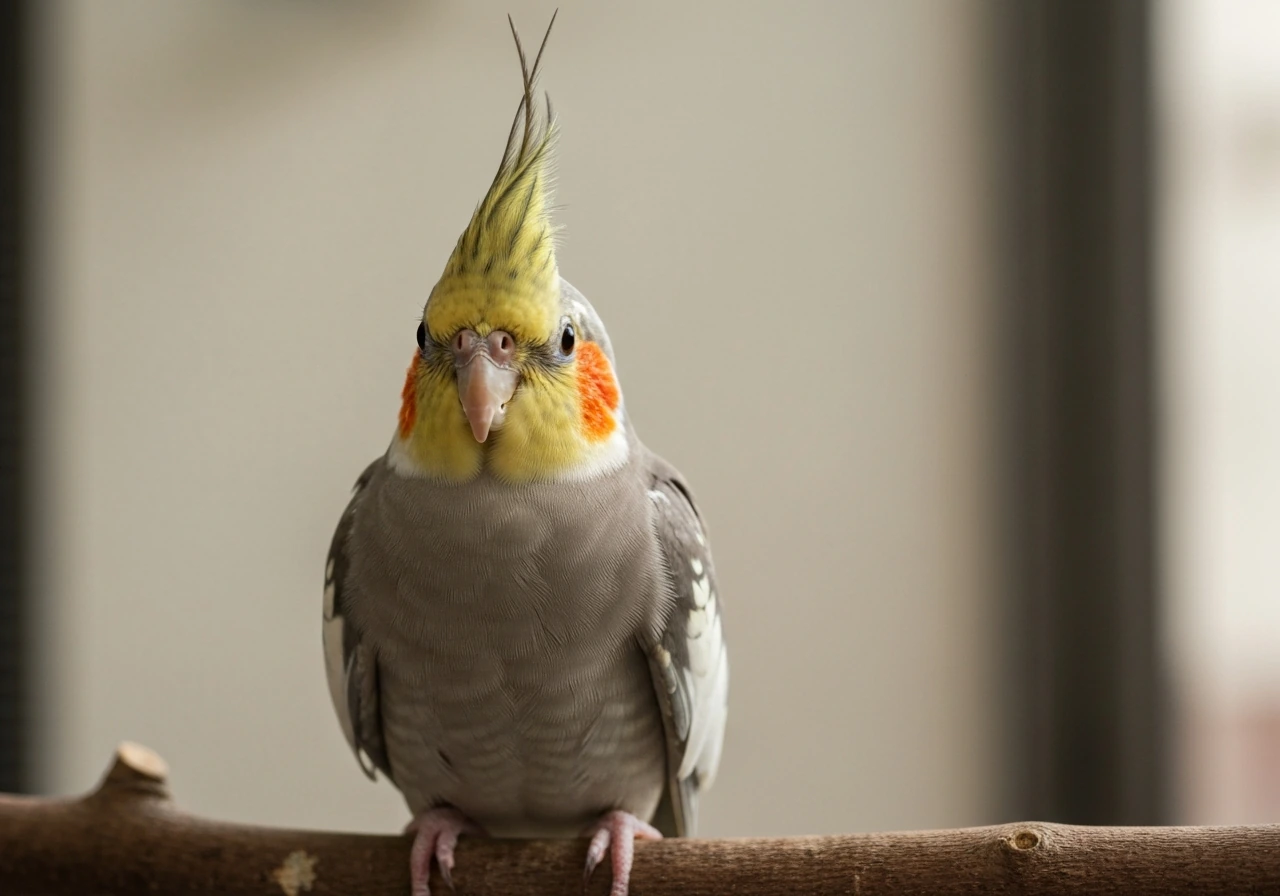
Before diving into meaning, it helps to know exactly which bird you're working with. The cockatiel (Nymphicus hollandicus) is a small crested parrot native to Australia and the only member of its own genus within the cockatoo family (Cacatuidae). Animal Diversity Web lists the cockatiel’s conservation assessment as “not considered threatened currently,” referencing IUCN Least Concern blank" rel="noopener noreferrer">conservation assessment as “not considered threatened currently”. It's distinct from parakeets, lovebirds, and larger parrots like macaws, even though people sometimes lump all of these together when discussing "parrot symbolism." Cockatiels are notably one of only three parrot species in the world that combine a crest with a long tail, the other two being the Horned Parakeet and the Ouvéa Parakeet.
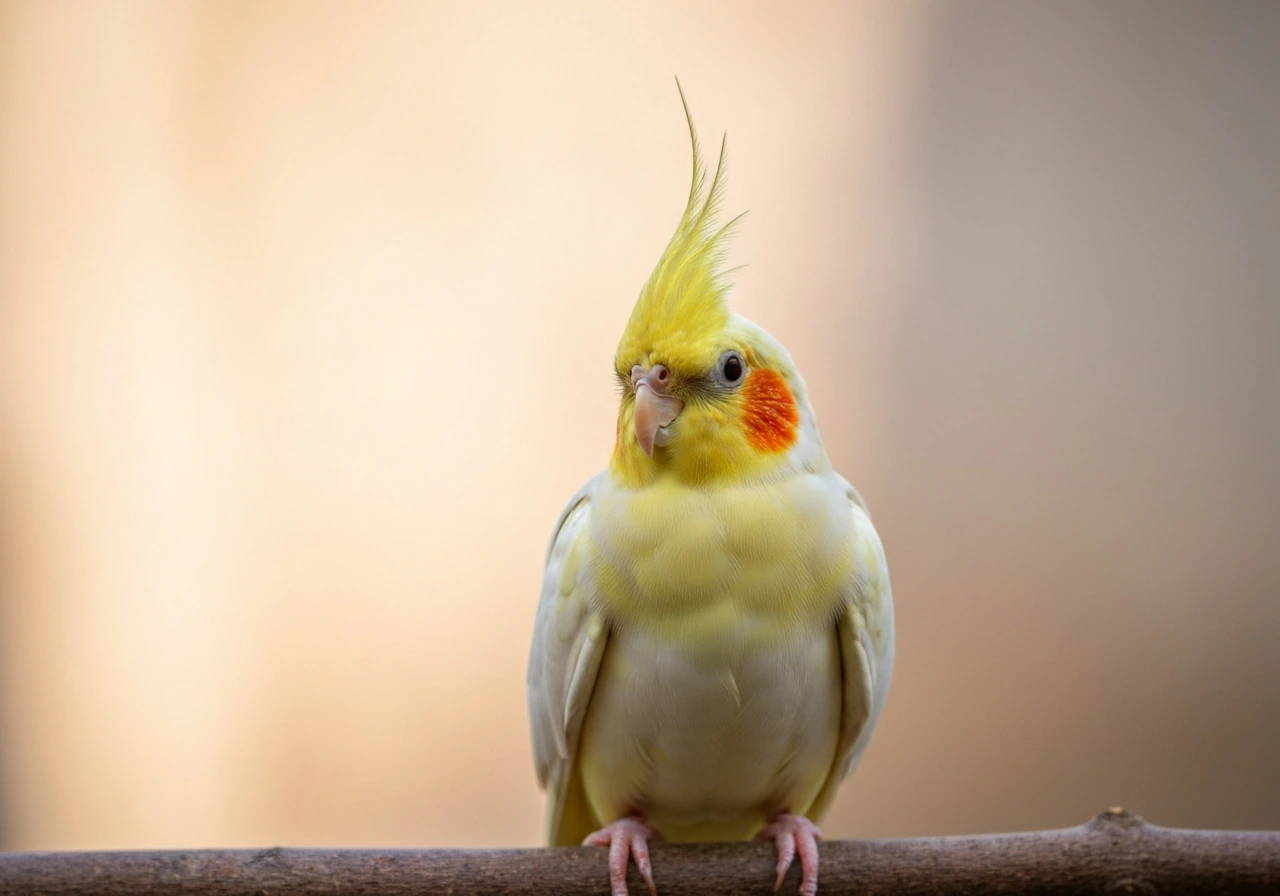
Why does the species detail matter for symbolism? Because the cockatiel's most distinctive physical trait, that expressive crest, is the heart of its symbolic identity. The crest is literally a mood indicator: raised straight up when the bird is startled or excited, held at a relaxed diagonal when calm, and flattened tight against the head when the bird is angry or defensive. This means the cockatiel is a bird that wears its emotional state visibly, constantly, and without apology. That quality runs through almost every layer of cockatiel symbolism.
What cockatiels symbolize in culture and everyday life
In Western pet culture, cockatiels are strongly associated with companionship, playfulness, and emotional sensitivity. They have a reputation for bonding deeply with their owners, singing and mimicking to get attention, and visibly sulking or brightening depending on the social environment around them. These behavioral traits have translated into a set of cultural associations that show up in how people talk about cockatiels symbolically.
- Joyful self-expression: Cockatiels whistle, chatter, and perform whether or not anyone is listening, which people read as a symbol of authentic self-expression and creative confidence.
- Emotional transparency: The crest-based communication makes cockatiels a natural symbol for wearing your heart on your sleeve, openness, and the refusal to mask your feelings.
- Adaptability and resilience: Native to the arid interior of Australia, cockatiels in the wild travel in flocks, moving with food and water. This translates symbolically into flexibility, community, and resourcefulness.
- Playful intelligence: Cockatiels are problem-solvers with a light touch, symbolic of wit, curiosity, and finding humor in ordinary situations.
- Loyalty and attachment: Their strong pair-bonding in the wild makes them a symbol of devoted relationships and faithful companionship.
In Australian Indigenous traditions, specific birds carry deep regional meaning, though cockatoos as a family (including cockatiels) are often associated with communication between worlds, loud presence as a warning or gathering signal, and the social cohesion of community. The cockatiel, as the smaller, more mobile member of this family, tends to carry the lighter, more intimate end of those meanings.
Cockatiel as a spirit bird: what it means spiritually
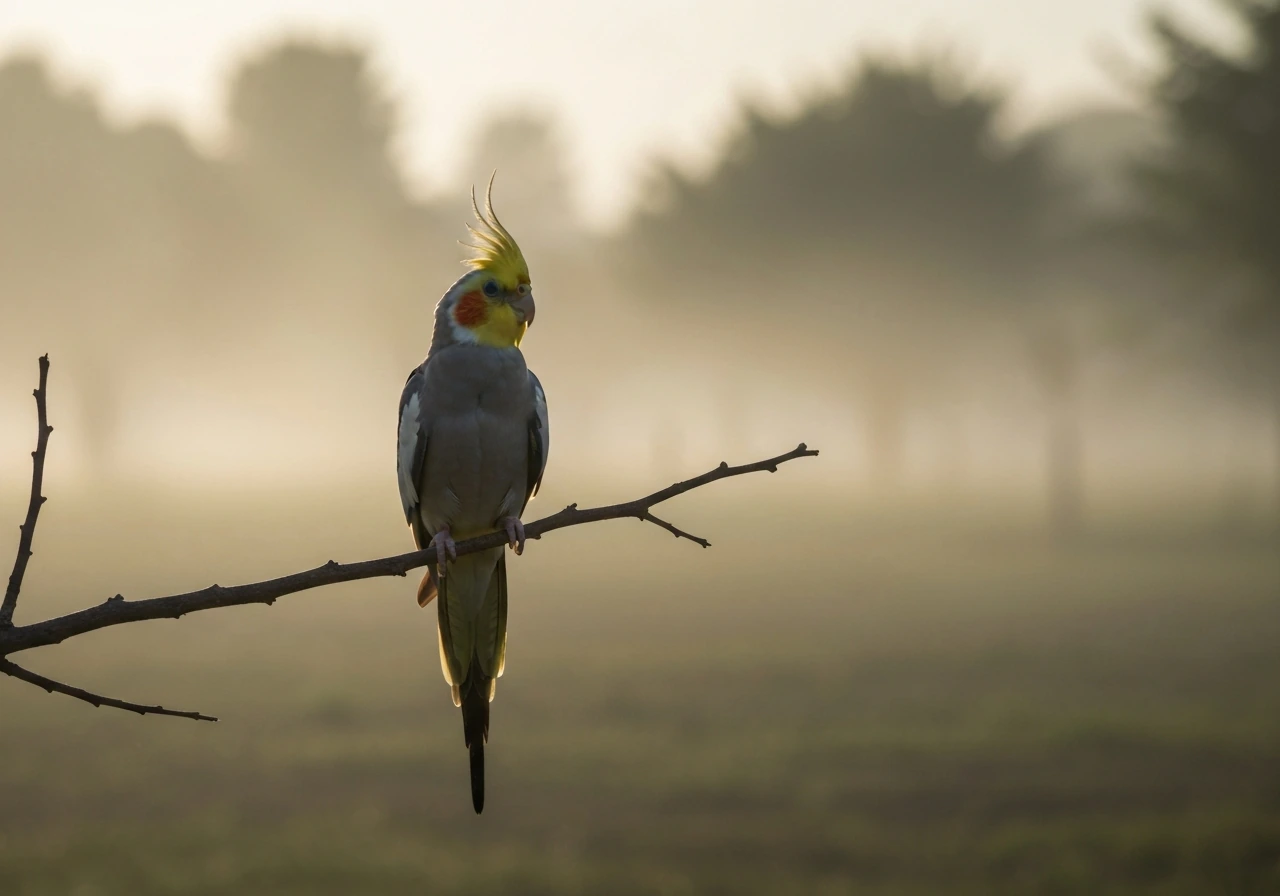
In spirit animal and totem traditions, the cockatiel is generally understood as a messenger of emotional honesty and a guide toward authentic communication. If the cockatiel shows up as your spirit bird, the traditional interpretation is that you're being nudged to stop suppressing how you really feel and to speak or create more freely. This is a bird that literally cannot hide its emotional state, so as a spirit symbol it tends to challenge you to do the same.
As an omen, a cockatiel crossing your path or appearing unexpectedly (in the wild, which is rare unless you're in Australia, or in an unusual context like an escaped bird finding you) is often read as a reminder to pay attention to the social or emotional signals around you. Are the people in your life showing you their "crest," and are you reading it honestly? Conversely, are you showing yours?
Some spiritual traditions that work with bird symbolism also associate the cockatiel with the solar plexus and throat chakras, reflecting themes of personal will, creative voice, and the courage to be heard. This aligns closely with its behavioral reality: cockatiels are persistent communicators who will keep trying to reach you if they feel ignored. Spiritually, that persistence is read as a call to not give up on expressing what matters to you.
It's worth noting here that while toucan bird meaning draws heavily on tropical mythology and vibrant visibility, cockatiel symbolism is more intimate and relational, less about dramatic display and more about the ongoing, daily work of emotional communication.
Cockatiels in dreams: what they usually mean
Dream interpretation is never one-size-fits-all, but there are consistent themes that come up when a cockatiel appears in a dream. The most common reading is that the cockatiel represents something you need to say but haven't said yet. Because cockatiels are so strongly associated with vocal expression and emotional visibility, dreaming of one often signals unexpressed feelings, creative ideas sitting dormant, or a conversation you've been avoiding.
The condition of the cockatiel in the dream matters a lot. A bright, singing, freely moving cockatiel usually reflects emotional vitality, social joy, or a period of creative flow. A caged or silent cockatiel tends to point toward feeling trapped, muted, or emotionally shut down. A cockatiel with its crest raised in alarm can signal anxiety or a situation in your waking life that's triggering a fight-or-flight response you haven't fully acknowledged. In Reddit comment threads about cockatiel crest positions, owners debate what the crest is “saying,” including readings like scared or angry versus sometimes excited or focused owners debate what the crest is “saying”.
| Dream scenario | Common interpretation | Reflection prompt |
|---|---|---|
| A singing, free cockatiel | Creative confidence, social connection, emotional flow | What am I expressing well right now? What feels alive in my relationships? |
| A caged or silent cockatiel | Suppressed feelings, creative block, feeling unheard | What am I holding back? Who or what is muting me? |
| A cockatiel with crest fully raised | Surprise, anxiety, or an unacknowledged threat | What is alarming me that I haven't named out loud yet? |
| A cockatiel landing on you | A message meant specifically for you, personal guidance | What have I been refusing to hear from myself? |
| A sick or injured cockatiel | Neglected emotional needs, a relationship needing care | What relationship or creative project am I not tending to? |
To make dream interpretation actually useful rather than just intellectually interesting, journal immediately after waking. Write the specific scene, the color and behavior of the bird, and your emotional state in the dream. Then ask yourself: where in my current life does this scene feel familiar? The answer usually surfaces within a few minutes of honest reflection.
Cockatiels in idioms, slang, and figurative speech
Here's where I'll be direct with you: cockatiels don't have a rich idiomatic life the way ravens, crows, doves, or even parrots do. You won't find "cockatiel" embedded in classic proverbs or literary metaphors the way you'd find references to a bird in hand or an albatross around your neck. The bird is too domestically specific and too recently popular in Western culture to have accrued centuries of figurative language.
What you will find is a set of informal, conversational comparisons. Calling someone "a cockatiel" in casual speech usually means they're chatty, attention-seeking in an endearing way, emotionally expressive, or prone to repeating things they've heard. It's generally affectionate rather than critical. Saying someone is "doing their cockatiel thing" typically refers to persistent, performative communication, whistling for attention, showing off, or demanding to be noticed.
If you came to this article looking for a specific phrase or expression involving cockatiels, it's likely either a very regional slang usage or something drawn from a specific cultural text (a song, a local saying, or a community's in-joke). In that case, the generic symbolism above still gives you useful interpretive material, even if the exact phrase isn't catalogued anywhere. The consistent thread is always communication, expression, and emotional display.
What to do when a cockatiel feels meaningful to you right now

If a cockatiel has shown up for you today, whether in a dream, a random encounter, a thought that won't leave, or you just found yourself here wondering about the meaning, the practical step is to sit with the communication theme directly. Cockatiel symbolism is almost always pointing at something in your expressive or emotional life.
- Ask yourself: Is there something I've been meaning to say to someone that I keep postponing? The cockatiel's persistence in communication is a direct prompt here.
- Ask: Am I reading the emotional signals around me accurately? Think of the cockatiel's crest: people in your life are showing you their moods. Are you noticing?
- Ask: Where am I suppressing my natural expressiveness? Work, relationships, creative projects: where are you keeping the crest down when it wants to come up?
- If it was a dream, journal the specific scene using the table above as a guide. Write two to three sentences about where in your waking life that scene echoes.
- If you're in a naming or decision-making moment (naming a pet, choosing a symbol for a project), cockatiel carries the energetic signature of joyful communication, loyalty, and playful intelligence. That's a useful identity to invoke.
The cockatiel doesn't ask you to be profound or serious. It asks you to be expressive, responsive, and real. That's actually a harder ask than it sounds for most people, which may be exactly why the symbol keeps showing up.
How to figure out which "meaning" you're actually after
"Cockatiel bird meaning" is a phrase people search for from several very different starting points, and it's worth clarifying which context applies to you so you can go deeper in the right direction. You may also be looking for the thotha bird meaning in English, which can be interpreted through its context and common usage.
| If you're asking because... | The relevant context is... | Where to focus |
|---|---|---|
| You saw or interacted with a real cockatiel and felt it was significant | Spiritual omen or personal synchronicity | Spiritual symbolism and the reflection prompts above |
| A cockatiel appeared in a dream | Dream interpretation | The dream table and journaling steps above |
| You heard someone use 'cockatiel' as a descriptor for a person | Slang or figurative speech | The idioms section above |
| You're researching this bird for a story, tattoo, or symbol | Cultural and symbolic meaning | The cultural symbolism and spirit meaning sections |
| You just want to know what the bird is and what it represents generally | Literal species identity plus baseline symbolism | The first two sections of this article |
One useful litmus test: if someone else used the word "cockatiel" in a context that confused you, pay attention to whether they were describing a personality (chatty, expressive, attention-seeking) or pointing at something more symbolic (a spirit animal, a dream, a cultural reference). The personality reading is almost always about communication style. The symbolic reading is almost always about emotional honesty and the courage to be heard.
If you're exploring the broader world of bird symbolism and want to compare how different birds carry meaning across cultures, it's worth looking at birds like the towhee bird, which carries its own distinct set of associations rooted in ground-level alertness and transition. Each bird offers a different angle on the same fundamental human instinct: finding meaning in the natural world.
The cockatiel is one of the more personally intimate bird symbols you'll encounter. It's not a grand mythological bird like a phoenix or an eagle. It's a small, expressive, emotionally available creature that wants to connect. When it shows up in your symbolic life, that's usually the invitation: be that. Be the one who shows up, communicates honestly, and doesn't flatten the crest.
FAQ
Is “cockatiel bird meaning” the same as “cockatoo” or “parrot” symbolism?
Not exactly. Cockatoo and generic parrot symbolism often emphasize presence and communication, but cockatiel-specific meaning centers on visible emotional state, the need to speak up, and relational playfulness. If the context is more about loud warnings or community signals, that leans more toward larger cockatoo-type meanings than the cockatiel’s intimate, emotional-honesty theme.
What should I do if I keep seeing a cockatiel repeatedly but I do not feel emotional honesty is relevant to me?
Treat repetition as a cue to check your “communication bandwidth” rather than assuming the message is about confession. Ask, where am I sending mixed signals, avoiding a conversation, or staying silent out of habit. If nothing emotional comes up, the crest-related theme can still show as practical self-advocacy, for example requesting support or stating boundaries clearly.
Does the cockatiel dream mean I must have a difficult conversation soon?
Not necessarily. A cockatiel dream more commonly points to what you are holding back, but it can also be about expressing ideas, creativity, or needs in a low-stakes way first. If the dream felt anxious, start with a small truth you can safely say, then reassess rather than assuming it predicts a major confrontation.
How do I interpret the dream if the cockatiel is sick, injured, or dying?
In cockatiel-symbol contexts, a weakened or distressed bird often maps to muted voice, burnout, or emotional depletion. Instead of focusing only on doom, look for where you have been “not speaking” for too long (to protect yourself, avoid conflict, or keep peace). A useful next step is to identify one unmet need and plan a realistic way to address it.
What if the cockatiel in the dream is not mine or I cannot interact with it?
If the bird feels out of reach, it can reflect blocked expression, timing, or outside circumstances limiting your communication. Consider whether you are waiting for permission, waiting for the right moment, or expecting someone else to read your crest. The practical read is to clarify what you can control, such as sending a message, asking a question, or writing down what you want to say.
Can cockatiel symbolism apply to communication with kids, partners, or coworkers, not just “speaking feelings”?
Yes. The crest theme translates into how openly you respond, listen, and adjust tone. In relationships, it can mean being emotionally readable and consistent. At work, it can mean clearer requests, follow-up, or advocating for resources. The symbol is about authentic communication, not only romantic or personal disclosure.
Is there a difference in meaning if the cockatiel is singing versus mimicking?
Singing often aligns with vitality, joy, and social connection, while mimicking can point to repetition, copying patterns, or picking up someone else’s cues. If the dream stresses mimicry, ask whether you are performing a role that is not fully yours, or whether you are echoing a message you already know you want to deliver.
How should I interpret a cockatiel with its crest raised in a dream or in real life?
A raised crest is a direct emotional signal, so in symbolism it commonly reads as heightened alertness, anxiety, or readiness to be heard. In real-life terms, it can be a prompt to check your stress triggers and clarify where you feel defensive. In dreams, it often highlights a waking-life situation where your nervous system is already “on.”
What does it mean if someone calls me “a cockatiel” or says I’m “doing my cockatiel thing”?
In casual speech, it usually means you are chatty, attention-seeking in an endearing way, emotionally expressive, or prone to repeating sounds or phrases. If it’s said teasingly, the symbol is often playful rather than critical. If it’s said in a cutting way, use the same clue to examine whether your communication is landing in a way you did not intend.
Why does “cockatiel bird meaning” sometimes feel vague or hard to apply to my life?
Because it is not a centuries-old idiom tied to one fixed narrative. It works best as a theme detector: communication, emotional transparency, courage to be heard, and crest-visible mood. To make it actionable, pick one specific behavior from the article that fits (for example, start a conversation, speak your need, or stop suppressing a creative idea), then test it for a week.
Do spiritual meanings like throat chakra or solar plexus override psychological interpretations like stress or avoidance?
They do not have to. You can use both layers: spiritually, the symbol emphasizes voice and personal will, psychologically, it often highlights avoidance, fear of judgment, or a need for agency. If you feel overwhelmed, start with the practical psychological read first, then treat the chakra theme as a supportive metaphor for aligning your voice and confidence.