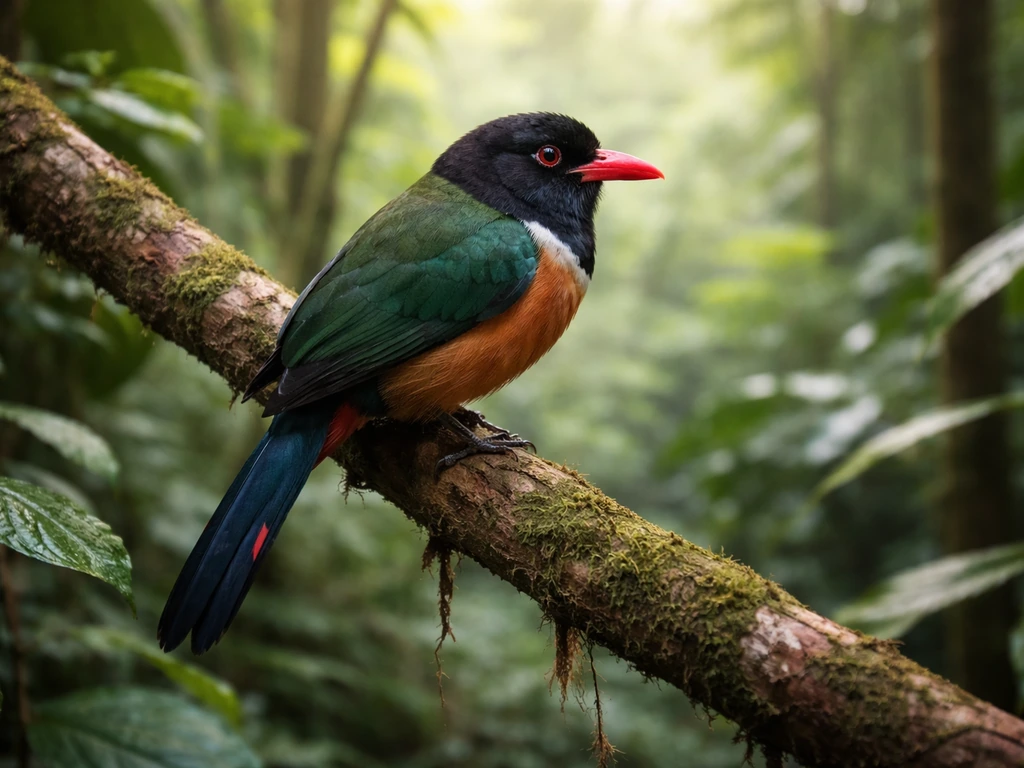
- National bird question: Cameroon has no officially declared national bird as of 2026. Multiple compilation sites claim otherwise, but those claims are not backed by Cameroonian government confirmation. They are secondary sources repeating each other.
- Species named 'Cameroon': The Cameroon sunbird (Cyanomitra oritis) is a real species whose common name includes the country. Ursula's sunbird is another Cameroon-line endemic. Searching 'Cameroon bird' can land you on these species pages without any symbolic content.
- Culturally significant bird: Bannerman's turaco (Tauraco bannermani) and various hornbill species are the birds most consistently tied to Cameroonian cultural symbolism, folklore, and ceremonial life. This is usually what people are really looking for.
If you landed here because a symbolism site, dream dictionary, or bird-meaning list told you 'the Cameroon bird' stands for something specific, the most likely candidate behind that claim is either Bannerman's turaco or a hornbill. Read on and you will be able to confirm which one applies to your context.
Identify the bird: literal definition and real-world description
Bannerman's turaco: the strongest cultural candidate
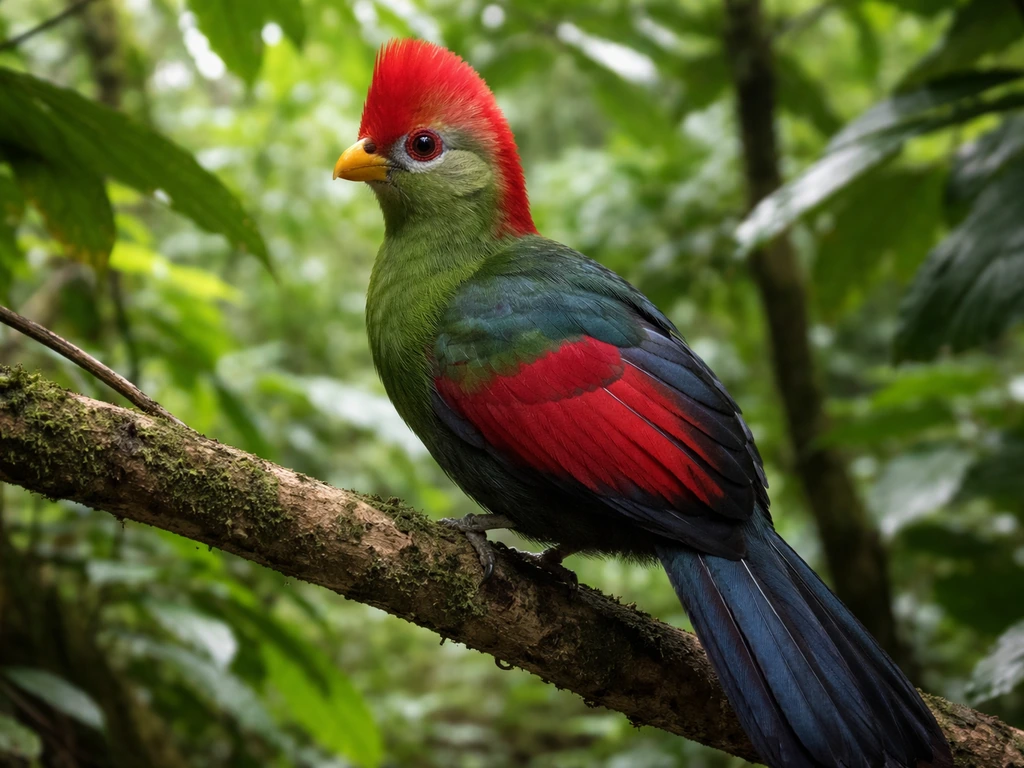
Bannerman's turaco (Tauraco bannermani) is a medium-sized, vivid green bird with a bold red crest and brilliant crimson flight feathers. Its entire known population is concentrated in the Bamenda Highlands of western Cameroon, making it about as 'Cameroon-specific' as a bird can get. It is listed as Endangered, which has actually amplified its cultural profile rather than diminished it: conservation campaigns have leaned into its symbolic status to build local support. If you have seen it described anywhere as 'the Cameroon bird,' this is almost certainly the one.
The Gray-necked Rockfowl: a close second
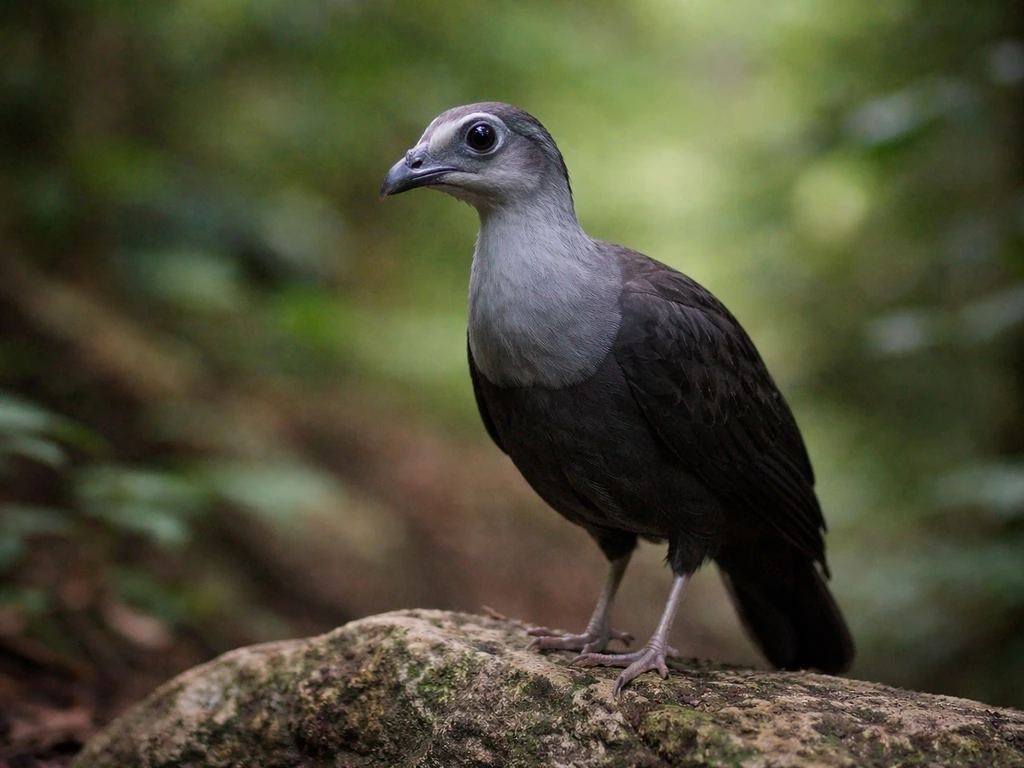
The Gray-necked Rockfowl (Picathartes oreas) is another species that holds major significance for the people of Cameroon. It is not the official national bird either (again, that designation does not formally exist), but it appears frequently in Cameroon-focused bird literature precisely because of its cultural resonance and its restricted range in Central and West African forests. It is a strange-looking bird: bald yellow head, long legs, and a habit of nesting in colonies on rocky cave walls. Its oddness has made it memorable.
Hornbills: the widespread symbolic powerhouse
Several hornbill species are present in Cameroon, including the Abyssinian ground hornbill (Bucorvus abyssinicus) in northern regions. Hornbills dominate a huge amount of African bird-symbolism content online, so when a generic 'Cameroon bird meaning' page talks about luck, power, or creation mythology, it is usually drawing on hornbill symbolism rather than a turaco-specific tradition. The two get conflated regularly, which is worth knowing when you are evaluating what you read.
Symbolic meaning in Cameroon and related cultural contexts
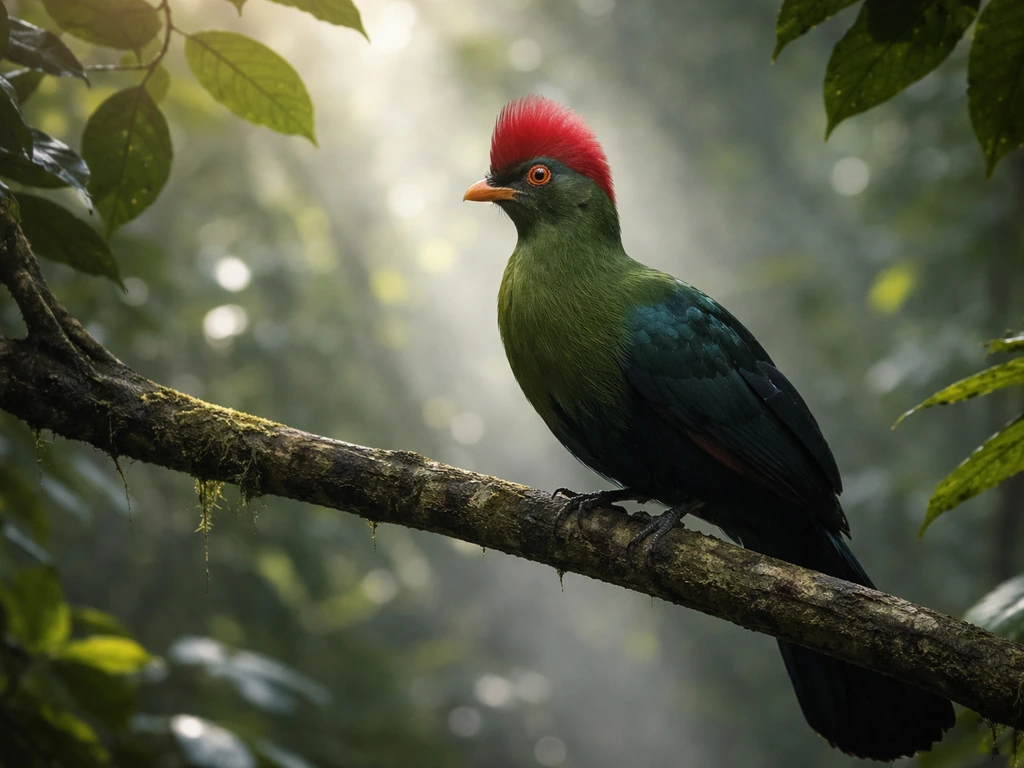
The richest, most documented symbolism attached to a Cameroon-specific bird belongs to Bannerman's turaco. Among communities in the Bamenda Highlands, it is known as 'The King of the Forest,' a title that does real cultural work. The bird's red flight feathers are highly prized and used as status symbols: they appear in ceremonial awards and mark rank or achievement in western Cameroon's social traditions. That is not a minor folkloric footnote. It means the bird is materially present in moments of community recognition, functioning the way a medal or insignia might in other cultures.
Hornbills carry a separate but equally significant symbolic weight. In several West and Central African traditions, hornbills are associated with the creation of the world. The Senufo people, for example, regard the hornbill as one of the primordial animals involved in creation, a cosmological role that gives the bird a gravity few other species can match. In some Cameroonian villages, hornbills are also believed to bring good luck, positioning them as protective or fortunate presences rather than purely powerful ones. This dual quality (cosmic significance plus everyday good fortune) explains why hornbill symbolism turns up in so many different 'meaning' contexts.
It is also worth noting that birds appear in Cameroonian institutional and organizational emblems. A dove, for instance, features in at least one major Cameroon-based organization's emblem. So when someone encounters 'Cameroon bird' in a logo or emblem context, they may be looking at something closer to a coat of arms bird meaning than a national wildlife symbol, and the two carry quite different interpretive frameworks.
Figurative and idiomatic use: how the symbolism shows up in language
Bannerman's turaco has entered oral tradition in the Bamenda Highlands through fables, proverbs, and songs. In those fables, its role as 'King of the Forest' maps onto the kinds of symbolic functions you would expect: authority, natural order, and the relationship between power and responsibility. A Cambridge Core paper on turaco cultural framing in Cameroon links these kinds of cultural values to conservation narratives tied to the species’ threat status and conservation framing blank" rel="noopener noreferrer">authority, natural order, and the relationship between power and responsibility. The proverb tradition around it tends to use the bird as a benchmark, the way English-language proverbs use eagles or ravens as shorthand for particular qualities. When elders invoke the turaco in speech, they are usually pointing at something about rightful leadership or earned status.
Hornbill imagery, by contrast, tends to show up in more practical figurative language across the region. Phrases invoking the hornbill often relate to abundance, protection, or the arrival of good fortune. In some communities, spotting a hornbill is treated as an omen worth noting, the bird functioning as a living sign rather than a metaphor in a sentence. This is a meaningful distinction: the turaco tends to live inside language (proverbs, fables), while the hornbill tends to live in observable behavior and response to real encounters.
If you are looking at a phrase or expression and trying to decode what 'the Cameroon bird' means within it, ask yourself whether the context is about status and leadership (points to turaco) or luck and protection (points to hornbill). That single question will usually get you most of the way there. This kind of figurative use is not unlike what happens with other culturally specific species, such as how the murai bird meaning in Southeast Asian tradition operates: a specific bird becomes a compressed symbol that entire communities use as shorthand for complex ideas.
Spiritual and folklore interpretations (and common variations)
In spiritual interpretations, Bannerman's turaco's red feathers carry the most weight. Red in many African symbolic traditions signals vital force, power, and transformation. The fact that the feathers are used in ceremonial contexts, not just admired, suggests they are understood as carriers of some transferable quality, a way of clothing the wearer in the bird's status. Dreaming of a turaco with bright red plumage in a Cameroon-influenced spiritual framework would most commonly be read as a sign of coming recognition, elevated status, or a call to step into a leadership role.
Hornbill spiritual interpretations are broader and vary significantly by ethnic group. The cosmological angle (hornbill as creation animal) gives it an almost ancestral spiritual character in some traditions, connecting the living bird to the world's origins. In more localized Cameroonian village belief, the hornbill's large bill is sometimes read as a sign of abundance and provision, the bird as a metaphor for a household that can always feed itself. This is comparable in structure to how the man of war bird meaning functions in maritime-influenced cultures: the creature becomes a container for a community's hopes and anxieties about survival.
One variation worth flagging: searches for 'Cameroon bird meaning' sometimes pull up content about the Ambazonia political movement, which uses bird imagery in its flag and emblems. This is a politically charged separate context where bird symbolism maps onto nationalist identity rather than folklore or spirituality. Do not conflate this with traditional Cameroonian cultural symbolism; they are drawing on different histories and intentions.
The Gray-necked Rockfowl has a quieter but real folkloric presence. Its unusual appearance and cave-nesting behavior have led some communities to associate it with the spirit world or with liminal spaces between the living and the dead. A bird that lives on the edge of dark cave walls and looks unlike anything else tends to attract that kind of interpretive attention. Interestingly, birds with striking or hidden appearances often accumulate this type of symbolism across cultures. Compare how the camouflage bird meaning framework tends to emphasize concealment, invisibility, and the power of going unseen, which shares structural DNA with the Rockfowl's cave-dwelling associations.
Some online sources also blend Cameroon bird symbolism with broader Central African traditions around forest birds as messengers. In this reading, any unusual forest bird sighting, turaco included, can signal a message from ancestors or a coming change in circumstances. This is a widespread interpretive pattern across the continent and should not be attributed specifically to any one Cameroonian ethnic group without more precise sourcing.
Comparing the main Cameroon bird candidates
| Bird | Official Status | Primary Symbolism | Cultural Role | Best Context to Apply |
|---|
| Bannerman's turaco | Not official national bird; Cameroon-endemic | Power, status, kingship | Feathers used in ceremonies; subject of proverbs and fables | Leadership, recognition, earned rank |
| Gray-necked Rockfowl | Not official; culturally significant | Liminality, spirit world | Associated with ancestral or hidden-world connections | Dreams, spiritual transitions, mysteries |
| Hornbill (various species) | Not official; broadly present | Creation, good luck, abundance | Appears in village omens and cosmological stories | Fortune, protection, cosmic order |
| Cameroon sunbird | Species name only | No significant cultural symbolism documented | Named for geographic range, not cultural role | Birdwatching ID, not symbolism research |
If you are trying to interpret a symbolic reference and the source gives no further context, go with Bannerman's turaco for anything about status or forest kingship, and hornbill for anything about luck, creation, or abundance. Those two cover the vast majority of what 'Cameroon bird meaning' content is actually pointing at. The Cameroon sunbird, despite its name, is essentially irrelevant to symbolism searches and exists only as a taxonomic label.
How to confirm you found the right bird and what to do next

The fastest way to verify whether a source's 'Cameroon bird' claim is legitimate is to check two things: does the bird actually occur in Cameroon, and is the cultural claim tied to a specific ethnic group or region? eBird explains that its bird names are based on its taxonomy and checklist approach and align with eBird/Clements taxonomy assets, which can help you verify common-name versus scientific-name matches eBird uses a taxonomy and checklist approach with eBird/Clements taxonomy/common names. The African Bird Club maintains a detailed Cameroon species checklist that lets you confirm range data quickly. If a symbolism site names a bird and that bird does not appear on Cameroon's species list, the source has made an error.
For cultural and symbolic claims, be skeptical of any source that presents 'Cameroon bird meaning' as a single clean answer without specifying which Cameroonian tradition or community holds that belief. Cameroon has over 250 ethnic groups, and bird symbolism is not uniform across them. A claim that says 'in Cameroon, this bird means X' without further specificity is doing a lot of flattening. That said, Bannerman's turaco's 'King of the Forest' identity and ceremonial feather use are well-documented enough that you can treat them as reliably attested.
It is also worth understanding that some 'national bird' claims circulating online are actually borrowing from ethnic group emblems rather than state symbols. This happens frequently across the continent. For example, some online results conflate Cameroon-linked birds with hornbill symbolism from the Zomi ethnic emblem tradition, where the hornbill is explicitly named as the national emblem bird of that group, not of Cameroon as a country. The confusion is understandable but important to untangle.
For dream or spiritual interpretation specifically: if you dreamed of a brilliantly colored forest bird in a Cameroon context, the turaco reading (authority, recognition, status) is your strongest starting point. If the bird in your dream was large, black, and prominent, a hornbill interpretation (creation energy, good fortune incoming) fits better. Some dream interpretation frameworks treat unusual or rare birds as signals of iron bird meaning type qualities: strength, endurance, and persistence. That angle can apply here too if the turaco or hornbill appeared in a context involving challenge or effort.
If you are researching bird symbolism more broadly across cultures, the pattern you find in Cameroon, where a locally endemic bird becomes a compressed symbol of community identity and values, is surprisingly consistent worldwide. The shima enaga bird meaning in Japanese culture follows a structurally similar path: a geographically specific bird accumulates symbolic meaning that reflects the values of the people who live alongside it. Geography and symbolism tend to reinforce each other.
One final practical note: if you are looking for Cameroon bird meaning in the context of a specific country or regional bird list, check whether the source you are reading distinguishes between birds endemic to Cameroon, birds simply found there, and birds used in Cameroonian institutional symbols. These three categories overlap but are not the same thing. A bird like the lac bird Vietnam meaning illustrates the point: geographically named birds and culturally symbolic birds can share a name pattern but carry entirely different kinds of meaning. Keep those lanes separate and your research will be a lot cleaner.
- Decide which context you are working in: national symbol, species identification, or cultural/spiritual symbolism. Each requires a different source.
- For cultural symbolism, default to Bannerman's turaco (status, kingship, ceremony) or hornbill (creation, luck) depending on your source's context.
- Verify that any bird named in a symbolism source actually occurs in Cameroon using the African Bird Club checklist or a comparable species database.
- Treat generic 'national bird of Cameroon' claims with caution: no bird holds that designation officially as of 2026.
- For spiritual or dream interpretation, match the bird's appearance and behavior in your source to the cultural tradition most specific to the Bamenda Highlands or relevant Cameroonian ethnic group.